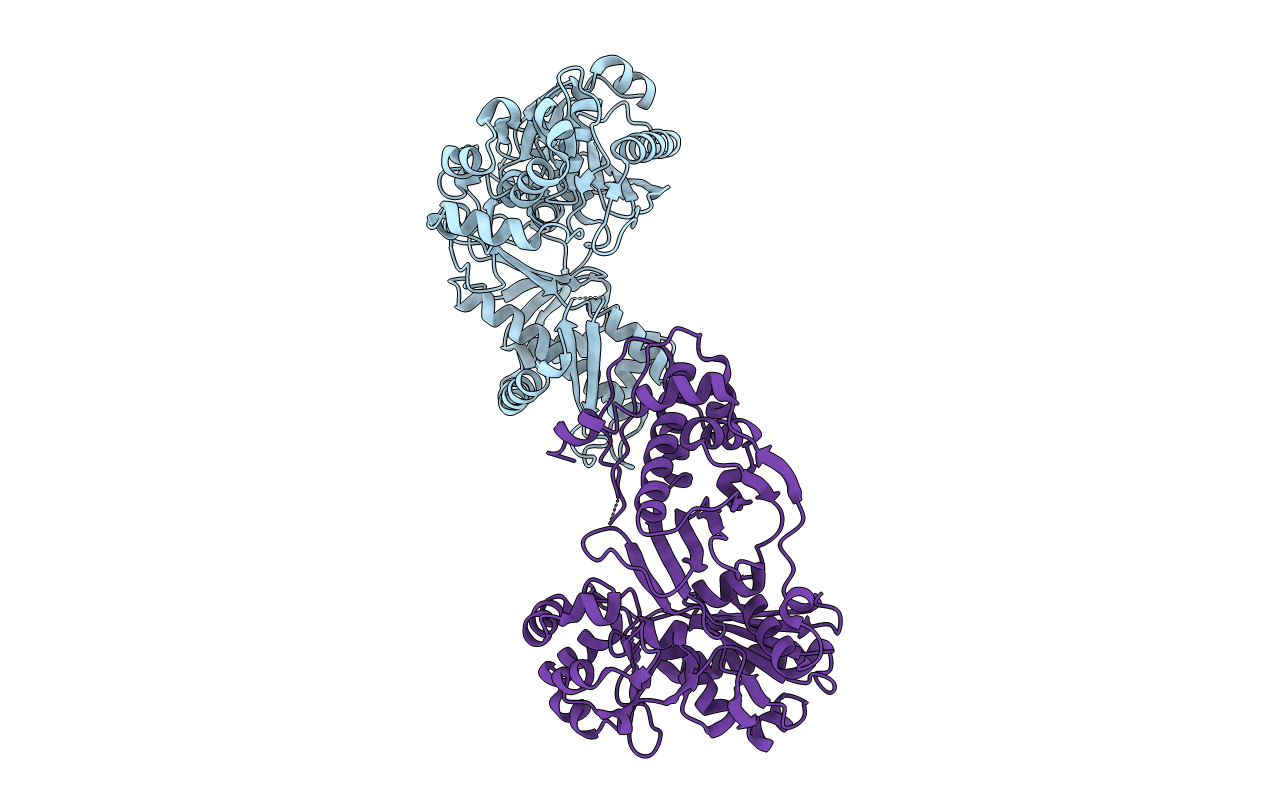
2NLX image
Deposition Date 2006-10-20
Release Date 2006-11-14
Last Version Date 2023-12-27
Entry Detail
PDB ID:
2NLX
Keywords:
Title:
Crystal structure of the apo E. coli xylulose kinase
Biological Source:
Source Organism:
Escherichia coli (Taxon ID: 562)
Host Organism:
Method Details:
Experimental Method:
Resolution:
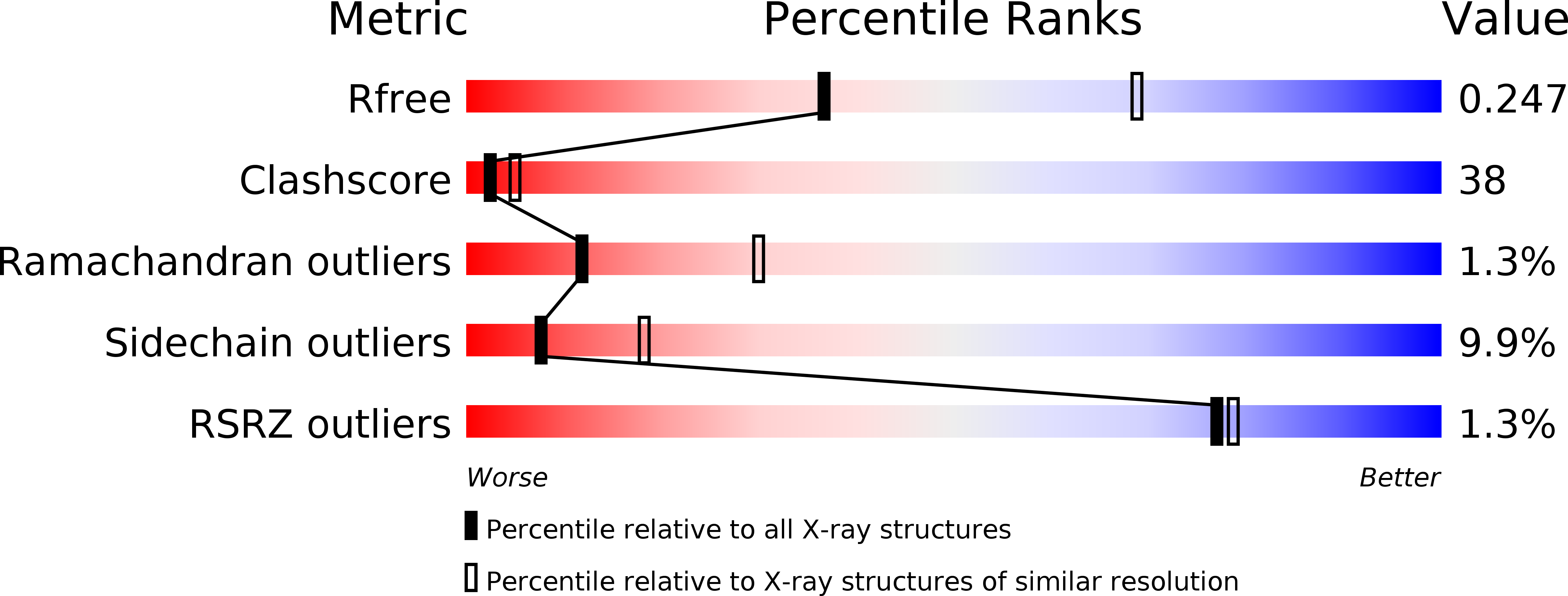
2.70 Å
R-Value Free:
0.25
R-Value Work:
0.20
R-Value Observed:
0.20
Space Group:
P 21 21 21
Macromolecular Entities
Structures with similar UniProt ID
Protein Blast
Polymer Type:polypeptide(L)
Molecule:Xylulose kinase
Gene (Uniprot):xylB
Chain IDs:A, B
Chain Length:484
Number of Molecules:2
Biological Source:Escherichia coli
Primary Citation
Structural and kinetic studies of induced fit in xylulose kinase from Escherichia coli.
J.Mol.Biol. 365 783 798 (2007)
PMID: 17123542 DOI: 10.1016/j.jmb.2006.10.068

Abstact

The primary metabolic route for D-xylose, the second most abundant sugar in nature, is via the pentose phosphate pathway after a two-step or three-step conversion to xylulose-5-phosphate. Xylulose kinase (XK; EC 2.7.1.17) phosphorylates D-xylulose, the last step in this conversion. The apo and D-xylulose-bound crystal structures of Escherichia coli XK have been determined and show a dimer composed of two domains separated by an open cleft. XK dimerization was observed directly by a cryo-EM reconstruction at 36 A resolution. Kinetic studies reveal that XK has a weak substrate-independent MgATP-hydrolyzing activity, and phosphorylates several sugars and polyols with low catalytic efficiency. Binding of pentulose and MgATP to form the reactive ternary complex is strongly synergistic. Although the steady-state kinetic mechanism of XK is formally random, a path is preferred in which D-xylulose binds before MgATP. Modelling of MgATP binding to XK and the accompanying conformational change suggests that sugar binding is accompanied by a dramatic hinge-bending movement that enhances interactions with MgATP, explaining the observed synergism. A catalytic mechanism is proposed and supported by relevant site-directed mutants.

Legend

Protein

Chemical

Disease

Primary Citation of related structures
Feedback Form
Name
Email
Institute
Feedback