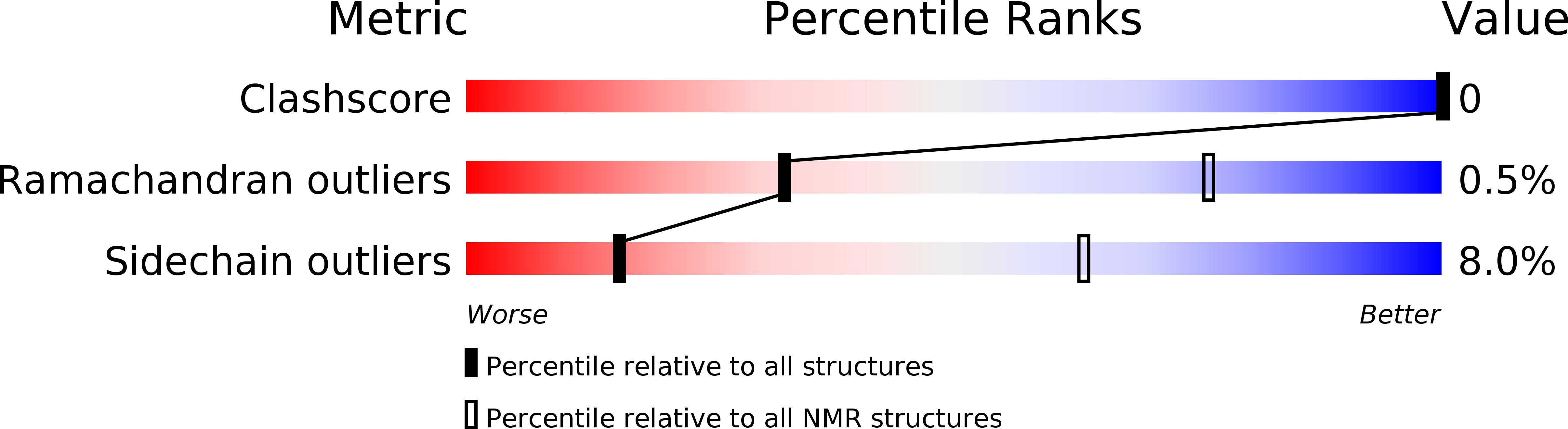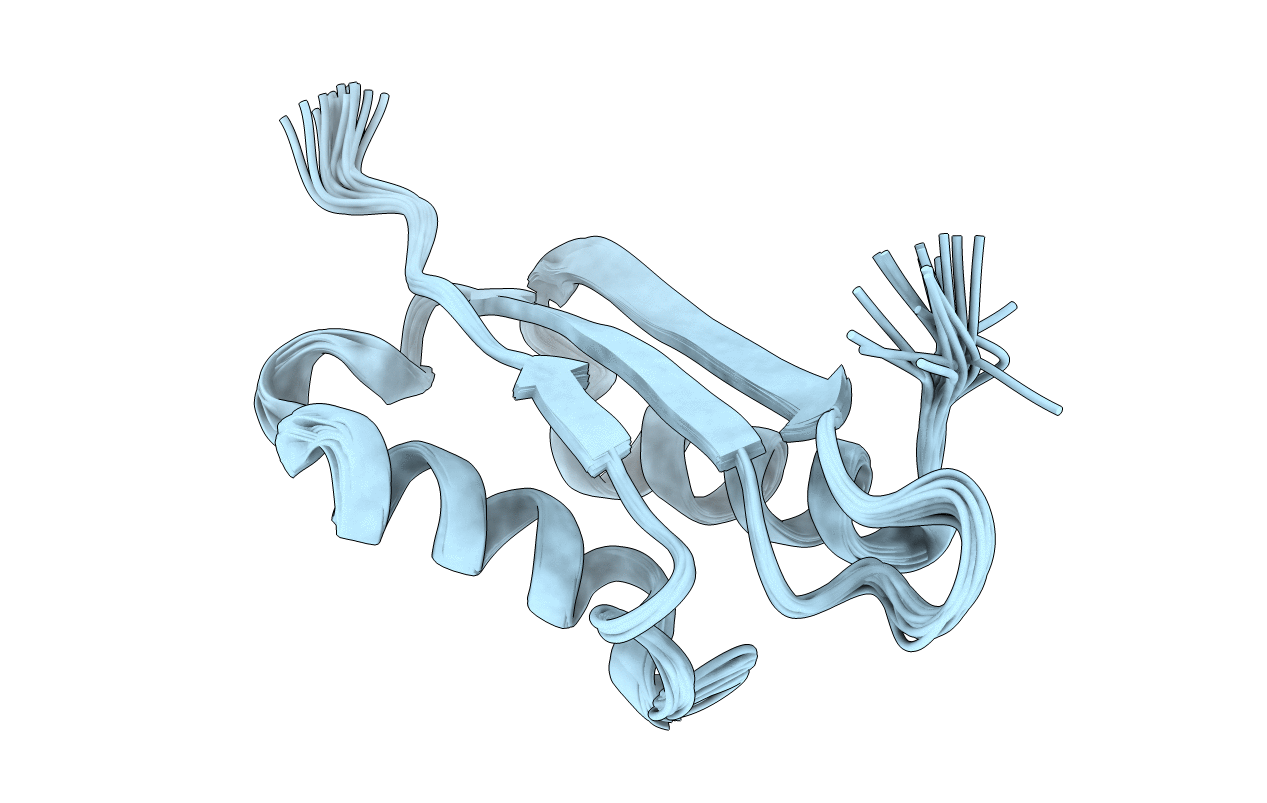
2NCL image
Deposition Date 2016-04-11
Release Date 2016-09-07
Last Version Date 2024-05-15
Entry Detail
PDB ID:
2NCL
Keywords:
Title:
Solution structure of BOLA3 from Homo sapiens
Biological Source:
Source Organism:
Homo sapiens (Taxon ID: 9606)
Host Organism:
Method Details:
Experimental Method:
Conformers Calculated:
80
Conformers Submitted:
20
Macromolecular Entities
Structures with similar UniProt ID
Protein Blast
Polymer Type:polypeptide(L)
Molecule:BolA-like protein 3
Gene (Uniprot):BOLA3
Chain IDs:A
Chain Length:81
Number of Molecules:1
Biological Source:Homo sapiens
Ligand Molecules
Primary Citation
Mitochondrial Bol1 and Bol3 function as assembly factors for specific iron-sulfur proteins.
Elife 5 ? ? (2016)
PMID: 27532772 DOI: 10.7554/eLife.16673

Abstact

Assembly of mitochondrial iron-sulfur (Fe/S) proteins is a key process of cells, and defects cause many rare diseases. In the first phase of this pathway, ten Fe/S cluster (ISC) assembly components synthesize and insert [2Fe-2S] clusters. The second phase is dedicated to the assembly of [4Fe-4S] proteins, yet this part is poorly understood. Here, we characterize the BOLA family proteins Bol1 and Bol3 as specific mitochondrial ISC assembly factors that facilitate [4Fe-4S] cluster insertion into a subset of mitochondrial proteins such as lipoate synthase and succinate dehydrogenase. Bol1-Bol3 perform largely overlapping functions, yet cannot replace the ISC protein Nfu1 that also participates in this phase of Fe/S protein biogenesis. Bol1 and Bol3 form dimeric complexes with both monothiol glutaredoxin Grx5 and Nfu1. Complex formation differentially influences the stability of the Grx5-Bol-shared Fe/S clusters. Our findings provide the biochemical basis for explaining the pathological phenotypes of patients with mutations in BOLA3.

Legend

Protein

Chemical

Disease

Primary Citation of related structures
Feedback Form
Name
Email
Institute
Feedback