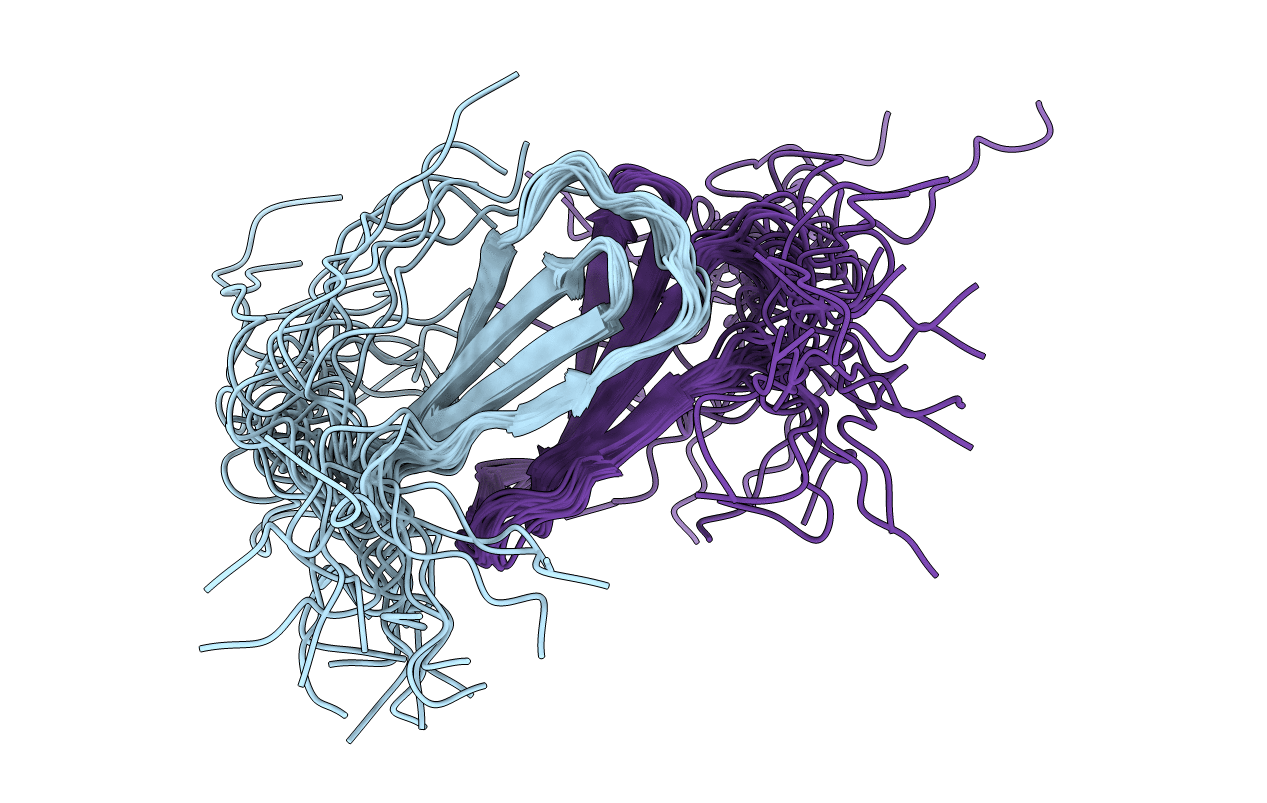
2N54 image
Deposition Date 2015-07-07
Release Date 2015-10-07
Last Version Date 2024-11-20
Entry Detail
PDB ID:
2N54
Keywords:
Title:
Solution structure of a disulfide stabilized XCL1 dimer
Biological Source:
Source Organism:
Homo sapiens (Taxon ID: 9606)
Host Organism:
Method Details:
Experimental Method:
Conformers Calculated:
100
Conformers Submitted:
20
Selection Criteria:
target function

Macromolecular Entities
Structures with similar UniProt ID
Protein Blast
Polymer Type:polypeptide(L)
Molecule:Lymphotactin
Gene (Uniprot):XCL1
Mutagens:A57C, A70C
Chain IDs:A, B
Chain Length:93
Number of Molecules:2
Biological Source:Homo sapiens
Ligand Molecules
Primary Citation
Engineering Metamorphic Chemokine Lymphotactin/XCL1 into the GAG-Binding, HIV-Inhibitory Dimer Conformation.
Acs Chem.Biol. 10 2580 2588 (2015)
PMID: 26302421 DOI: 10.1021/acschembio.5b00542

Abstact

Unlike other chemokines, XCL1 undergoes a distinct metamorphic interconversion between a canonical monomeric chemokine fold and a unique β-sandwich dimer. The monomeric conformation binds and activates the receptor XCR1, whereas the dimer binds extracellular matrix glycosaminoglycans and has been associated with anti-human immunodeficiency virus (HIV) activity. Functional studies of WT-XCL1 are complex, as both conformations are populated in solution. To overcome this limitation, we engineered a stabilized dimeric variant of XCL1 designated CC5. This variant features a new disulfide bond (A36C-A49C) that prevents structural interconversion by locking the chemokine into the β-sandwich dimeric conformation, as demonstrated by NMR structural analysis and hydrogen/deuterium exchange experiments. Functional studies analyzing glycosaminoglycan binding demonstrate that CC5 binds with high affinity to heparin. In addition, CC5 exhibits potent inhibition of HIV-1 activity in primary peripheral blood mononuclear cells (PBMCs), demonstrating the importance of the dimer in blocking viral infection. Conformational variants like CC5 are valuable tools for elucidating the biological relevance of the XCL1 native-state interconversion and will assist in future antiviral and functional studies.

Legend

Protein

Chemical

Disease

Primary Citation of related structures
Feedback Form
Name
Email
Institute
Feedback