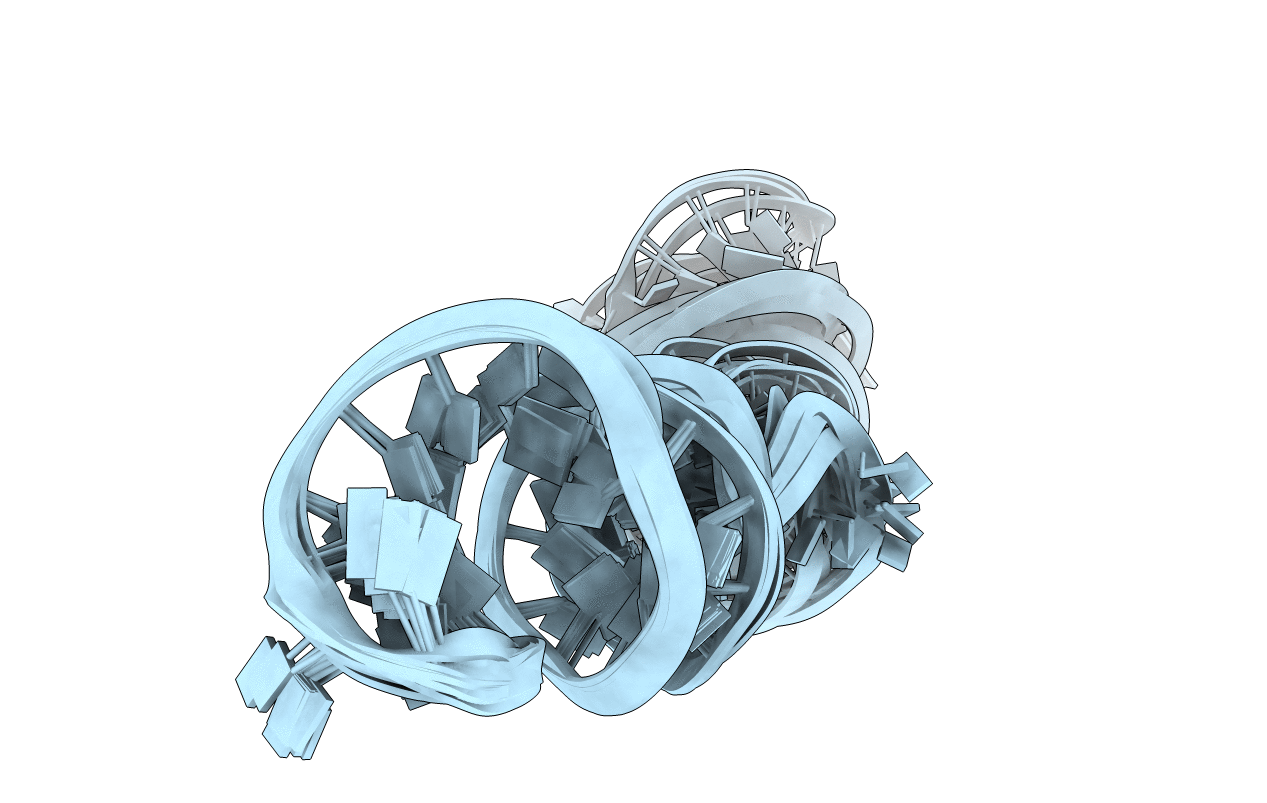
2MQT image
Deposition Date 2014-06-26
Release Date 2014-09-10
Last Version Date 2024-05-01
Entry Detail
PDB ID:
2MQT
Keywords:
Title:
Solution NMR structure of the U5-primer binding site (U5-PBS) domain of murine leukemia virus RNA genome
Biological Source:
Source Organism:
Method Details:
Experimental Method:
Conformers Calculated:
20
Conformers Submitted:
10
Selection Criteria:
structures with the least restraint violations

Macromolecular Entities
Polymer Type:polyribonucleotide
Molecule:RNA (68-MER)
Chain IDs:A
Chain Length:68
Number of Molecules:1
Biological Source:Murine Leukemia Virus
Ligand Molecules
Primary Citation
A structure-based mechanism for tRNA and retroviral RNA remodelling during primer annealing.
Nature 515 591 595 (2014)
PMID: 25209668 DOI: 10.1038/nature13709

Abstact

To prime reverse transcription, retroviruses require annealing of a transfer RNA molecule to the U5 primer binding site (U5-PBS) region of the viral genome. The residues essential for primer annealing are initially locked in intramolecular interactions; hence, annealing requires the chaperone activity of the retroviral nucleocapsid (NC) protein to facilitate structural rearrangements. Here we show that, unlike classical chaperones, the Moloney murine leukaemia virus NC uses a unique mechanism for remodelling: it specifically targets multiple structured regions in both the U5-PBS and tRNA(Pro) primer that otherwise sequester residues necessary for annealing. This high-specificity and high-affinity binding by NC consequently liberates these sequestered residues--which are exactly complementary--for intermolecular interactions. Furthermore, NC utilizes a step-wise, entropy-driven mechanism to trigger both residue-specific destabilization and residue-specific release. Our structures of NC bound to U5-PBS and tRNA(Pro) reveal the structure-based mechanism for retroviral primer annealing and provide insights as to how ATP-independent chaperones can target specific RNAs amidst the cellular milieu of non-target RNAs.

Legend

Protein

Chemical

Disease

Primary Citation of related structures
Feedback Form
Name
Email
Institute
Feedback