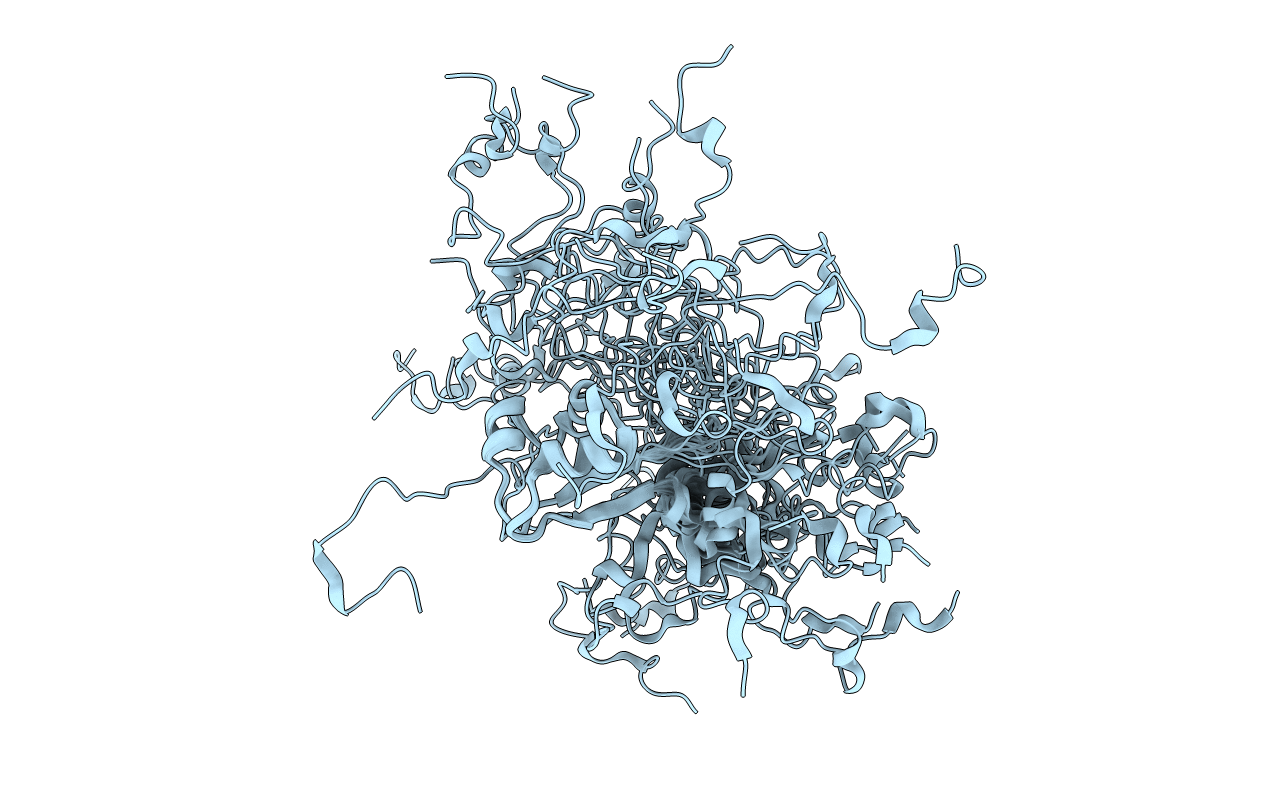
2MPW image
Deposition Date 2014-06-05
Release Date 2014-11-12
Last Version Date 2024-05-15
Entry Detail
PDB ID:
2MPW
Title:
Solution structure of the LysM region of the E. coli Intimin periplasmic domain
Biological Source:
Source Organism(s):
Escherichia coli (Taxon ID: 562)
Expression System(s):
Method Details:
Experimental Method:
Conformers Calculated:
95
Conformers Submitted:
23
Selection Criteria:
structures with the lowest energy
Macromolecular Entities
Structures with similar UniProt ID
Protein Blast
Polymer Type:polypeptide(L)
Molecule:Intimin
Gene (Uniprot):eae
Mutagens:A39M
Chain IDs:A
Chain Length:115
Number of Molecules:1
Biological Source:Escherichia coli
Ligand Molecules
Primary Citation
The Intimin periplasmic domain mediates dimerisation and binding to peptidoglycan.
Mol.Microbiol. 95 80 100 (2015)
PMID: 25353290 DOI: 10.1111/mmi.12840

Abstact

Intimin and Invasin are prototypical inverse (Type Ve) autotransporters and important virulence factors of enteropathogenic Escherichia coli and Yersinia spp. respectively. In addition to a C-terminal extracellular domain and a β-barrel transmembrane domain, both proteins also contain a short N-terminal periplasmic domain that, in Intimin, includes a lysin motif (LysM), which is thought to mediate binding to peptidoglycan. We show that the periplasmic domain of Intimin does bind to peptidoglycan both in vitro and in vivo, but only under acidic conditions. We were able to determine a dissociation constant of 0.8 μM for this interaction, whereas the Invasin periplasmic domain, which lacks a LysM, bound only weakly in vitro and failed to bind peptidoglycan in vivo. We present the solution structure of the Intimin LysM, which has an additional α-helix conserved within inverse autotransporter LysMs but lacking in others. In contrast to previous reports, we demonstrate that the periplasmic domain of Intimin mediates dimerisation. We further show that dimerisation and peptidoglycan binding are general features of LysM-containing inverse autotransporters. Peptidoglycan binding by the periplasmic domain in the infection process may aid in resisting mechanical and chemical stress during transit through the gastrointestinal tract.

Legend

Protein

Chemical

Disease

Primary Citation of related structures
Feedback Form
Name
Email
Institute
Feedback