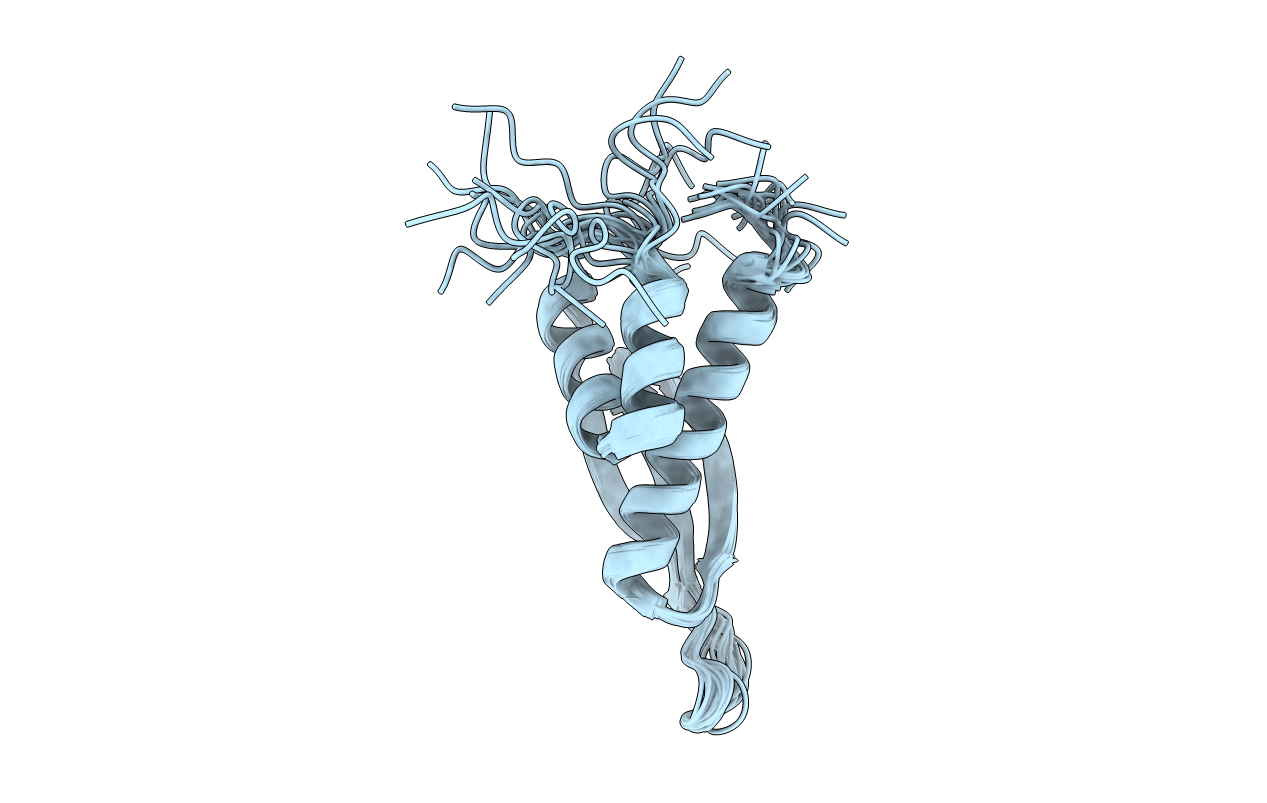
2MDR image
Deposition Date 2013-09-17
Release Date 2014-04-30
Last Version Date 2024-05-15
Entry Detail
PDB ID:
2MDR
Keywords:
Title:
Solution structure of the third double-stranded RNA-binding domain (dsRBD3) of human adenosine-deaminase ADAR1
Biological Source:
Source Organism:
Homo sapiens (Taxon ID: 9606)
Host Organism:
Method Details:
Experimental Method:
Conformers Calculated:
100
Conformers Submitted:
20
Selection Criteria:
structures with the lowest energy
Macromolecular Entities
Structures with similar UniProt ID
Protein Blast
Polymer Type:polypeptide(L)
Molecule:Double-stranded RNA-specific adenosine deaminase
Gene (Uniprot):ADAR
Chain IDs:A
Chain Length:113
Number of Molecules:1
Biological Source:Homo sapiens
Ligand Molecules
Primary Citation
A bimodular nuclear localization signal assembled via an extended double-stranded RNA-binding domain acts as an RNA-sensing signal for transportin 1.
Proc.Natl.Acad.Sci.USA 111 E1852 E1861 (2014)
PMID: 24753571 DOI: 10.1073/pnas.1323698111

Abstact

The human RNA-editing enzyme adenosine deaminase acting on RNA (ADAR1) carries a unique nuclear localization signal (NLS) that overlaps one of its double-stranded RNA-binding domains (dsRBDs). This dsRBD-NLS is recognized by the nuclear import receptor transportin 1 (Trn1; also called karyopherin-β2) in an RNA-sensitive manner. Most Trn1 cargos bear a well-characterized proline-tyrosine-NLS, which is missing from the dsRBD-NLS. Here, we report the structure of the dsRBD-NLS, which reveals an unusual dsRBD fold extended by an additional N-terminal α-helix that brings the N- and C-terminal flanking regions in close proximity. We demonstrate experimentally that the atypical ADAR1-NLS is bimodular and is formed by the combination of the two flexible fragments flanking the folded domain. The intervening dsRBD acts only as an RNA-sensing scaffold, allowing the two NLS modules to be properly positioned for interacting with Trn1. We also provide a structural model showing how Trn1 can recognize the dsRBD-NLS and how dsRNA binding can interfere with Trn1 binding.

Legend

Protein

Chemical

Disease

Primary Citation of related structures
Feedback Form
Name
Email
Institute
Feedback