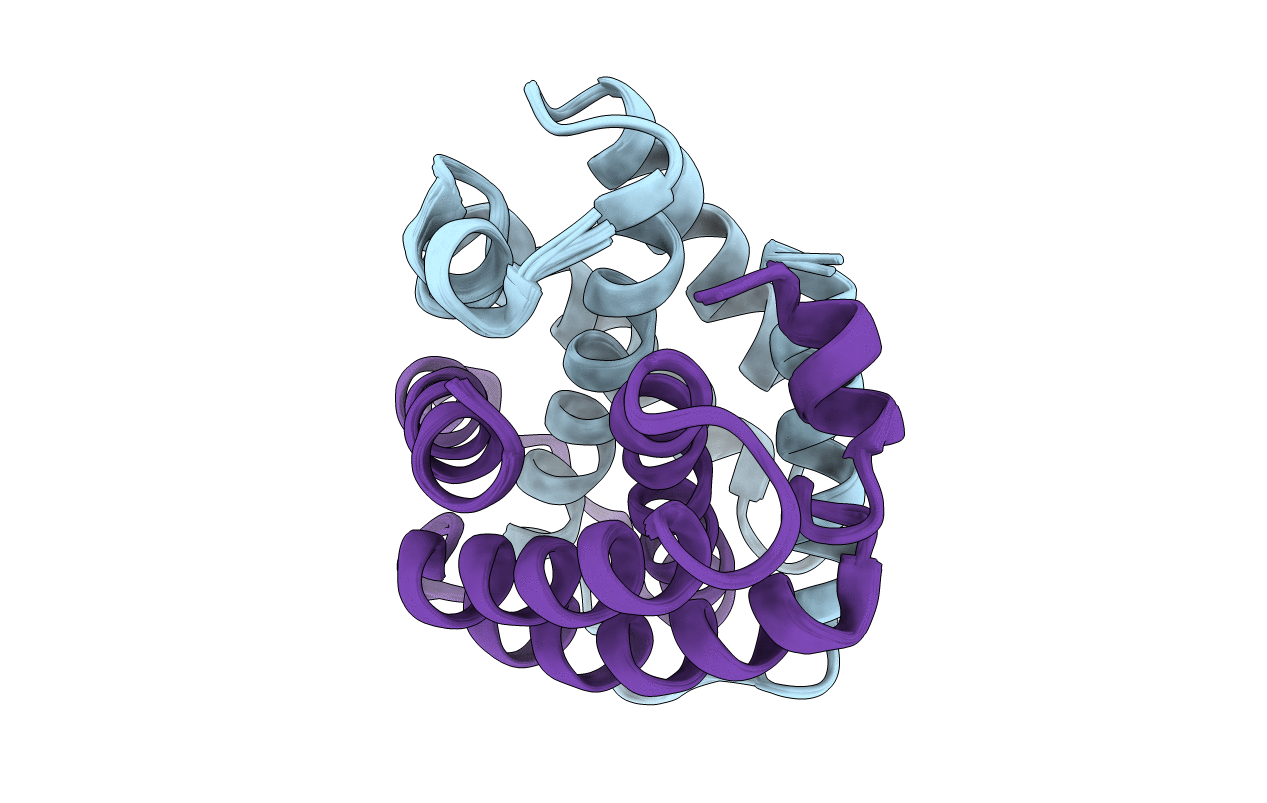
2MAB image
Deposition Date 2013-07-09
Release Date 2014-03-05
Last Version Date 2024-05-15
Entry Detail
PDB ID:
2MAB
Title:
Untangling the Solution Structure of C-Terminal Domain of Aciniform Spidroin
Biological Source:
Source Organism:
Host Organism:
Method Details:
Experimental Method:
Conformers Calculated:
20
Conformers Submitted:
20
Selection Criteria:
target function
Macromolecular Entities
Structures with similar UniProt ID
Protein Blast
Polymer Type:polypeptide(L)
Molecule:ACINIFORM SPIDROIN
Chain IDs:A, B
Chain Length:109
Number of Molecules:2
Biological Source:Nephila Antipodiana
Ligand Molecules
Primary Citation
Structure and function of C-terminal domain of aciniform spidroin
Biomacromolecules 15 468 477 (2014)
PMID: 24422432 DOI: 10.1021/bm401709v

Abstact

C-terminal domains (CTDs) of various spidroins are relatively conserved in the amino acid sequence and have been suggested to perform similar functions. Here, we solved the structure of the CTD of an aciniform spidroin using NMR spectroscopy with a two-point mutant and studied its functional role with several constructs. The CTDs of aciniform, major, and minor ampullate spidroins adopt the same domain-swapping dimeric folding although their sequence identities are 24-40%. Unlike CTDs of major and minor ampullate spidroins, the aciniform CTD had no obvious effects on preventing spidroins from aggregation in storage but slightly enhanced protein assembly under shear force. The differential functions may result from significant differences in detailed structures and properties of repetitive regions of various types of spidroins. Nevertheless, all CTDs may have a common functional role: dimerization of the CTD doubles the size of silk proteins, reduces the number of chain ends, and thus leads to fewer chain end defects in the fibers formed.

Legend

Protein

Chemical

Disease

Primary Citation of related structures
Feedback Form
Name
Email
Institute
Feedback