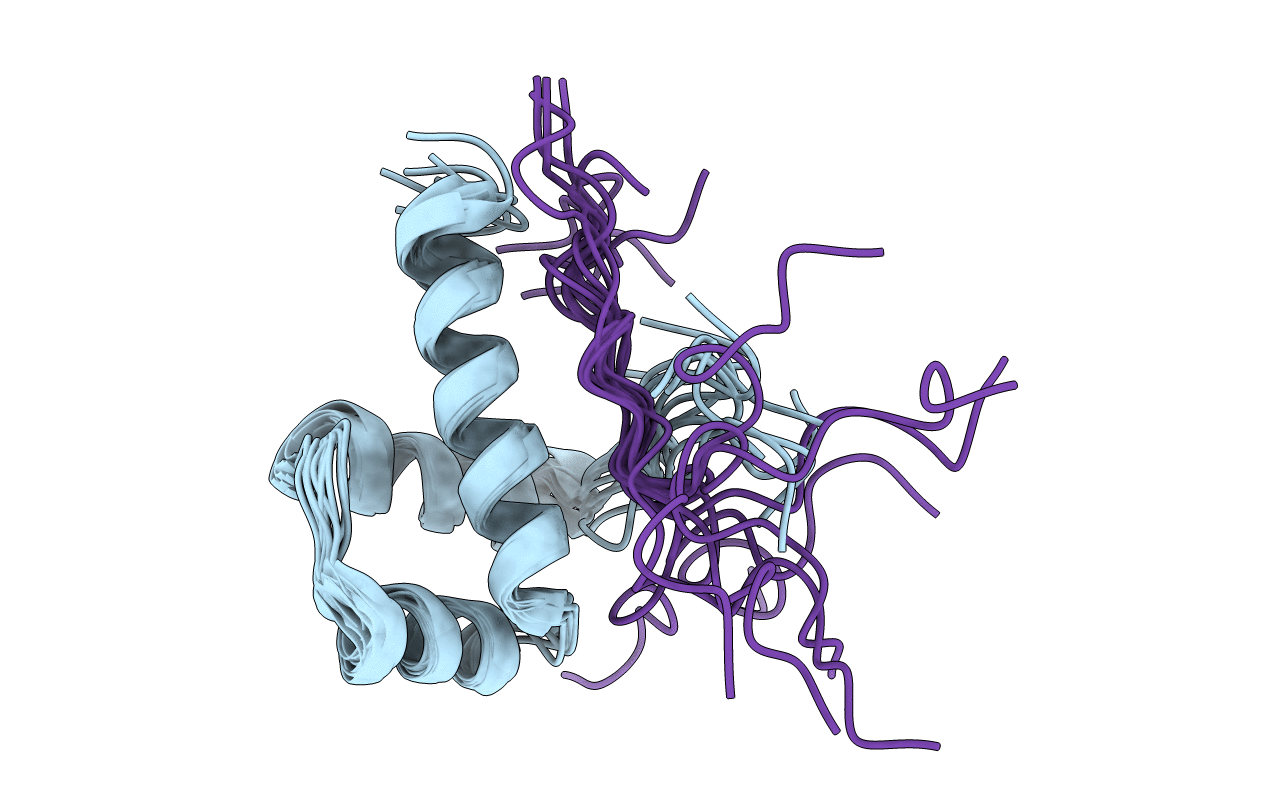
2LP0 image
Deposition Date 2012-01-29
Release Date 2012-06-06
Last Version Date 2024-05-15
Entry Detail
PDB ID:
2LP0
Title:
The solution structure of homeodomain-protein complex
Biological Source:
Source Organism:
Homo sapiens (Taxon ID: 9606)
Host Organism:
Method Details:
Experimental Method:
Conformers Calculated:
200
Conformers Submitted:
10
Selection Criteria:
structures with the least restraint violations
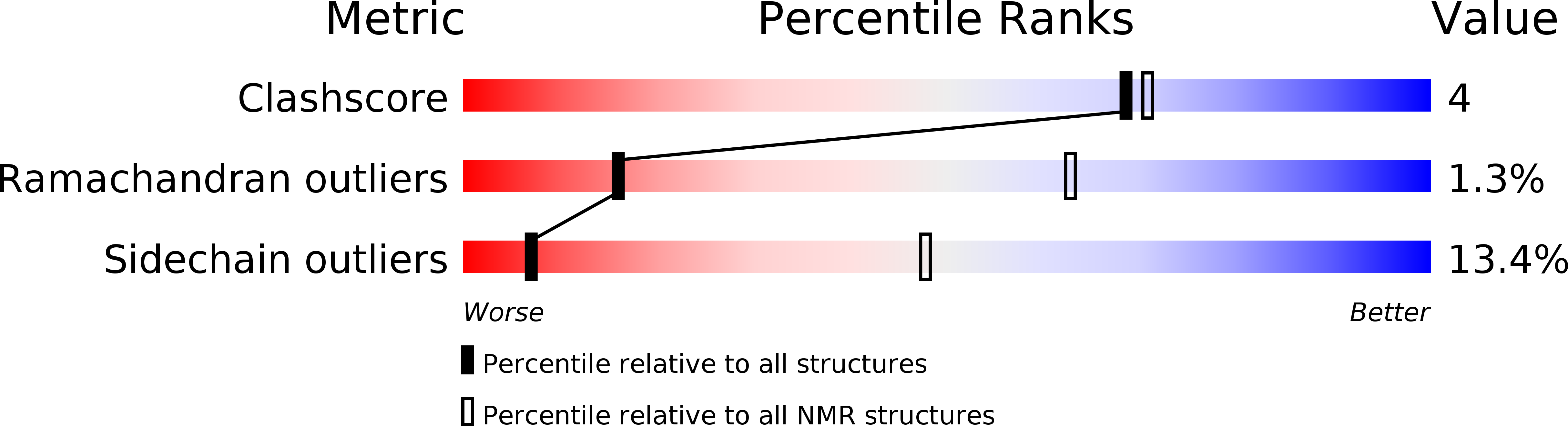
Macromolecular Entities
Structures with similar UniProt ID
Protein Blast
Polymer Type:polypeptide(L)
Molecule:Homeobox protein Hox-C9
Gene (Uniprot):HOXC9
Chain IDs:A
Chain Length:60
Number of Molecules:1
Biological Source:Homo sapiens
Structures with similar UniProt ID
Protein Blast
Polymer Type:polypeptide(L)
Molecule:Geminin
Gene (Uniprot):GMNN
Chain IDs:B
Chain Length:20
Number of Molecules:1
Biological Source:Homo sapiens
Ligand Molecules
Primary Citation
Structural basis for homeodomain recognition by the cell-cycle regulator Geminin
Proc.Natl.Acad.Sci.USA ? ? ? (2012)
PMID: 22615398 DOI: 10.1073/pnas.1200874109

Abstact

Homeodomain-containing transcription factors play a fundamental role in the regulation of numerous developmental and cellular processes. Their multiple regulatory functions are accomplished through context-dependent inputs of target DNA sequences and collaborating protein partners. Previous studies have well established the sequence-specific DNA binding to homeodomains; however, little is known about how protein partners regulate their functions through targeting homeodomains. Here we report the solution structure of the Hox homeodomain in complex with the cell-cycle regulator, Geminin, which inhibits Hox transcriptional activity and enrolls Hox in cell proliferative control. Side-chain carboxylates of glutamates and aspartates in the C terminus of Geminin generate an overall charge pattern resembling the DNA phosphate backbone. These residues provide electrostatic interactions with homeodomain, which combine with the van der Waals contacts to form the stereospecific complex. We further showed that the interaction with Geminin is homeodomain subclass-selective and Hox paralog-specific, which relies on the stapling role of residues R43 and M54 in helix III and the basic amino acid cluster in the N terminus. Interestingly, we found that the C-terminal residue Ser184 of Geminin could be phosphorylated by Casein kinase II, resulting in the enhanced binding to Hox and more potent inhibitory effect on Hox transcriptional activity, indicating an additional layer of regulation. This structure provides insight into the molecular mechanism underlying homeodomain-protein recognition and may serve as a paradigm for interactions between homeodomains and DNA-competitive peptide inhibitors.

Legend

Protein

Chemical

Disease

Primary Citation of related structures
Feedback Form
Name
Email
Institute
Feedback