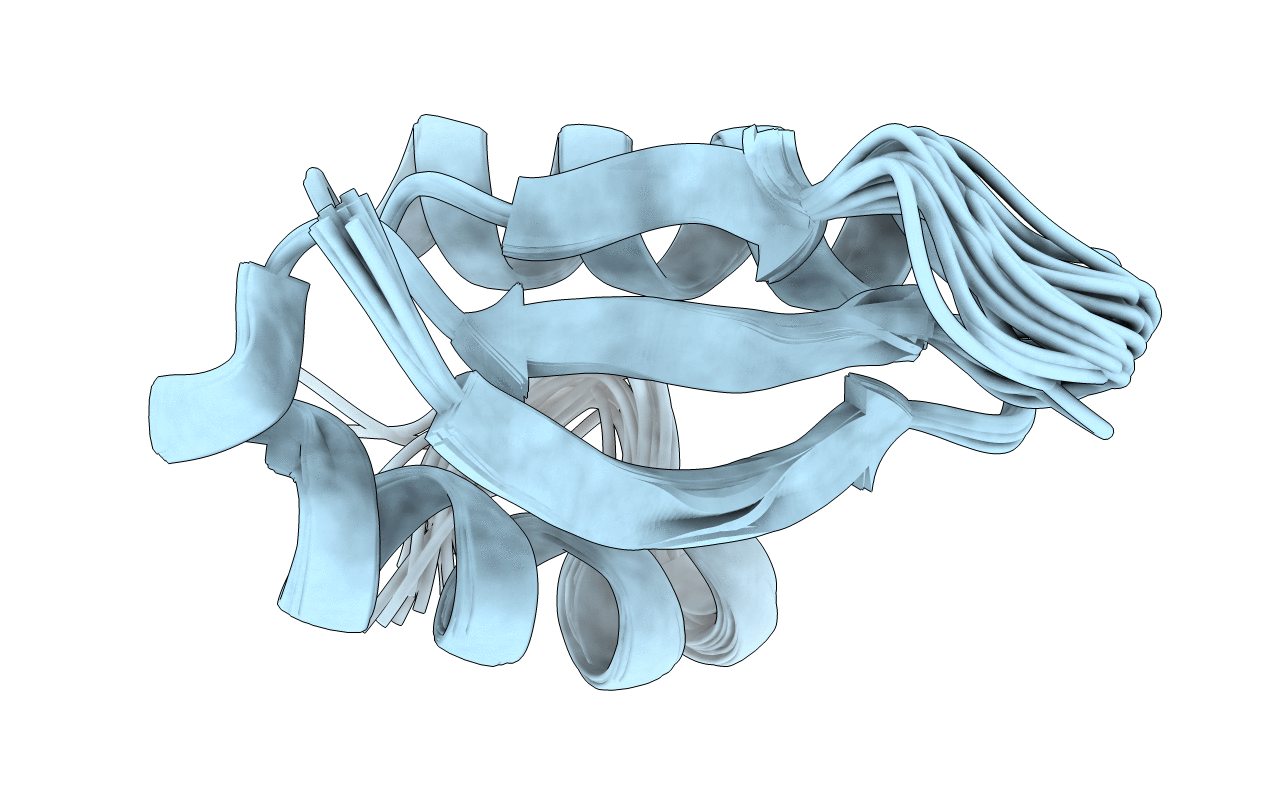
2LEP image
Deposition Date 2011-06-20
Release Date 2012-06-20
Last Version Date 2024-05-01
Entry Detail
PDB ID:
2LEP
Keywords:
Title:
Solution Structure of N-terminal Cytosolic Domain of Rhomboid Intramembrane Protease from Escherichia Coli
Biological Source:
Source Organism:
Escherichia coli (Taxon ID: 562)
Host Organism:
Method Details:
Experimental Method:
Conformers Calculated:
200
Conformers Submitted:
20
Selection Criteria:
structures with the lowest energy

Macromolecular Entities
Structures with similar UniProt ID
Protein Blast
Polymer Type:polypeptide(L)
Molecule:Rhomboid protease glpG 1
Chain IDs:A
Chain Length:69
Number of Molecules:1
Biological Source:Escherichia coli
Ligand Molecules
Primary Citation
Activity-Based Protein Profiling of the Escherichia coli GlpG Rhomboid Protein Delineates the Catalytic Core.
Biochemistry 51 7794 7803 (2012)
PMID: 22963263 DOI: 10.1021/bi301087c

Abstact

Rhomboid proteins comprise the largest class of intramembrane protease known, being conserved from bacteria to humans. The functional status of these proteases is typically assessed through direct or indirect detection of peptide cleavage products. Although these assays can report on the ability of a rhomboid to catalyze peptide bond cleavage, differences in measured hydrolysis rates can reflect changes in the structure and activity of catalytic residues, as well as the ability of the substrate to access the active site. Here we show that a highly reactive and sterically unencumbered fluorophosphonate activity-based protein profiling probe can be used to report on the catalytic integrity of active site residues in the Escherichia coli GlpG protein. We used results obtained with this probe on GlpG in proteomic samples, in combination with a conventional assay of proteolytic function on purified samples, to identify residues that are located on the cytoplasmic side of the lipid bilayer that are required for maximal proteolytic activity. Regions tested include the 90-residue aqueous-exposed N-terminus that encompasses a globular structure that we have determined by solution nuclear magnetic resonance, along with residues on the cytoplasmic side of the transmembrane domain core. While in most cases mutation or elimination of these residues did not significantly alter the catalytic status of the GlpG active site, the lipid-facing residue Arg227 was found to be important for maintaining a catalytically competent active site. In addition, we found a functionally critical region outside the transmembrane domain (TMD) core that is required for maximal protease activity. This region encompasses an additional 8-10 residues on the N-terminal side of the TMD core that precedes the first transmembrane segment and was not previously known to play a role in rhomboid function. These findings highlight the utility of the activity-based protein profiling approach for the characterization of rhomboid function.

Legend

Protein

Chemical

Disease

Primary Citation of related structures
Feedback Form
Name
Email
Institute
Feedback