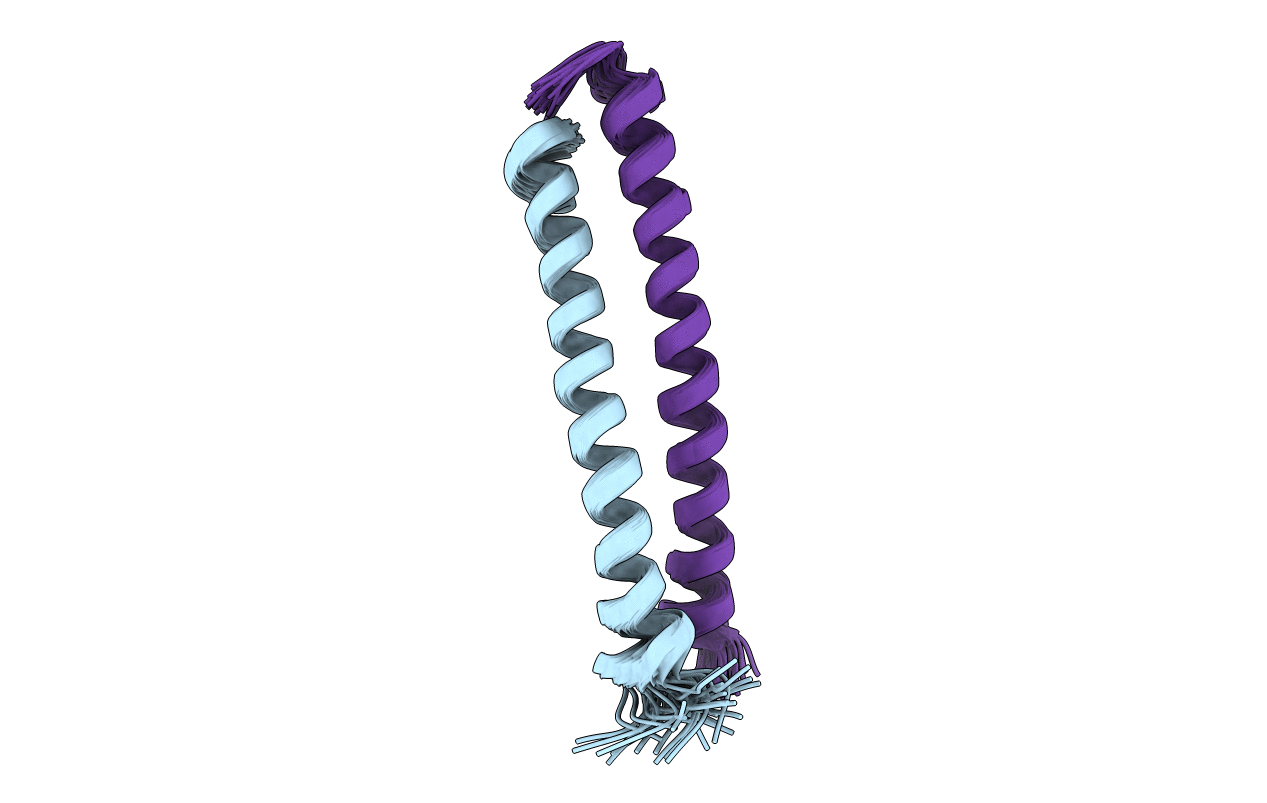
2L5G image
Deposition Date 2010-11-01
Release Date 2011-02-02
Last Version Date 2024-05-01
Entry Detail
PDB ID:
2L5G
Title:
Co-ordinates and 1H, 13C and 15N chemical shift assignments for the complex of GPS2 53-90 and SMRT 167-207
Biological Source:
Source Organism(s):
Homo sapiens (Taxon ID: 9606)
Expression System(s):
Method Details:
Experimental Method:
Conformers Calculated:
50
Conformers Submitted:
35
Selection Criteria:
structures with the lowest energy
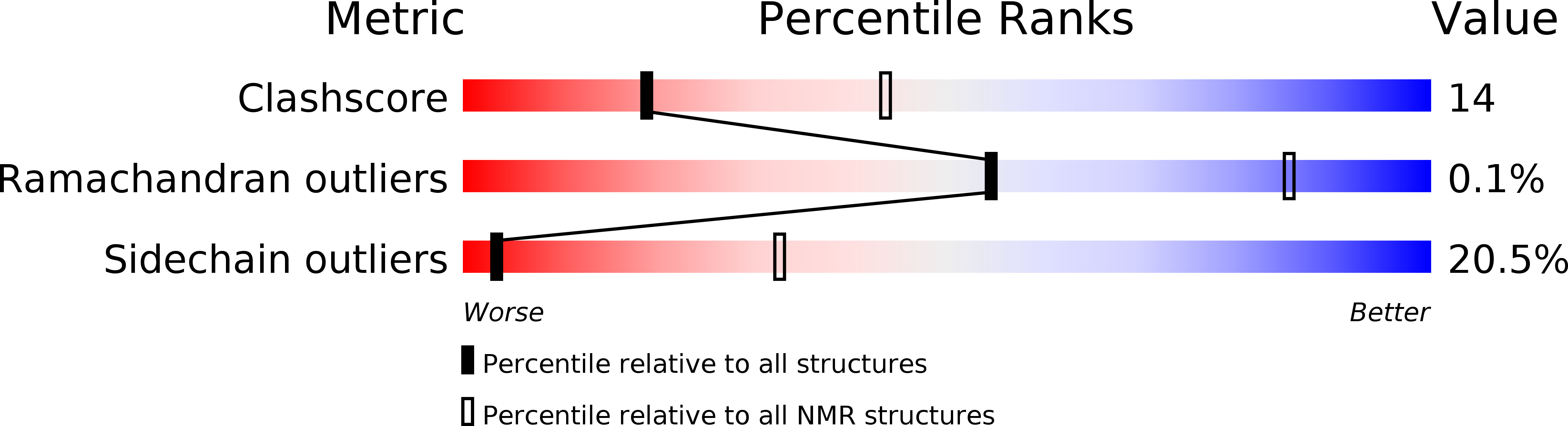
Macromolecular Entities
Structures with similar UniProt ID
Protein Blast
Polymer Type:polypeptide(L)
Molecule:G protein pathway suppressor 2
Chain IDs:A
Chain Length:38
Number of Molecules:1
Biological Source:Homo sapiens
Structures with similar UniProt ID
Protein Blast
Polymer Type:polypeptide(L)
Molecule:Putative uncharacterized protein NCOR2
Chain IDs:B
Chain Length:42
Number of Molecules:1
Biological Source:Homo sapiens
Ligand Molecules
Primary Citation
Structural basis for the assembly of the SMRT/NCoR core transcriptional repression machinery.
Nat.Struct.Mol.Biol. 18 177 184 (2011)
PMID: 21240272 DOI: 10.1038/nsmb.1983

Abstact

Eukaryotic transcriptional repressors function by recruiting large coregulatory complexes that target histone deacetylase enzymes to gene promoters and enhancers. Transcriptional repression complexes, assembled by the corepressor NCoR and its homolog SMRT, are crucial in many processes, including development and metabolic physiology. The core repression complex involves the recruitment of three proteins, HDAC3, GPS2 and TBL1, to a highly conserved repression domain within SMRT and NCoR. We have used structural and functional approaches to gain insight into the architecture and biological role of this complex. We report the crystal structure of the tetrameric oligomerization domain of TBL1, which interacts with both SMRT and GPS2, and the NMR structure of the interface complex between GPS2 and SMRT. These structures, together with computational docking, mutagenesis and functional assays, reveal the assembly mechanism and stoichiometry of the corepressor complex.

Legend

Protein

Chemical

Disease

Primary Citation of related structures
Feedback Form
Name
Email
Institute
Feedback