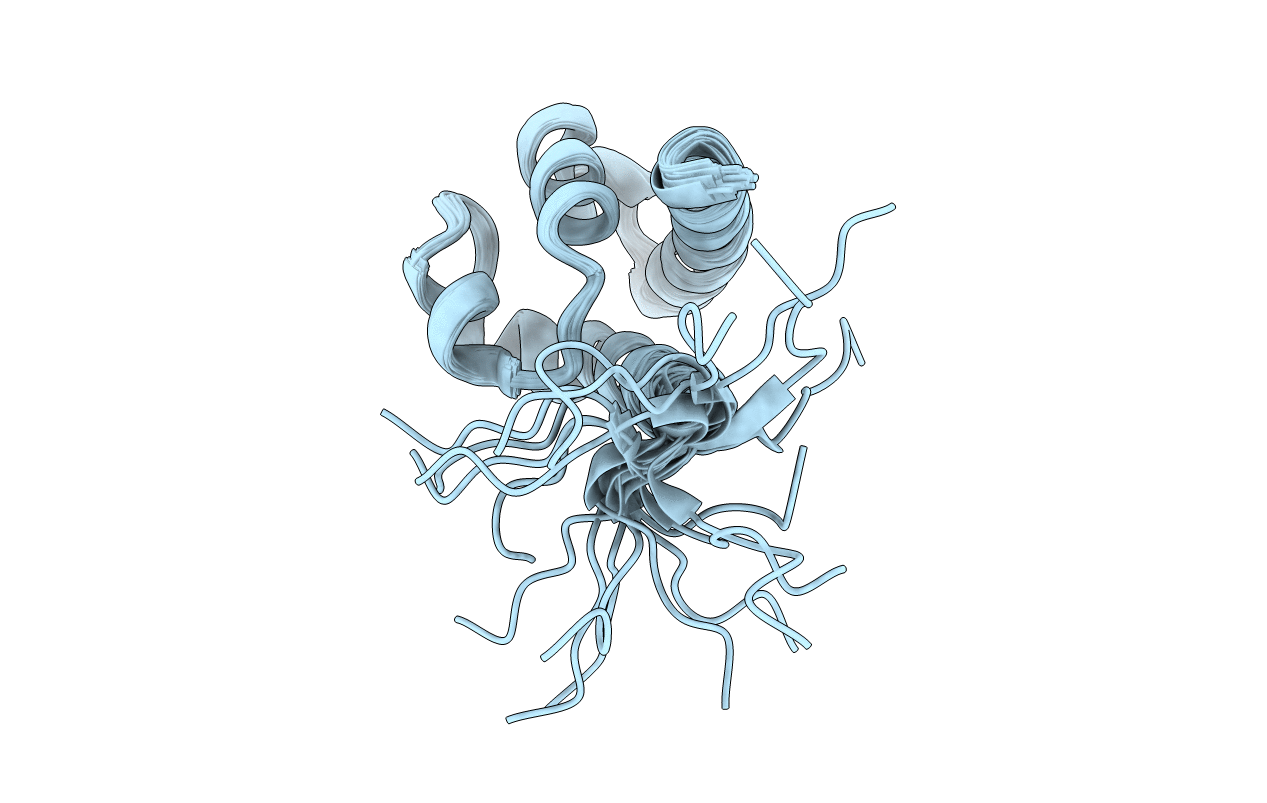
2KV2 image
Deposition Date 2010-03-04
Release Date 2010-12-15
Last Version Date 2024-05-01
Entry Detail
PDB ID:
2KV2
Keywords:
Title:
Solution Structure of the human BLM HRDC domain
Biological Source:
Source Organism(s):
Homo sapiens (Taxon ID: 9606)
Expression System(s):
Method Details:
Experimental Method:
Conformers Calculated:
100
Conformers Submitted:
20
Selection Criteria:
structures with the lowest energy

Macromolecular Entities
Structures with similar UniProt ID
Protein Blast
Polymer Type:polypeptide(L)
Molecule:Bloom syndrome protein
Gene (Uniprot):BLM
Chain IDs:A
Chain Length:85
Number of Molecules:1
Biological Source:Homo sapiens
Ligand Molecules
Primary Citation
Structure and function of the regulatory HRDC domain from human Bloom syndrome protein
Nucleic Acids Res. 38 7764 7777 (2010)
PMID: 20639533 DOI: 10.1093/nar/gkq586

Abstact

The helicase and RNaseD C-terminal (HRDC) domain, conserved among members of the RecQ helicase family, regulates helicase activity by virtue of variations in its surface residues. The HRDC domain of Bloom syndrome protein (BLM) is known as a critical determinant of the dissolution function of double Holliday junctions by the BLM-Topoisomerase IIIα complex. In this study, we determined the solution structure of the human BLM HRDC domain and characterized its DNA-binding activity. The BLM HRDC domain consists of five α-helices with a hydrophobic 3(10)-helical loop between helices 1 and 2 and an extended acidic surface comprising residues in helices 3-5. The BLM HRDC domain preferentially binds to ssDNA, though with a markedly low binding affinity (K(d) ∼100 μM). NMR chemical shift perturbation studies suggested that the critical DNA-binding residues of the BLM HRDC domain are located in the hydrophobic loop and the N-terminus of helix 2. Interestingly, the isolated BLM HRDC domain had quite different DNA-binding modes between ssDNA and Holliday junctions in electrophoretic mobility shift assay experiments. Based on its surface charge separation and DNA-binding properties, we suggest that the HRDC domain of BLM may be adapted for a unique function among RecQ helicases--that of bridging protein and DNA interactions.

Legend

Protein

Chemical

Disease

Primary Citation of related structures
Feedback Form
Name
Email
Institute
Feedback