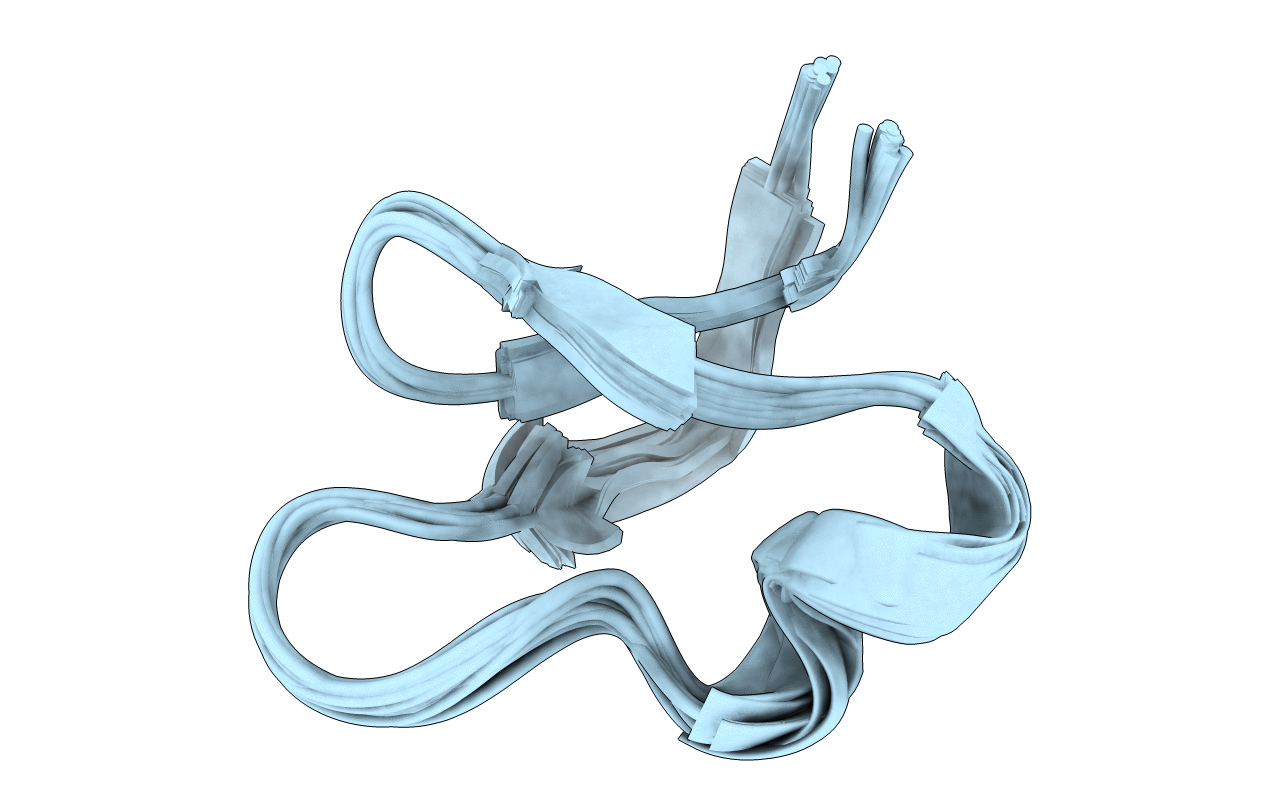
2KUX image
Deposition Date 2010-03-01
Release Date 2010-03-23
Last Version Date 2024-10-16
Entry Detail
PDB ID:
2KUX
Keywords:
Title:
Solution structure of the cyclotide kalata B5 from Oldenlandia affinis
Biological Source:
Source Organism:
Method Details:
Experimental Method:
Conformers Calculated:
50
Conformers Submitted:
20
Selection Criteria:
structures with the lowest energy
Macromolecular Entities
Structures with similar UniProt ID
Protein Blast
Polymer Type:polypeptide(L)
Molecule:Kalata-B5
Chain IDs:A
Chain Length:30
Number of Molecules:1
Biological Source:Oldenlandia affinis
Ligand Molecules
Primary Citation
Structural and biochemical characteristics of the cyclotide kalata B5 from Oldenlandia affinis
Biopolymers 94 647 658 (2010)
PMID: 20564013 DOI: 10.1002/bip.21409

Abstact

Cyclotides are a large family of plant-derived proteins typified by their head-to-tail cyclic backbone and knotted arrangement of three disulfide bonds. Although they display a diverse range of biological activities, their native function is thought to be plant defense. Here we characterized the expression, three-dimensional structure, and hemolytic activity of the cyclotide kalata B5 from the African plant Oldenlandia affinis. Kalata B5 shows an interesting seasonal variation in its expression and can only be isolated during certain times of the year, when the plant is flowering. It displays a typical tightly folded cyclic Scystine knot structure. A range of pH and temperature titrations reveal that a conserved glutamic acid in loop 1 Sof the structure forms a key hydrogen bond network, similar to that reported previously for other cyclotides. However, specific line broadening in the NMR spectra of kalata B5 suggests that the hydrogen bonding network in this peptide is less rigid than in other cyclotides. Notably, the pK9a) of Glu6 of 4.5 is higher than the values for other cyclotides studied so far, which range from 3.0 to 4.0, providing a further indication of a weaker hydrogen bond network. Kalata B5 has only moderate hemolytic activity compared with other highly expressed cyclotides, and this reduced activity probably reflects its more flexible structure. As is the case with other cyclotides, kalata B5 has an exposed hydrophobic region on its surface, supporting suggestions that this hydrophobic patch is a key feature for membrane binding and biological activity of cyclotides.

Legend

Protein

Chemical

Disease

Primary Citation of related structures
Feedback Form
Name
Email
Institute
Feedback