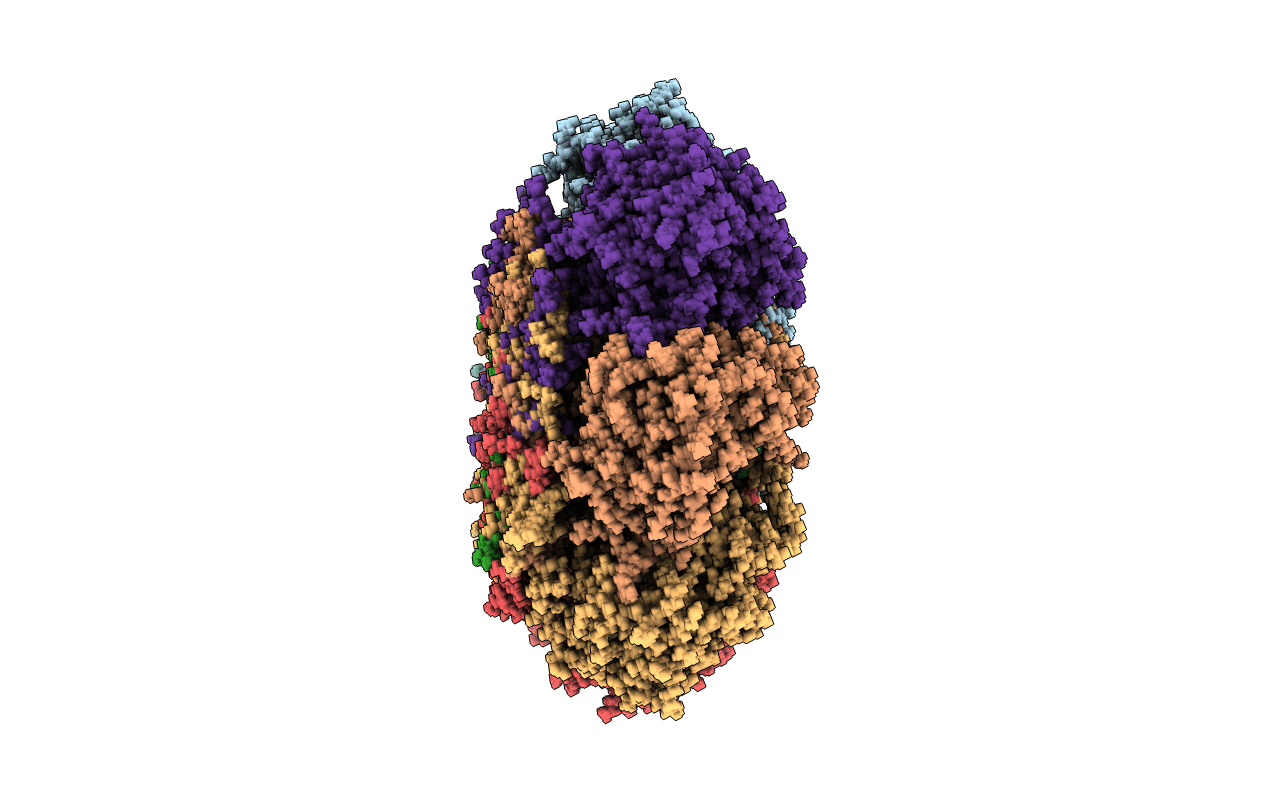
2KU2 image
Deposition Date 2010-02-11
Release Date 2010-04-21
Last Version Date 2024-05-22
Entry Detail
PDB ID:
2KU2
Keywords:
Title:
Dynamic Regulation of Archaeal Proteasome Gate Opening as Studied by TROSY-NMR
Biological Source:
Source Organism:
Host Organism:
Method Details:
Experimental Method:
Conformers Calculated:
166
Conformers Submitted:
50
Selection Criteria:
structures with the lowest energy

Macromolecular Entities
Structures with similar UniProt ID
Protein Blast
Polymer Type:polypeptide(L)
Molecule:Proteasome subunit alpha
Gene (Uniprot):psmA
Mutagens:Y8G,D9G
Chain IDs:A, B, C, D, E, F, G
Chain Length:237
Number of Molecules:7
Biological Source:Thermoplasma acidophilum
Ligand Molecules
Primary Citation
Dynamic regulation of archaeal proteasome gate opening as studied by TROSY NMR.
Science 328 98 102 (2010)
PMID: 20360109 DOI: 10.1126/science.1184991

Abstact

The proteasome catalyzes the majority of protein degradation in the cell and plays an integral role in cellular homeostasis. Control over proteolysis by the 20S core-particle (CP) proteasome is achieved by gated access of substrate; thus, an understanding of the molecular mechanism by which these gates regulate substrate entry is critical. We used methyl-transverse relaxation optimized nuclear magnetic resonance spectroscopy to show that the amino-terminal residues that compose the gates of the alpha subunits of the Thermoplasma acidophilum proteasome are highly dynamic over a broad spectrum of time scales and that gating termini are in conformations that extend either well inside (closed gate) or outside (open gate) of the antechamber. Interconversion between these conformers on a time scale of seconds leads to a dynamic regulation of 20S CP proteolysis activity.

Legend

Protein

Chemical

Disease

Primary Citation of related structures
Feedback Form
Name
Email
Institute
Feedback