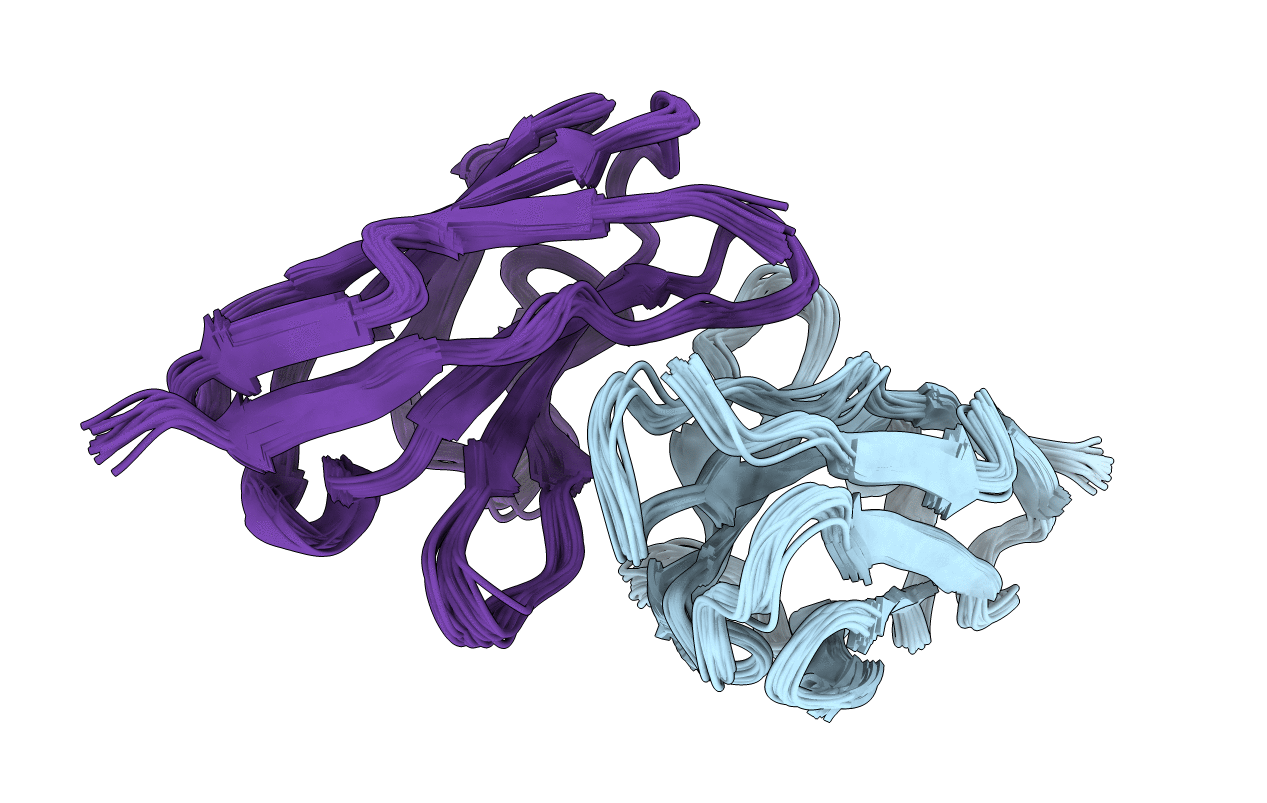
2KQM image
Deposition Date 2009-11-11
Release Date 2010-03-16
Last Version Date 2024-10-30
Entry Detail
PDB ID:
2KQM
Keywords:
Title:
Solution structure of the KI O18/O8 Y87H immunoglobulin light chain variable domain
Biological Source:
Source Organism(s):
Homo sapiens (Taxon ID: 9606)
Expression System(s):
Method Details:
Experimental Method:
Conformers Calculated:
100
Conformers Submitted:
20
Selection Criteria:
target function
Macromolecular Entities
Polymer Type:polypeptide(L)
Molecule:Ig kappa chain V-I region AU
Mutagens:Y87H
Chain IDs:A, B
Chain Length:110
Number of Molecules:2
Biological Source:Homo sapiens
Ligand Molecules
Primary Citation
A single mutation promotes amyloidogenicity through a highly promiscuous dimer interface.
Structure 18 563 570 (2010)
PMID: 20462490 DOI: 10.1016/j.str.2010.02.012

Abstact

Light chain amyloidosis is a devastating protein misfolding disease characterized by the accumulation of amyloid fibrils that causes tissue damage and organ failure. These fibrils are composed of monoclonal light chain protein secreted from an abnormal proliferation of bone marrow plasma cells. We previously reported that amyloidogenic light chain protein AL-09 adopts an altered dimer while its germline protein (kappaI O18/O8) forms a canonical dimer observed in other light chain crystal structures. In solution, conformational heterogeneity obscures all NMR signals at the AL-09 and kappaI O18/O8 dimer interfaces, so we solved the nuclear magnetic resonance structure of two related mutants. AL-09 H87Y adopts the normal dimer interface, but the kappaI Y87H solution structure presents an altered interface rotated 180 degrees relative to the canonical dimer interface and 90 degrees from the AL-09 arrangement. Our results suggest that promiscuity in the light chain dimer interface may promote new intermolecular contacts that may contribute to amyloid fibril structure.

Legend

Protein

Chemical

Disease

Primary Citation of related structures
Feedback Form
Name
Email
Institute
Feedback