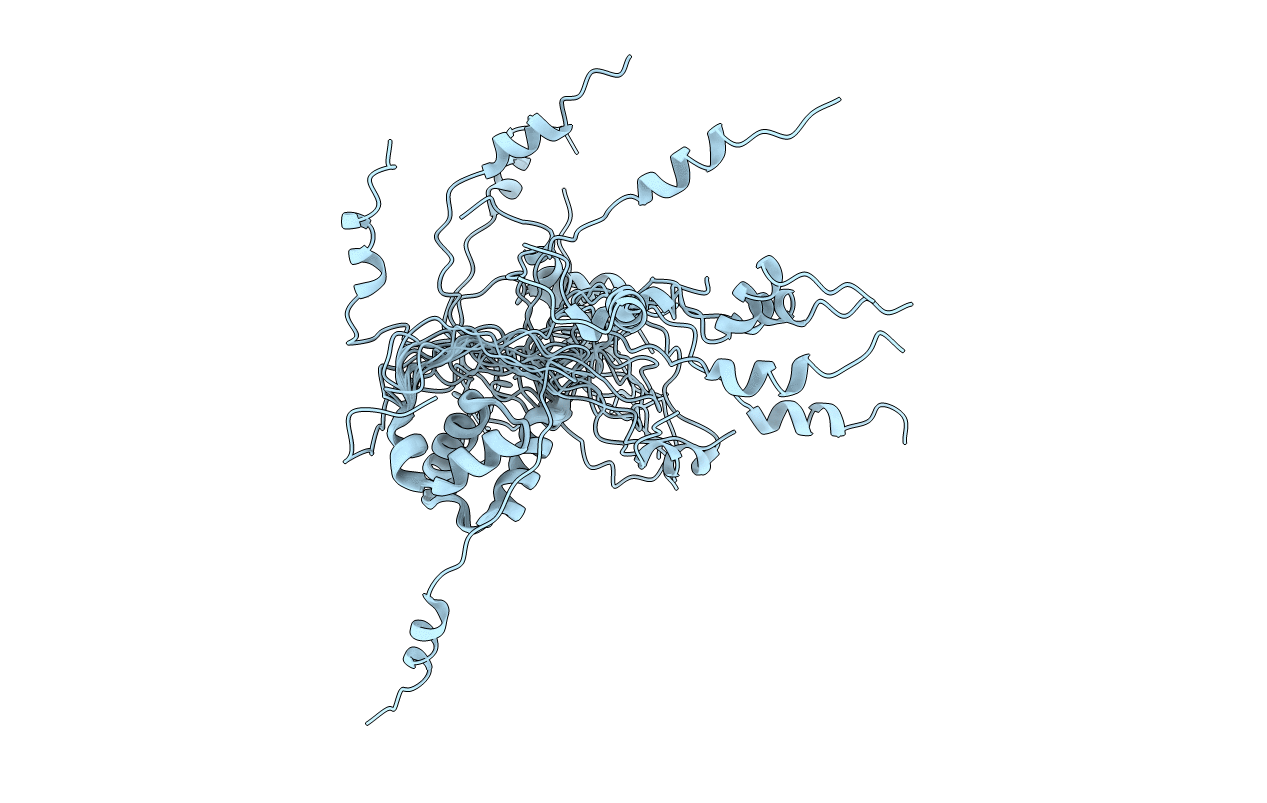
2KNA image
Deposition Date 2009-08-20
Release Date 2010-09-01
Last Version Date 2024-05-01
Entry Detail
PDB ID:
2KNA
Keywords:
Title:
Solution structure of UBA domain of XIAP
Biological Source:
Source Organism:
Homo sapiens (Taxon ID: 9606)
Host Organism:
Method Details:
Experimental Method:
Conformers Calculated:
300
Conformers Submitted:
15
Selection Criteria:
structures with the lowest energy
Macromolecular Entities
Structures with similar UniProt ID
Protein Blast
Polymer Type:polypeptide(L)
Molecule:Baculoviral IAP repeat-containing protein 4
Gene (Uniprot):XIAP
Chain IDs:A
Chain Length:104
Number of Molecules:1
Biological Source:Homo sapiens
Ligand Molecules
Primary Citation
Backbone and side-chain 1H, 13C and 15N assignments of the ubiquitin-associated domain of human X-linked inhibitor of apoptosis protein
Biomol.Nmr Assign. 4 13 15 (2010)
PMID: 19916060 DOI: 10.1007/s12104-009-9197-x

Abstact

X-linked inhibitor of apoptosis protein (XIAP), a leading member of the family of inhibitor of apoptosis (IAP) proteins, is considered as the most potent and versatile inhibitor of caspases and apoptosis. It has been reported that XIAP is frequently overexpressed in cancer and its expression level is implicated in contributing to tumorigenesis, disease progression, chemoresistance and poor patient-survival. Therefore, XIAP is one of the leading targets in drug development for cancer therapy. Recently, based on bioinformatics study, a previously unrecognized but evolutionarily conserved ubiquitin-associated (UBA) domain in IAPs was identified. The UBA domain is found to be essential for the oncogenic potential of IAP, to maintain endothelial cell survival and to protect cells from TNF-alpha-induced apoptosis. Moreover, the UBA domain is required for XIAP to activate NF-kappaB. In the present study, we report the near complete resonance assignments of the UBA domain-containing region of human XIAP protein. Secondary structure prediction based on chemical shift index (CSI) analysis reveals that the protein is predominately alpha-helical, which is consistent with the structures of known UBA proteins.

Legend

Protein

Chemical

Disease

Primary Citation of related structures
Feedback Form
Name
Email
Institute
Feedback