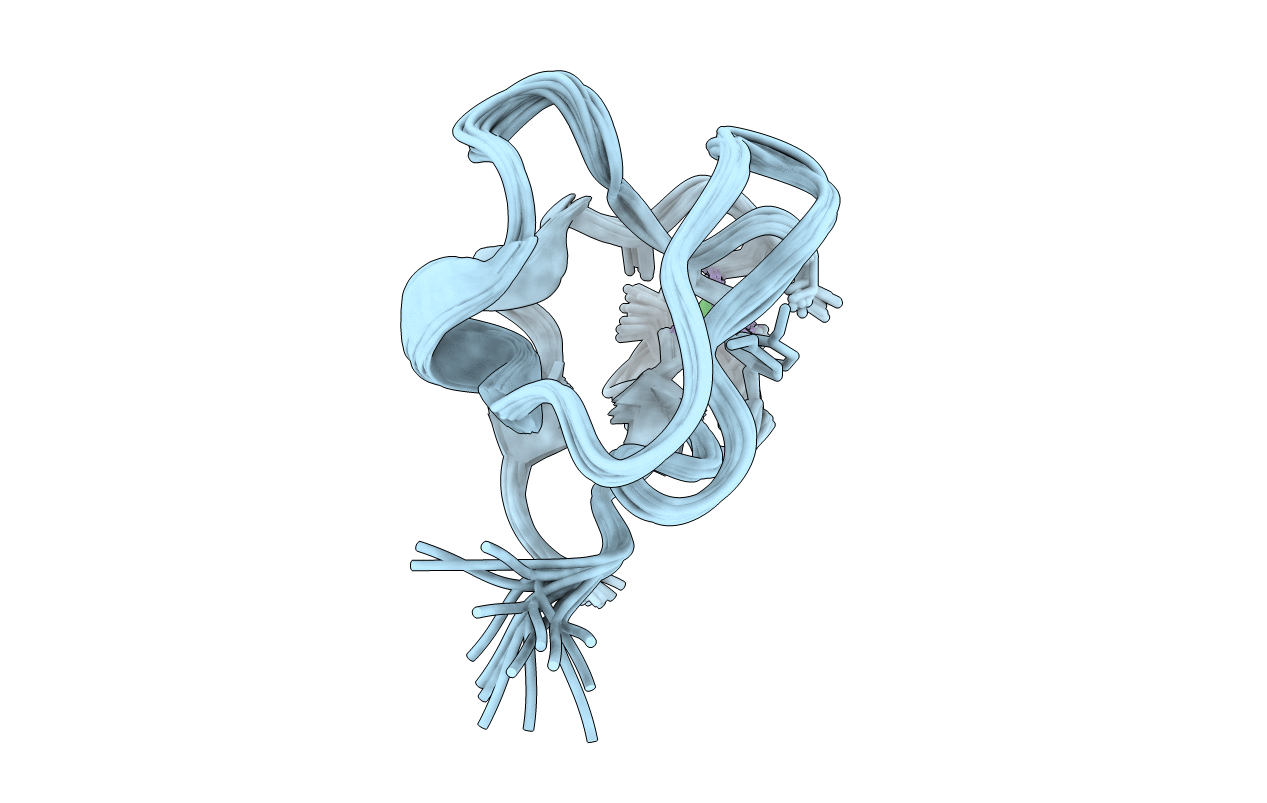
2KKD image
Deposition Date 2009-06-18
Release Date 2009-12-22
Last Version Date 2024-05-22
Entry Detail
PDB ID:
2KKD
Title:
NMR Structure of Ni Substitued Desulfovibrio vulgaris Rubredoxin
Biological Source:
Source Organism:
Host Organism:
Method Details:
Experimental Method:
Conformers Calculated:
400
Conformers Submitted:
15
Selection Criteria:
target function
Macromolecular Entities
Structures with similar UniProt ID
Protein Blast
Polymer Type:polypeptide(L)
Molecule:Rubredoxin
Gene (Uniprot):rub
Chain IDs:A
Chain Length:52
Number of Molecules:1
Biological Source:Desulfovibrio vulgaris str. Hildenborough
Ligand Molecules
Primary Citation
An NMR structural study of nickel-substituted rubredoxin
J.Biol.Inorg.Chem. 15 409 420 (2010)
PMID: 19997764 DOI: 10.1007/s00775-009-0613-6

Abstact

The Ni(II) and Zn(II) derivatives of Desulfovibrio vulgaris rubredoxin (DvRd) have been studied by NMR spectroscopy to probe the structure at the metal centre. The beta CH(2) proton pairs from the cysteines that bind the Ni(II) atom have been identified using 1D nuclear Overhauser enhancement (NOE) difference spectra and sequence specifically assigned via NOE correlations to neighbouring protons and by comparison with the published X-ray crystal structure of a Ni(II) derivative of Clostridium pasteurianum rubredoxin. The solution structures of DvRd(Zn) and DvRd(Ni) have been determined and the paramagnetic form refined using pseudocontact shifts. The determination of the magnetic susceptibility anisotropy tensor allowed the contact and pseudocontact contributions to the observed chemical shifts to be obtained. Analysis of the pseudocontact and contact chemical shifts of the cysteine H beta protons and backbone protons close to the metal centre allowed conclusions to be drawn as to the geometry and hydrogen-bonding pattern at the metal binding site. The importance of NH-S hydrogen bonds at the metal centre for the delocalization of electron spin density is confirmed for rubredoxins and can be extrapolated to metal centres in Cu proteins: amicyanin, plastocyanin, stellacyanin, azurin and pseudoazurin.

Legend

Protein

Chemical

Disease

Primary Citation of related structures
Feedback Form
Name
Email
Institute
Feedback