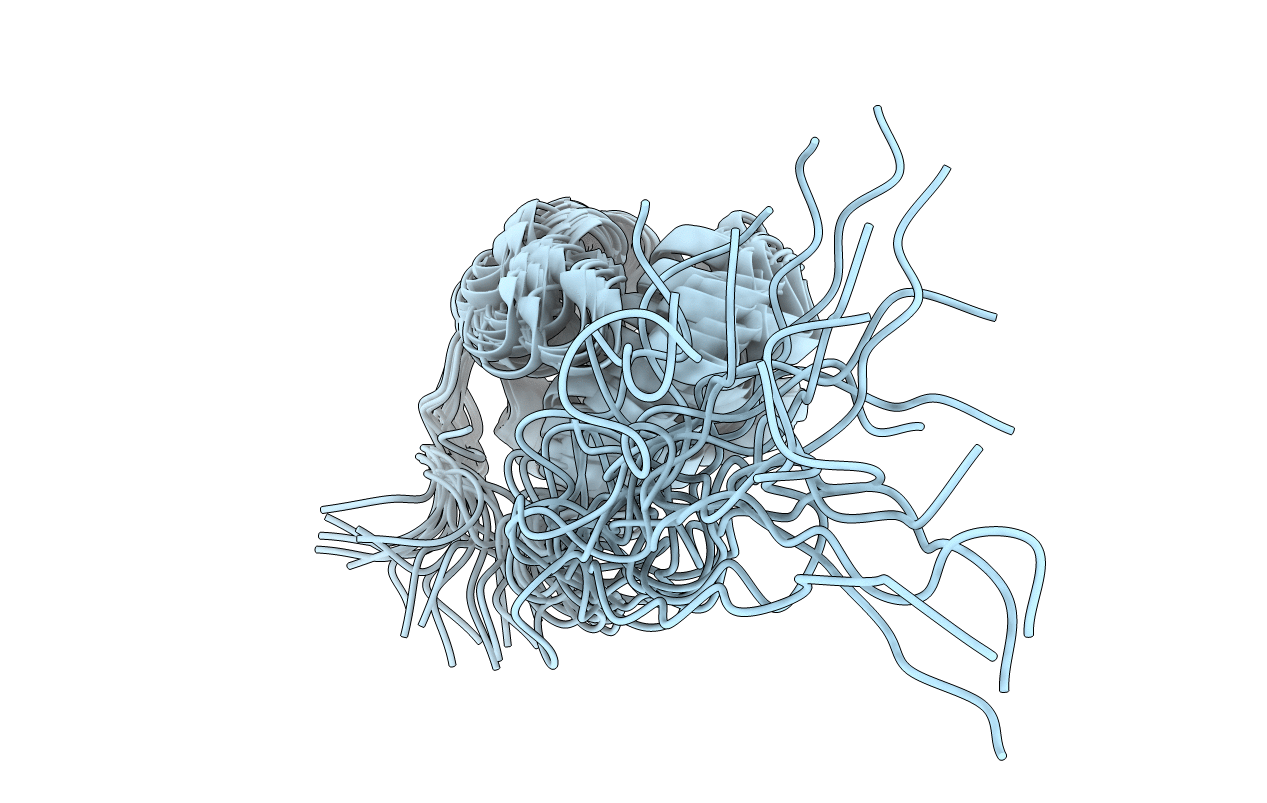
2KG5 image
Deposition Date 2009-03-05
Release Date 2009-11-17
Last Version Date 2024-05-22
Entry Detail
PDB ID:
2KG5
Title:
NMR Solution structure of ARAP3-SAM
Biological Source:
Source Organism(s):
Homo sapiens (Taxon ID: 9606)
Expression System(s):
Method Details:
Experimental Method:
Conformers Calculated:
100
Conformers Submitted:
20
Selection Criteria:
target function

Macromolecular Entities
Structures with similar UniProt ID
Protein Blast
Polymer Type:polypeptide(L)
Molecule:Arf-GAP, Rho-GAP domain, ANK repeat and PH domain-containing protein 3
Gene (Uniprot):ARAP3
Chain IDs:A
Chain Length:100
Number of Molecules:1
Biological Source:Homo sapiens
Ligand Molecules
Primary Citation
The Sam domain of the lipid phosphatase Ship2 adopts a common model to interact with Arap3-Sam and EphA2-Sam.
Bmc Struct.Biol. 9 59 59 (2009)
PMID: 19765305 DOI: 10.1186/1472-6807-9-59

Abstact

BACKGROUND Sterile alpha motif (Sam) domains are small protein modules that can be involved in homotypic or heterotypic associations and exhibit different functions. Previous studies have demonstrated that the Sam domain of the lipid phosphatase Ship2 can hetero-dimerize with the Sam domain of the PI3K effector protein Arap3. RESULTS Here, we determine the NMR solution structure of Arap3-Sam and implement a multidisciplinary approach consisting of NMR spectroscopy, ITC (Isothermal Titration Calorimetry), mutagenesis and molecular modeling studies to analyze the interaction between Ship2-Sam and Arap3-Sam. This work reveals that Arap3-Sam may associate with Ship2-Sam by adopting a binding mode common to other Sam domains. This binding mode is identical to what we have very recently observed for the association between Ship2-Sam and the Sam domain from the Ephrin A2 receptor. CONCLUSION Our studies further clarify the structural features that are relevant for Sam-Sam interactions involving Ship2 and give additional hints that could be used for the identification of new molecules able to selectively inhibit Sam-Sam associations.

Legend

Protein

Chemical

Disease

Primary Citation of related structures
Feedback Form
Name
Email
Institute
Feedback