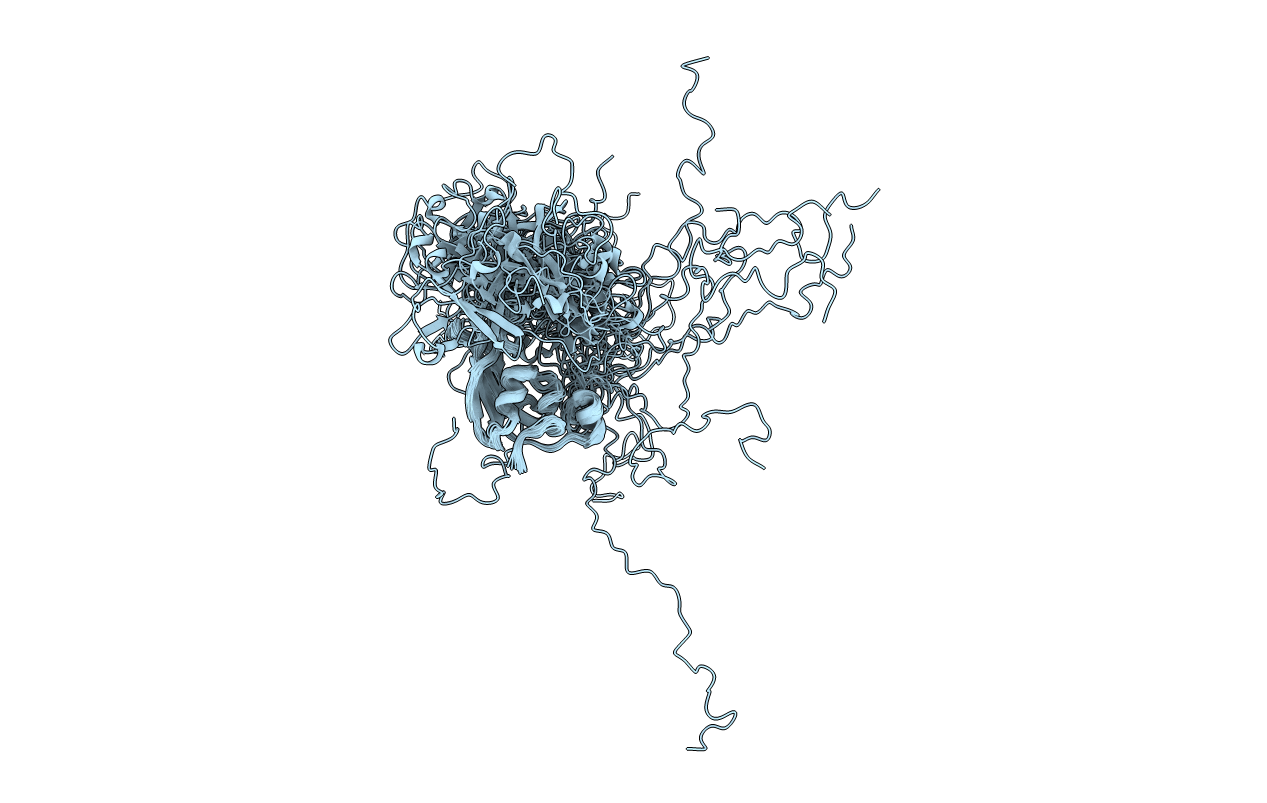
2KFW image
Deposition Date 2009-02-28
Release Date 2009-09-15
Last Version Date 2024-05-01
Entry Detail
PDB ID:
2KFW
Keywords:
Title:
Solution structure of full-length SlyD from E.coli
Biological Source:
Source Organism:
Escherichia coli (Taxon ID: 562)
Host Organism:
Method Details:
Experimental Method:
Conformers Calculated:
100
Conformers Submitted:
20
Selection Criteria:
structures with the lowest energy

Macromolecular Entities
Structures with similar UniProt ID
Protein Blast
Polymer Type:polypeptide(L)
Molecule:FKBP-type peptidyl-prolyl cis-trans isomerase slyD
Gene (Uniprot):slyD
Chain IDs:A
Chain Length:196
Number of Molecules:1
Biological Source:Escherichia coli
Ligand Molecules
Primary Citation
The interaction of the Escherichia coli protein SlyD with nickel ions illuminates the mechanism of regulation of its peptidyl-prolyl isomerase activity.
Febs J. 276 4529 4544 (2009)
PMID: 19645725 DOI: 10.1111/j.1742-4658.2009.07159.x

Abstact

The sensitive to lysis D (SlyD) protein from Escherichia coli is related to the FK506-binding protein family, and it harbours both peptidyl-prolyl cis-trans isomerase (PPIase) and chaperone-like activity, preventing aggregation and promoting the correct folding of other proteins. Whereas a functional role of SlyD as a protein-folding catalyst in vivo remains unclear, SlyD has been shown to be an essential component for [Ni-Fe]-hydrogenase metallocentre assembly in bacteria. Interestingly, the isomerase activity of SlyD is uniquely modulated by nickel ions, which possibly regulate its functions in response to external stimuli. In this work, we investigated the solution structure of SlyD and its interaction with nickel ions, enabling us to gain insights into the molecular mechanism of this regulation. We have revealed that the PPIase module of SlyD contains an additional C-terminal alpha-helix packed against the catalytic site of the domain; unexpectedly, our results show that the interaction of SlyD with nickel ions entails participation of the novel structural features of the PPIase domain, eliciting structural alterations of the catalytic pocket. We suggest that such conformational rearrangements upon metal binding underlie the ability of nickel ions to regulate the isomerase activity of SlyD.

Legend

Protein

Chemical

Disease

Primary Citation of related structures
Feedback Form
Name
Email
Institute
Feedback