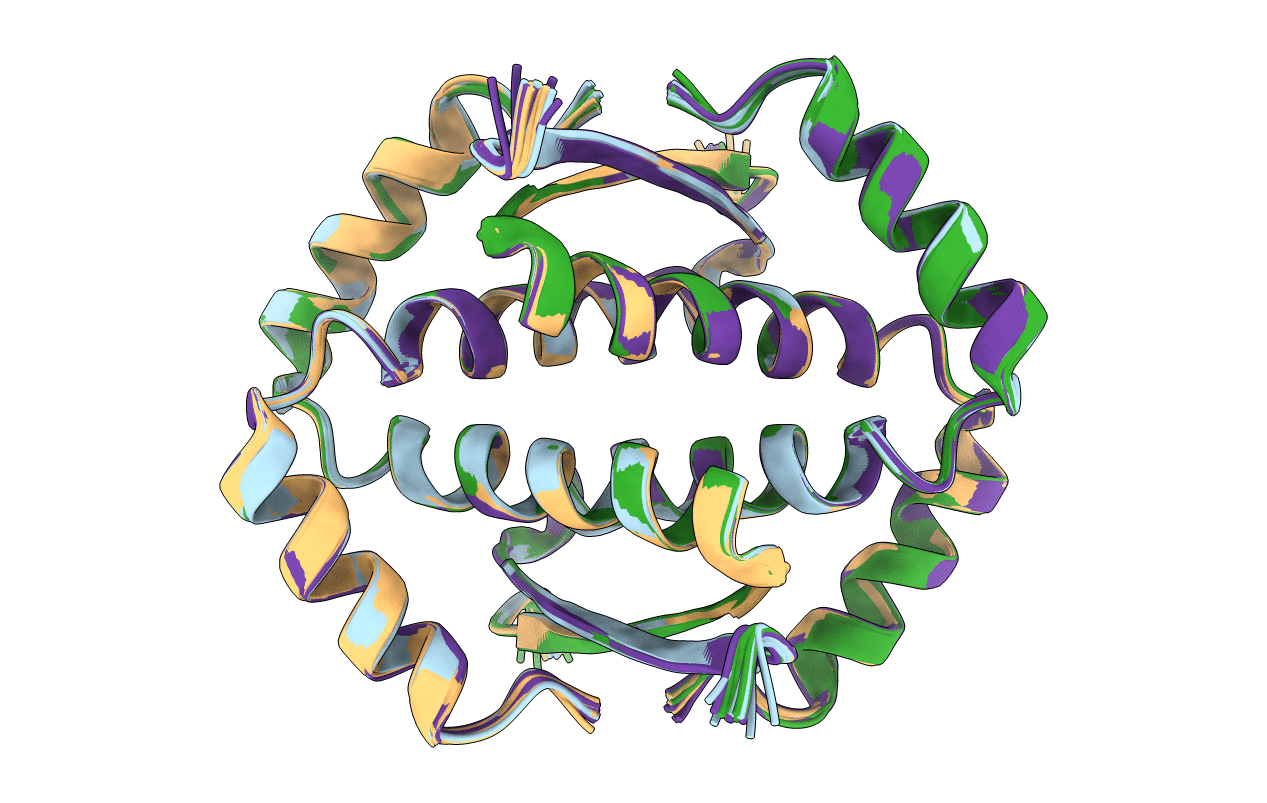
2KBY image
Deposition Date 2008-12-12
Release Date 2009-09-29
Last Version Date 2024-05-29
Entry Detail
PDB ID:
2KBY
Keywords:
Title:
The Tetramerization Domain of Human p73
Biological Source:
Source Organism:
Homo sapiens (Taxon ID: 9606)
Host Organism:
Method Details:
Experimental Method:
Conformers Calculated:
100
Conformers Submitted:
20
Selection Criteria:
structures with the lowest energy
Macromolecular Entities
Structures with similar UniProt ID
Protein Blast
Polymer Type:polypeptide(L)
Molecule:Tumor protein p73
Gene (Uniprot):TP73
Chain IDs:A, B, C, D
Chain Length:50
Number of Molecules:4
Biological Source:Homo sapiens
Ligand Molecules
Primary Citation
Conformational stability and activity of p73 require a second helix in the tetramerization domain.
Cell Death Differ. 16 1582 1589 (2009)
PMID: 19763140 DOI: 10.1038/cdd.2009.139

Abstact

p73 and p63, the two ancestral members of the p53 family, are involved in neurogenesis, epithelial stem cell maintenance and quality control of female germ cells. The highly conserved oligomerization domain (OD) of tumor suppressor p53 is essential for its biological functions, and its structure was believed to be the prototype for all three proteins. However, we report that the ODs of p73 and p63 differ from the OD of p53 by containing an additional alpha-helix that is not present in the structure of the p53 OD. Deletion of this helix causes a dissociation of the OD into dimers; it also causes conformational instability and reduces the transcriptional activity of p73. Moreover, we show that ODs of p73 and p63 strongly interact and that a large number of different heterotetramers are supported by the additional helix. Detailed analysis shows that the heterotetramer consisting of two homodimers is thermodynamically more stable than the two homotetramers. No heterooligomerization between p53 and the p73/p63 subfamily was observed, supporting the notion of functional orthogonality within the p53 family.

Legend

Protein

Chemical

Disease

Primary Citation of related structures
Feedback Form
Name
Email
Institute
Feedback