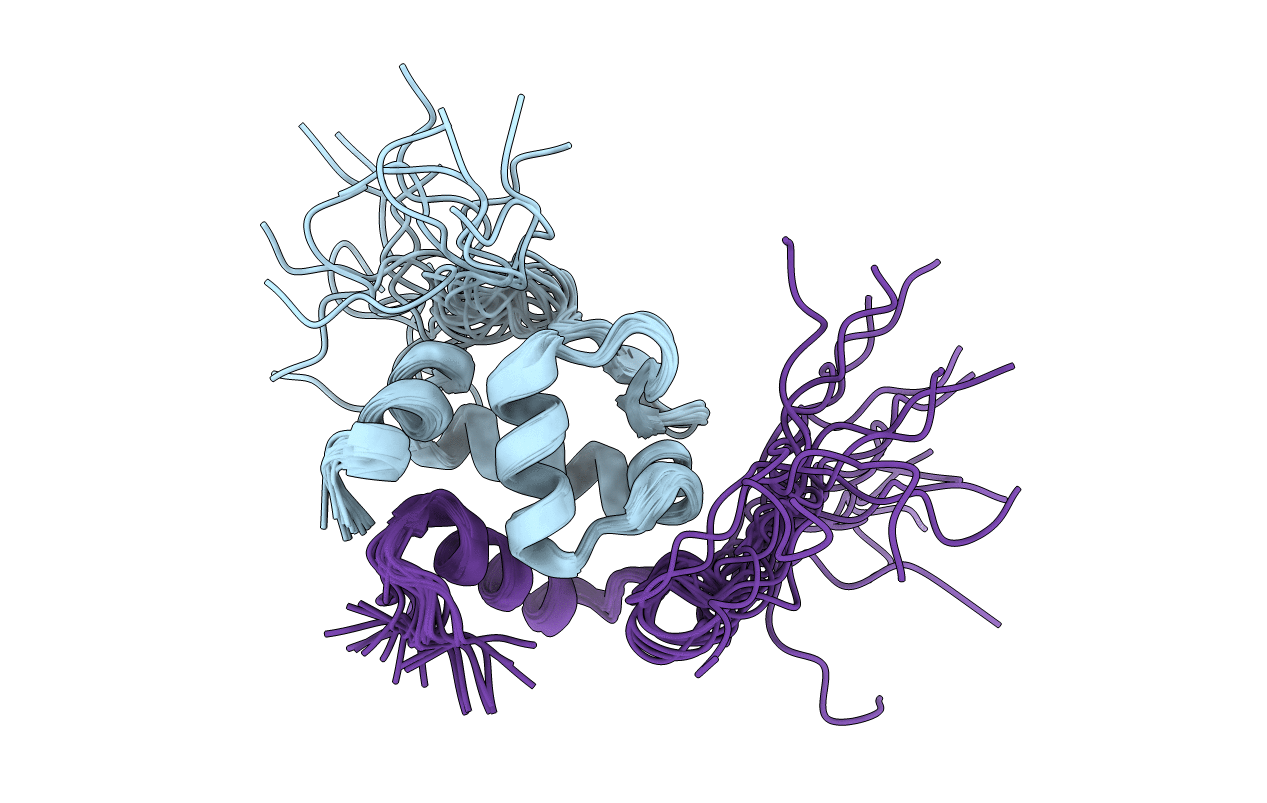
2K42 image
Deposition Date 2008-05-27
Release Date 2008-07-22
Last Version Date 2024-05-29
Entry Detail
PDB ID:
2K42
Title:
Solution Structure of the GTPase Binding Domain of WASP in Complex with EspFU, an EHEC Effector
Biological Source:
Source Organism:
Host Organism:
Method Details:
Experimental Method:
Conformers Calculated:
50
Conformers Submitted:
20
Selection Criteria:
structures with the least restraint violations
Macromolecular Entities
Structures with similar UniProt ID
Protein Blast
Polymer Type:polypeptide(L)
Molecule:Wiskott-Aldrich syndrome protein
Gene (Uniprot):WAS
Chain IDs:A
Chain Length:72
Number of Molecules:1
Biological Source:Homo sapiens
Polymer Type:polypeptide(L)
Molecule:ESPFU
Chain IDs:B
Chain Length:36
Number of Molecules:1
Biological Source:Escherichia coli O157:H7
Ligand Molecules
Primary Citation
Structural mechanism of WASP activation by the enterohaemorrhagic E. coli effector EspF(U).
Nature 454 1009 1013 (2008)
PMID: 18650809 DOI: 10.1038/nature07160

Abstact

During infection, enterohaemorrhagic Escherichia coli (EHEC) takes over the actin cytoskeleton of eukaryotic cells by injecting the EspF(U) protein into the host cytoplasm. EspF(U) controls actin by activating members of the Wiskott-Aldrich syndrome protein (WASP) family. Here we show that EspF(U) binds to the autoinhibitory GTPase binding domain (GBD) in WASP proteins and displaces it from the activity-bearing VCA domain (for verprolin homology, central hydrophobic and acidic regions). This interaction potently activates WASP and neural (N)-WASP in vitro and induces localized actin assembly in cells. In the solution structure of the GBD-EspF(U) complex, EspF(U) forms an amphipathic helix that binds the GBD, mimicking interactions of the VCA domain in autoinhibited WASP. Thus, EspF(U) activates WASP by competing directly for the VCA binding site on the GBD. This mechanism is distinct from that used by the eukaryotic activators Cdc42 and SH2 domains, which globally destabilize the GBD fold to release the VCA. Such diversity of mechanism in WASP proteins is distinct from other multimodular systems, and may result from the intrinsically unstructured nature of the isolated GBD and VCA elements. The structural incompatibility of the GBD complexes with EspF(U) and Cdc42/SH2, plus high-affinity EspF(U) binding, enable EHEC to hijack the eukaryotic cytoskeletal machinery effectively.

Legend

Protein

Chemical

Disease

Primary Citation of related structures
Feedback Form
Name
Email
Institute
Feedback