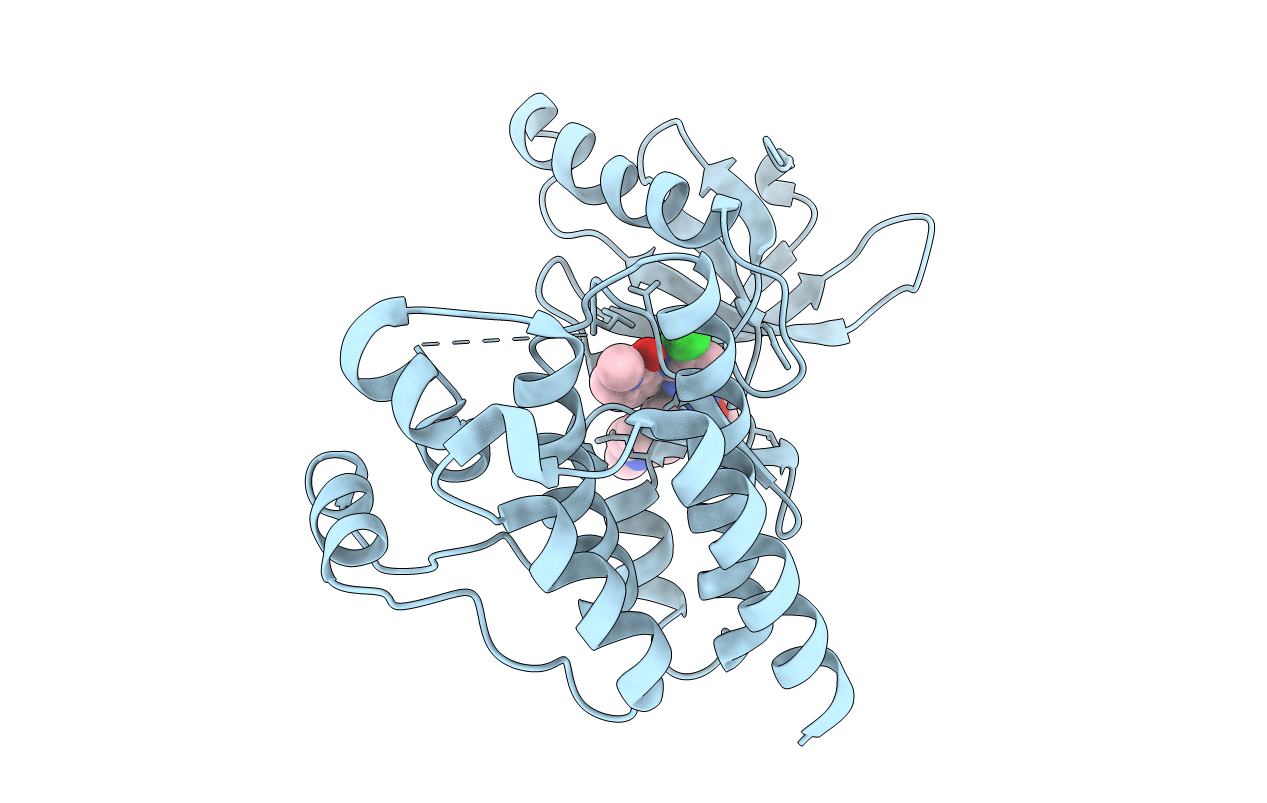
2JKO image
Deposition Date 2008-08-28
Release Date 2008-09-09
Last Version Date 2024-11-06
Entry Detail
PDB ID:
2JKO
Keywords:
Title:
Focal Adhesion Kinase catalytic domain in complex with bis-anilino pyrimidine inhibitor
Biological Source:
Source Organism:
GALLUS GALLUS (Taxon ID: 9031)
Host Organism:
Method Details:
Experimental Method:
Resolution:
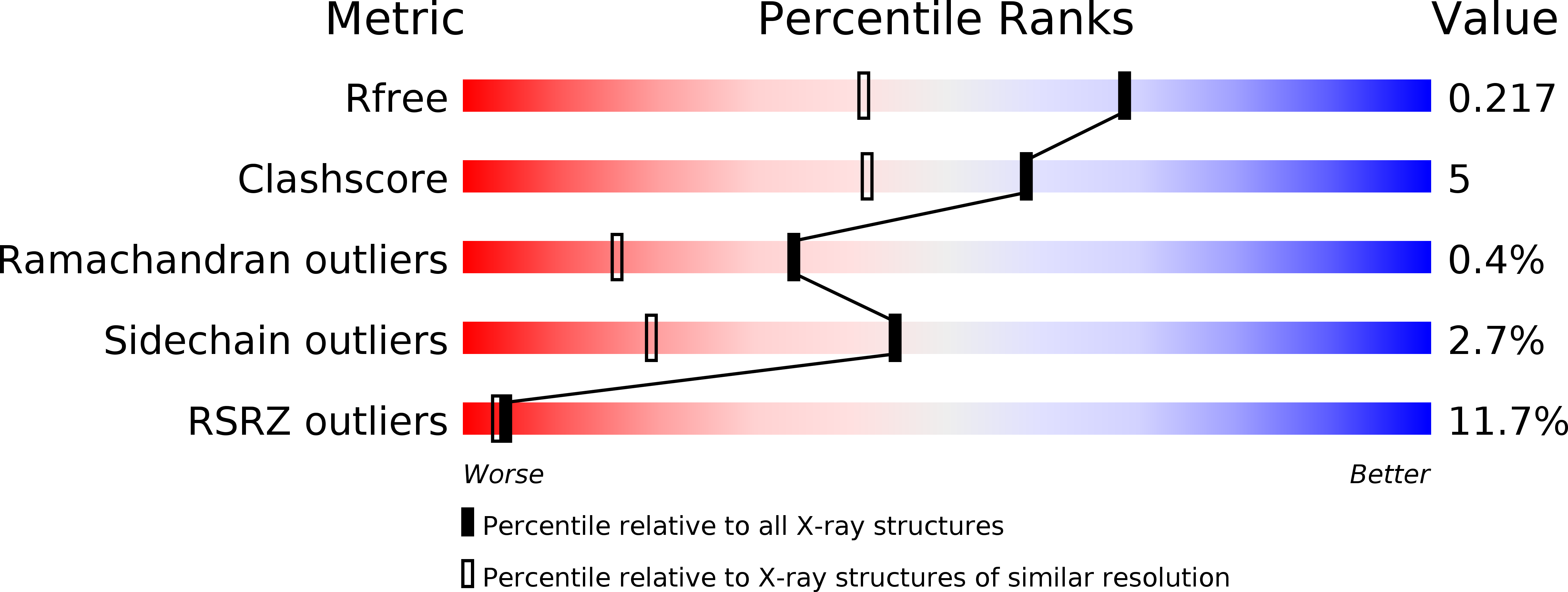
1.65 Å
R-Value Free:
0.21
R-Value Work:
0.18
R-Value Observed:
0.18
Space Group:
P 1 21 1
Macromolecular Entities
Structures with similar UniProt ID
Protein Blast
Polymer Type:polypeptide(L)
Molecule:FOCAL ADHESION KINASE 1
Gene (Uniprot):PTK2
Chain IDs:A
Chain Length:276
Number of Molecules:1
Biological Source:GALLUS GALLUS
Ligand Molecules
Primary Citation
Crystal Structures of the Fak Kinase in Complex with Tae226 and Related Bis-Anilino Pyrimidine Inhibitors Reveal a Helical Dfg Conformation.
Plos One 3 E3800 ? (2008)
PMID: 19030106 DOI: 10.1371/JOURNAL.PONE.0003800

Abstact

Focal Adhesion Kinase (FAK) is a non-receptor tyrosine kinase required for cell migration, proliferation and survival. FAK overexpression has been documented in diverse human cancers and is associated with a poor clinical outcome. Recently, a novel bis-anilino pyrimidine inhibitor, TAE226, was reported to efficiently inhibit FAK signaling, arrest tumor growth and invasion and prolong the life of mice with glioma or ovarian tumor implants. Here we describe the crystal structures of the FAK kinase bound to TAE226 and three related bis-anilino pyrimidine compounds. TAE226 induces a conformation of the N-terminal portion of the kinase activation loop that is only observed in FAK, but is distinct from the conformation in both the active and inactive states of the kinase. This conformation appears to require a glycine immediately N-terminal to the "DFG motif", which adopts a helical conformation stabilized by interactions with TAE226. The presence of a glycine residue in this position contributes to the specificity of TAE226 and related compounds for FAK. Our work highlights the fact that kinases can access conformational space that is not necessarily utilized for their native catalytic regulation, and that such conformations can explain and be exploited for inhibitor specificity.

Legend

Protein

Chemical

Disease

Primary Citation of related structures
Feedback Form
Name
Email
Institute
Feedback