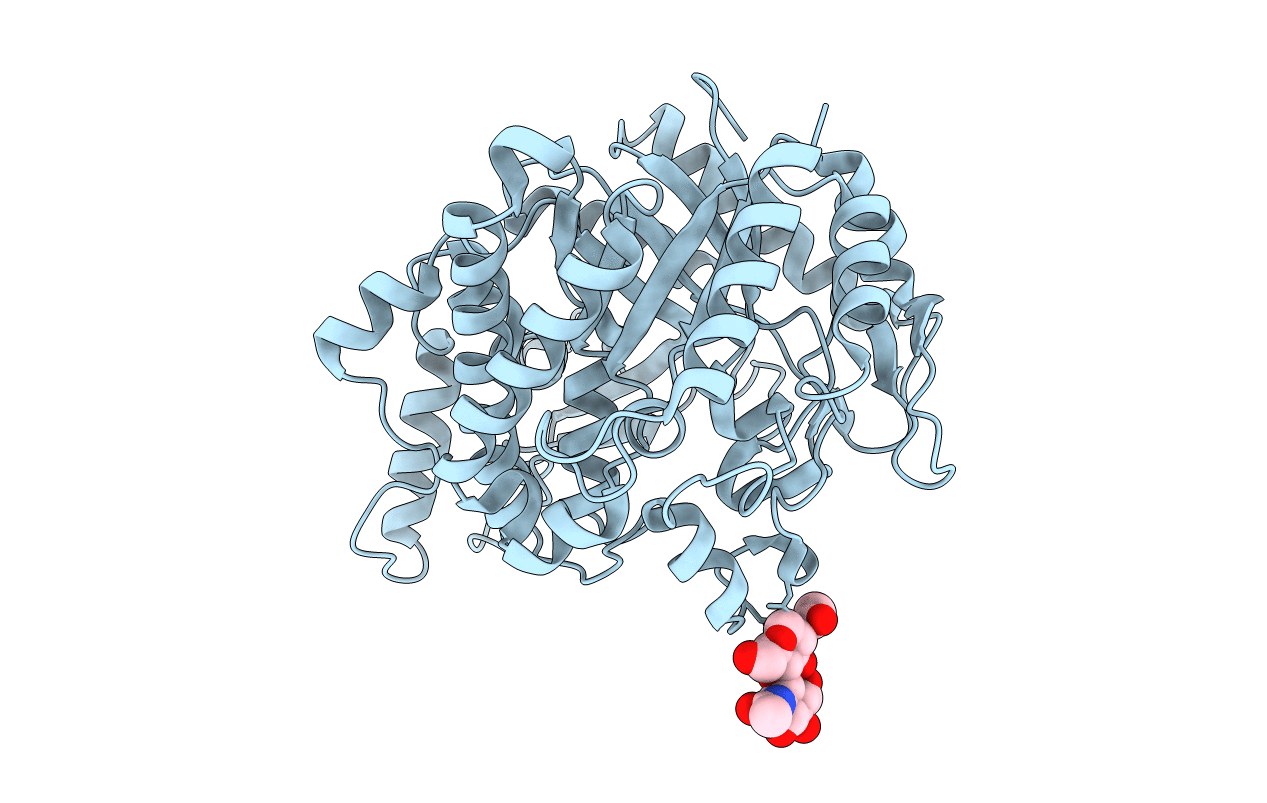
2JFE image
Deposition Date 2007-01-31
Release Date 2007-06-19
Last Version Date 2024-10-09
Entry Detail
PDB ID:
2JFE
Keywords:
Title:
The crystal structure of human cytosolic beta-glucosidase
Biological Source:
Source Organism(s):
HOMO SAPIENS (Taxon ID: 9606)
Expression System(s):
Method Details:
Experimental Method:
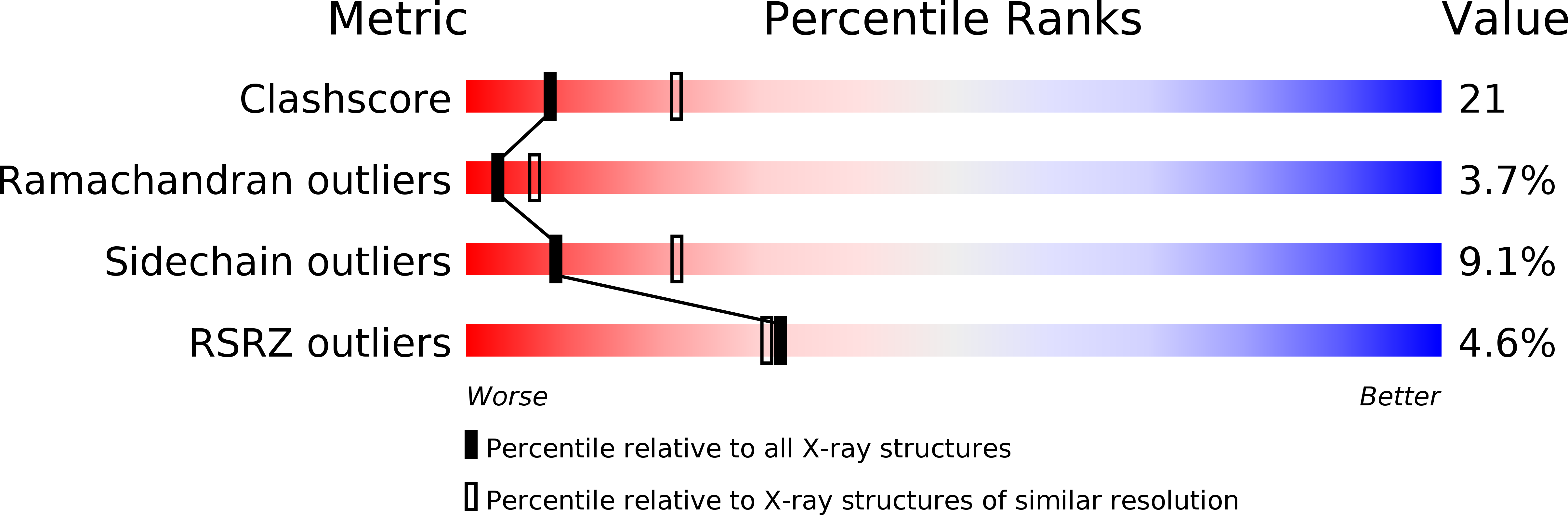
Resolution:
2.70 Å
R-Value Free:
0.28
R-Value Work:
0.19
R-Value Observed:
0.20
Space Group:
P 31 2 1
Macromolecular Entities
Structures with similar UniProt ID
Protein Blast
Polymer Type:polypeptide(L)
Molecule:CYTOSOLIC BETA-GLUCOSIDASE
Gene (Uniprot):GBA3
Chain IDs:A (auth: X)
Chain Length:469
Number of Molecules:1
Biological Source:HOMO SAPIENS
Modified Residue
Compound ID Chain ID Parent Comp ID Details 2D Image
ASN A ASN GLYCOSYLATION SITE
Primary Citation
The Crystal Structure of Human Cytosolic Beta-Glucosidase Unravels the Substrate Aglycone Specificity of a Family 1 Glycoside Hydrolase
J.Mol.Biol. 370 964 ? (2007)
PMID: 17555766 DOI: 10.1016/J.JMB.2007.05.034

Abstact

Human cytosolic beta-glucosidase (hCBG) is a xenobiotic-metabolizing enzyme that hydrolyses certain flavonoid glucosides, with specificity depending on the aglycone moiety, the type of sugar and the linkage between them. In this study, the substrate preference of this enzyme was investigated by mutational analysis, X-ray crystallography and homology modelling. The crystal structure of hCBG was solved by the molecular replacement method and refined at 2.7 A resolution. The main-chain fold of the enzyme belongs to the (beta/alpha)(8) barrel structure, which is common to family 1 glycoside hydrolases. The active site is located at the bottom of a pocket (about 16 A deep) formed by large surface loops, surrounding the C termini of the barrel of beta-strands. As for all the clan of GH-A enzymes, the two catalytic glutamate residues are located on strand 4 (the acid/base Glu165) and on strand 7 (the nucleophile Glu373). Although many features of hCBG were shown to be very similar to previously described enzymes from this family, crucial differences were observed in the surface loops surrounding the aglycone binding site, and these are likely to strongly influence the substrate specificity. The positioning of a substrate molecule (quercetin-4'-glucoside) by homology modelling revealed that hydrophobic interactions dominate the binding of the aglycone moiety. In particular, Val168, Trp345, Phe225, Phe179, Phe334 and Phe433 were identified as likely to be important in determining substrate specificity in hCBG, and site-directed mutagenesis supported a key role for some of these residues.

Legend

Protein

Chemical

Disease

Primary Citation of related structures
Feedback Form
Name
Email
Institute
Feedback