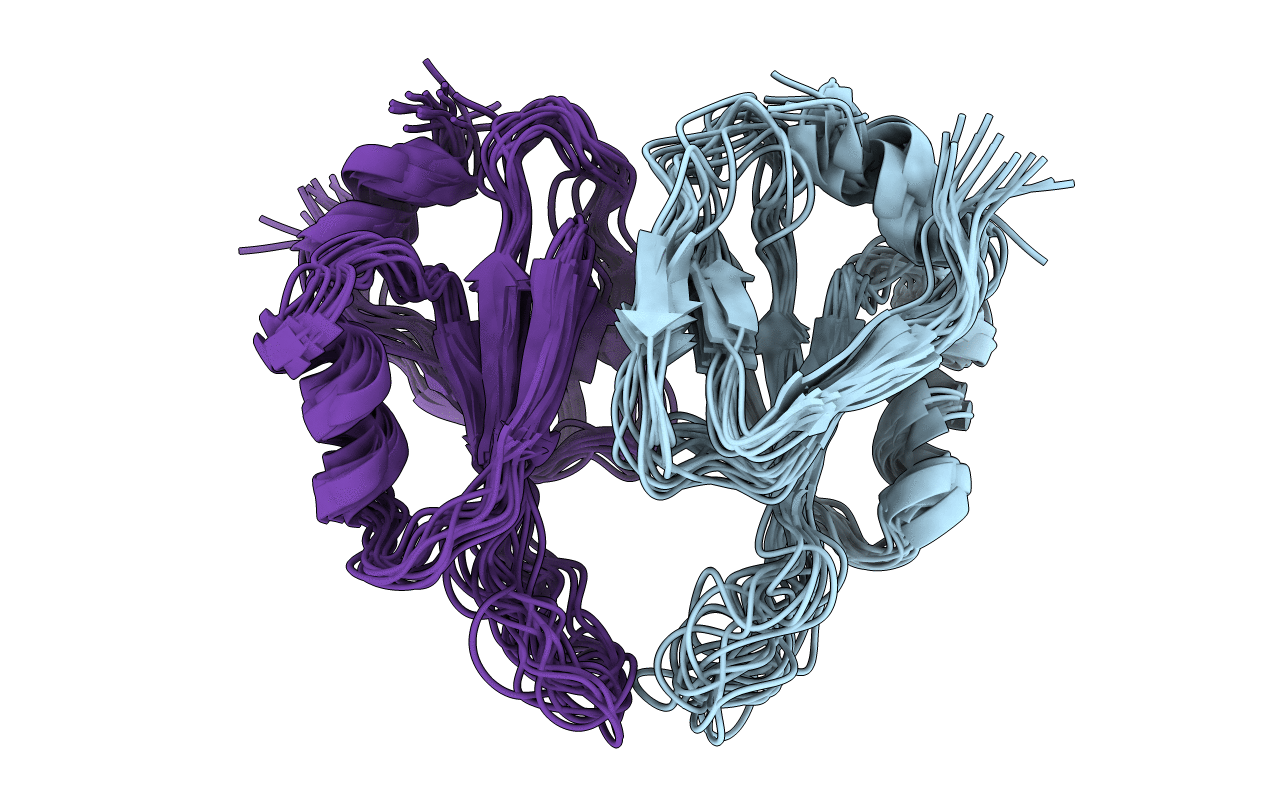
2J8L image
Deposition Date 2006-10-25
Release Date 2007-10-02
Last Version Date 2024-10-16
Entry Detail
PDB ID:
2J8L
Keywords:
Title:
FXI Apple 4 domain loop-out conformation
Biological Source:
Source Organism:
HOMO SAPIENS (Taxon ID: 9606)
Method Details:
Experimental Method:
Conformers Calculated:
1
Conformers Submitted:
14
Selection Criteria:
NO RESTRAINT VIOLATION AND LOWEST ENERGY
Macromolecular Entities
Structures with similar UniProt ID
Protein Blast
Polymer Type:polypeptide(L)
Molecule:COAGULATION FACTOR XI
Gene (Uniprot):F11
Chain IDs:A, B
Chain Length:90
Number of Molecules:2
Biological Source:HOMO SAPIENS
Ligand Molecules
Primary Citation
Solution Structure of the A4 Domain of Factor Xi Sheds Light on the Mechanism of Zymogen Activation.
Proc.Natl.Acad.Sci.USA 104 15693 ? (2007)
PMID: 17884987 DOI: 10.1073/PNAS.0703080104

Abstact

Factor XI (FXI) is a homodimeric blood coagulation protein. Each monomer comprises four tandem apple-domain repeats (A1-A4) and a serine protease domain. We report here the NMR solution structure of the A4 domain (residues 272-361), which mediates formation of the disulfide-linked FXI dimer. A4 exhibits characteristic features of the plasminogen apple nematode domain family, including a five-stranded beta-sheet flanked by an alpha-helix on one side and a two-stranded beta-sheet on the other. In addition, the solution structure reveals a second alpha-helix at the C terminus. Comparison with a recent crystal structure of full-length FXI, combined with molecular modeling, suggests that the C-terminal helix is formed only upon proteolytic activation. The newly formed helix disrupts interdomain contacts and reorients the catalytic domains, bringing the active sites into close proximity. This hypothesis is supported by small-angle x-ray scattering and electron microscopy data, which indicate that FXI activation is accompanied by a major change in shape. The results are consistent with biochemical evidence that activated FXI cleaves its substrate at two positions without release of an intermediate.

Legend

Protein

Chemical

Disease

Primary Citation of related structures
Feedback Form
Name
Email
Institute
Feedback