2J63 image
Deposition Date 2006-09-25
Release Date 2007-08-28
Last Version Date 2023-12-13
Entry Detail
PDB ID:
2J63
Keywords:
Title:
Crystal structure of AP endonuclease LMAP from Leishmania major
Biological Source:
Source Organism:
Host Organism:
Method Details:
Experimental Method:
Resolution:
2.48 Å
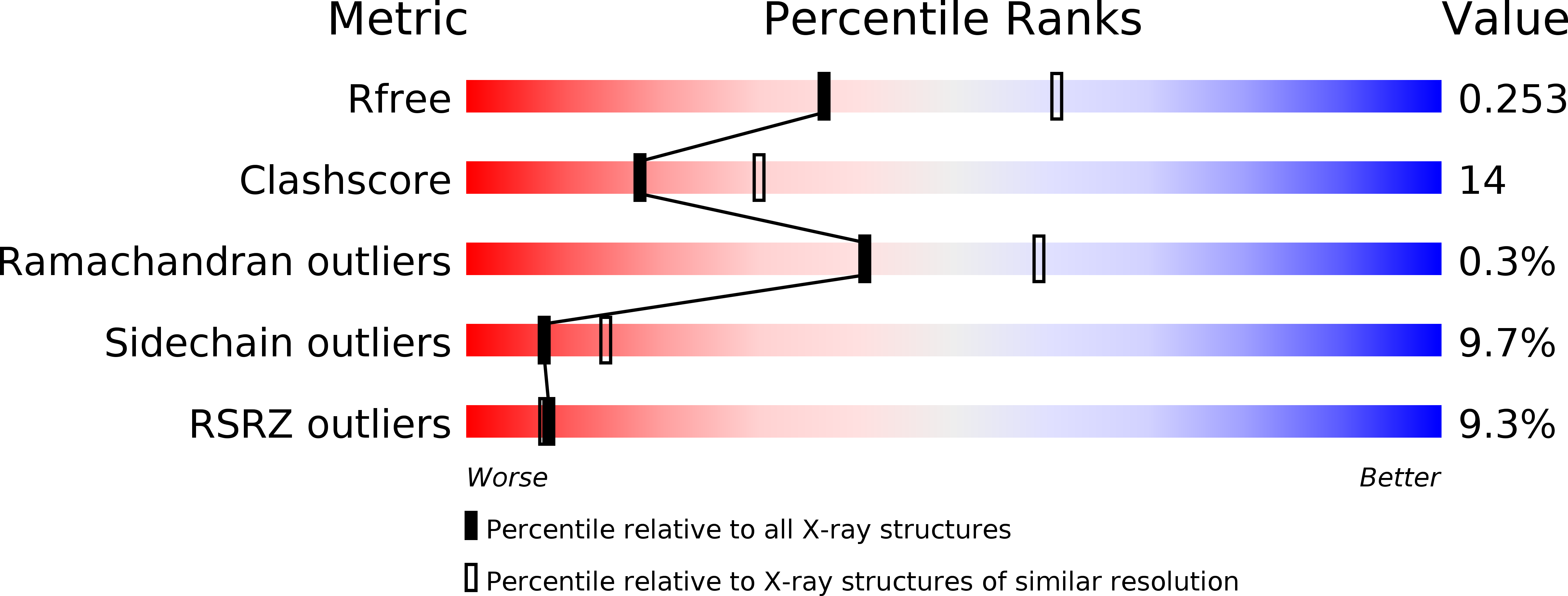
R-Value Free:
0.24
R-Value Work:
0.20
R-Value Observed:
0.20
Space Group:
C 1 2 1
Macromolecular Entities
Structures with similar UniProt ID
Protein Blast
Polymer Type:polypeptide(L)
Molecule:AP-ENDONUCLEASE
Gene (Uniprot):LmAP
Chain IDs:A, B
Chain Length:467
Number of Molecules:2
Biological Source:LEISHMANIA MAJOR
Primary Citation
Crystal Structure and DNA Repair Activities of the Ap Endonuclease from Leishmania Major.
J.Mol.Biol. 373 827 ? (2007)
PMID: 17870086 DOI: 10.1016/J.JMB.2007.08.001

Abstact

Apurinic/apyrimidinic endonucleases initiate the repair of abasic sites produced either spontaneously, from attack of bases by reactive oxygen species or as intermediates during base excision repair. The catalytic properties and crystal structure of Leishmania major apurinic/apyrimidinic endonuclease are described and compared with those of human APE1 and bacterial exonuclease III. The purified enzyme is shown to possess apurinic/apyrimidinic endonuclease activity of the same order as eukaryotic and prokaryotic counterparts and an equally robust 3'-phosphodiesterase activity. Consistent with this, expression of the L. major endonuclease confers resistance to both methyl methane sulphonate and H2O2 in Escherichia coli repair-deficient mutants while expression of the human homologue only reverts methyl methane sulphonate sensitivity. Structural analyses and modelling of the enzyme-DNA complex demonstrates a high degree of conservation to previously characterized homologues, although subtle differences in the active site geometry might account for the high 3'-phosphodiesterase activity. Our results confirm that the L. major's enzyme is a key element in mediating repair of apurinic/apyrimidinic sites and 3'-blocked termini and therefore must play an important role in the survival of kinetoplastid parasites after exposure to the highly oxidative environment within the host macrophage.

Legend

Protein

Chemical

Disease

Primary Citation of related structures
Feedback Form
Name
Email
Institute
Feedback