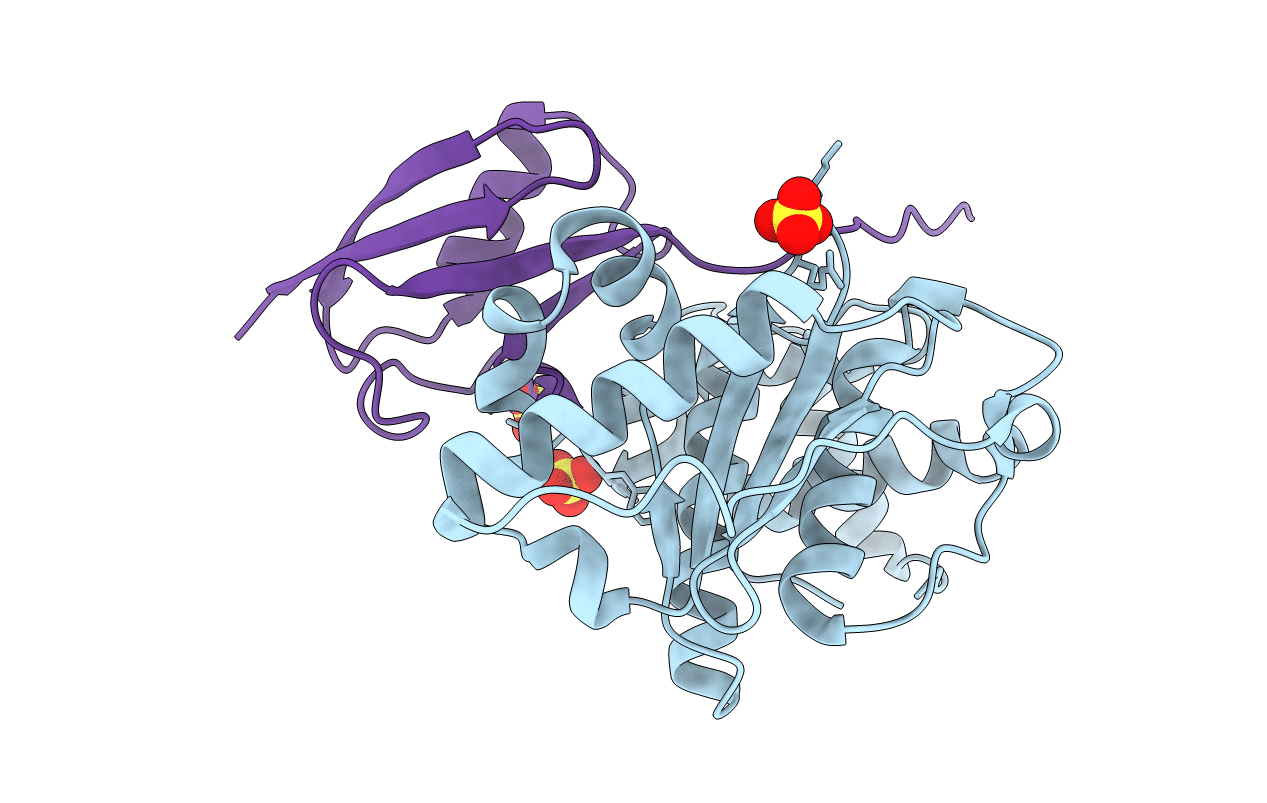
2IO0 image
Deposition Date 2006-10-09
Release Date 2006-11-14
Last Version Date 2023-08-30
Entry Detail
PDB ID:
2IO0
Title:
Crystal structure of human Senp2 in complex with preSUMO-2
Biological Source:
Source Organism:
Homo sapiens (Taxon ID: 9606)
Host Organism:
Method Details:
Experimental Method:
Resolution:
2.30 Å
R-Value Free:
0.24
R-Value Work:
0.20
Space Group:
H 3 2

Macromolecular Entities
Structures with similar UniProt ID
Protein Blast
Polymer Type:polypeptide(L)
Molecule:Sentrin-specific protease 2
Gene (Uniprot):SENP2
Mutagens:C548S
Chain IDs:A
Chain Length:232
Number of Molecules:1
Biological Source:Homo sapiens
Structures with similar UniProt ID
Protein Blast
Polymer Type:polypeptide(L)
Molecule:Small ubiquitin-related modifier 2 precursor
Gene (Uniprot):SUMO2
Chain IDs:B
Chain Length:91
Number of Molecules:1
Biological Source:Homo sapiens
Ligand Molecules
Primary Citation
Structural basis for SENP2 protease interactions with SUMO precursors and conjugated substrates.
Nat.Struct.Mol.Biol. 13 1060 1068 (2006)
PMID: 17099700 DOI: 10.1038/nsmb1168

Abstact

SUMO processing and deconjugation are essential proteolytic activities for nuclear metabolism and cell-cycle progression in yeast and higher eukaryotes. To elucidate the mechanisms used during substrate lysine deconjugation, SUMO isoform processing and SUMO isoform interactions, X-ray structures were determined for a catalytically inert SENP2 protease domain in complex with conjugated RanGAP1-SUMO-1 or RanGAP1-SUMO-2, or in complex with SUMO-2 or SUMO-3 precursors. Common features within the active site include a 90 degrees kink proximal to the scissile bond that forces C-terminal amino acid residues or the lysine side chain toward a protease surface that appears optimized for lysine deconjugation. Analysis of this surface reveals SENP2 residues, particularly Met497, that mediate, and in some instances reverse, in vitro substrate specificity. Mutational analysis and biochemistry provide a mechanism for SENP2 substrate preferences that explains why SENP2 catalyzes SUMO deconjugation more efficiently than processing.

Legend

Protein

Chemical

Disease

Primary Citation of related structures
Feedback Form
Name
Email
Institute
Feedback