2IF5 image
Deposition Date 2006-09-20
Release Date 2006-11-21
Last Version Date 2023-08-30
Entry Detail
PDB ID:
2IF5
Keywords:
Title:
Structure of the POZ domain of human LRF, a master regulator of oncogenesis
Biological Source:
Source Organism:
Homo sapiens (Taxon ID: 9606)
Method Details:
Experimental Method:
Resolution:
2.00 Å
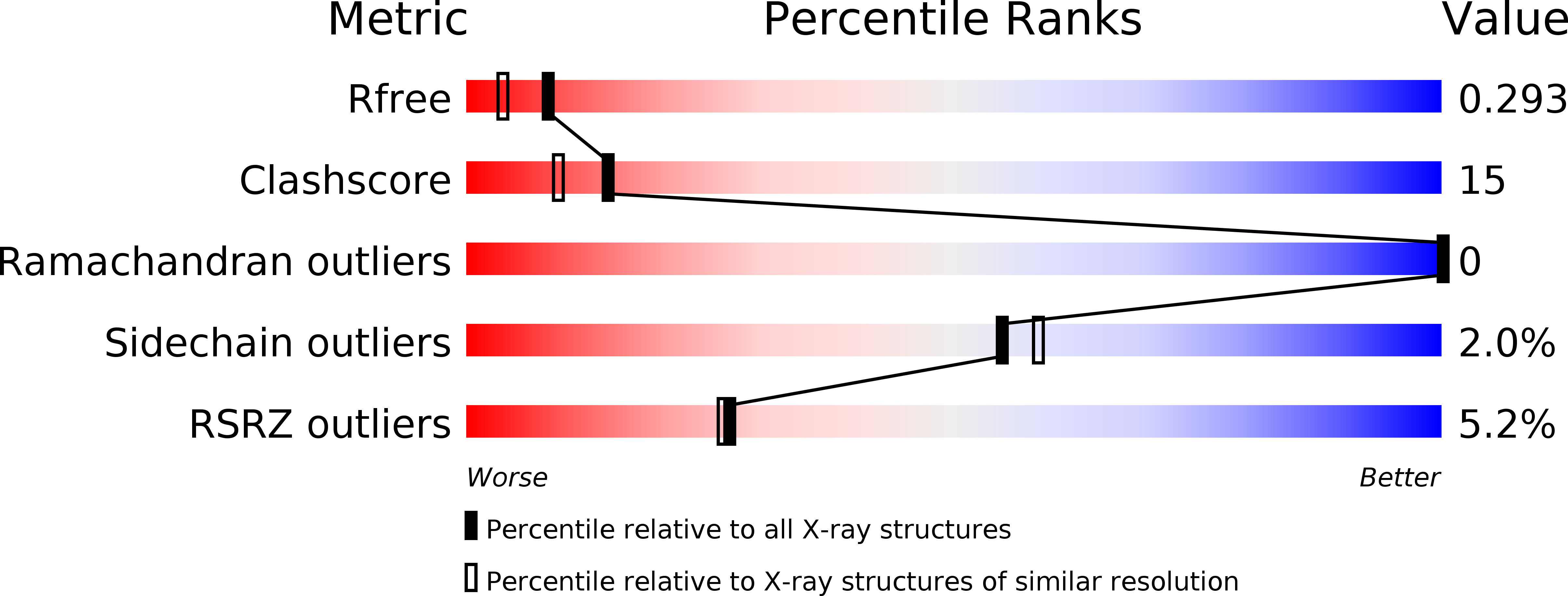
R-Value Free:
0.29
R-Value Work:
0.22
R-Value Observed:
0.23
Space Group:
I 41 2 2
Macromolecular Entities
Structures with similar UniProt ID
Protein Blast
Polymer Type:polypeptide(L)
Molecule:Zinc finger and BTB domain-containing protein 7A
Gene (Uniprot):ZBTB7A
Chain IDs:A
Chain Length:120
Number of Molecules:1
Biological Source:Homo sapiens
Ligand Molecules
Primary Citation
Structure of the POZ domain of human LRF, a master regulator of oncogenesis.
Biochem.Biophys.Res.Commun. 351 1 6 (2006)
PMID: 17052694 DOI: 10.1016/j.bbrc.2006.09.167

Abstact

The proto-oncogenic properties of the POK family of transcriptional repressors BCL6, PLZF, and LRF have been well established. These proteins utilize their amino-terminal POZ domains for multimerization and the recruitment of co-repressors. Because LRF represses the production of the tumor suppressor p19(Arf) (ARF), it is regarded as an attractive therapeutic target for the treatment of many types of cancer. The crystal structure of the LRF POZ domain reveals a high degree of structural conservation with the corresponding domains of BCL6 and PLZF. However, striking differences between the electrostatic properties of the BCL6 and LRF POZ domains suggest that if, like BCL6, LRF interacts with the co-repressor SMRT, it almost certainly uses a different mechanism to do so. These differences may also explain why LRF interacts with BCL6 but not with PLZF. Finally, the conservation of crystal packing contacts suggests the probable location of the interface that mediates LRF/BCL6 complex formation.

Legend

Protein

Chemical

Disease

Primary Citation of related structures
Feedback Form
Name
Email
Institute
Feedback