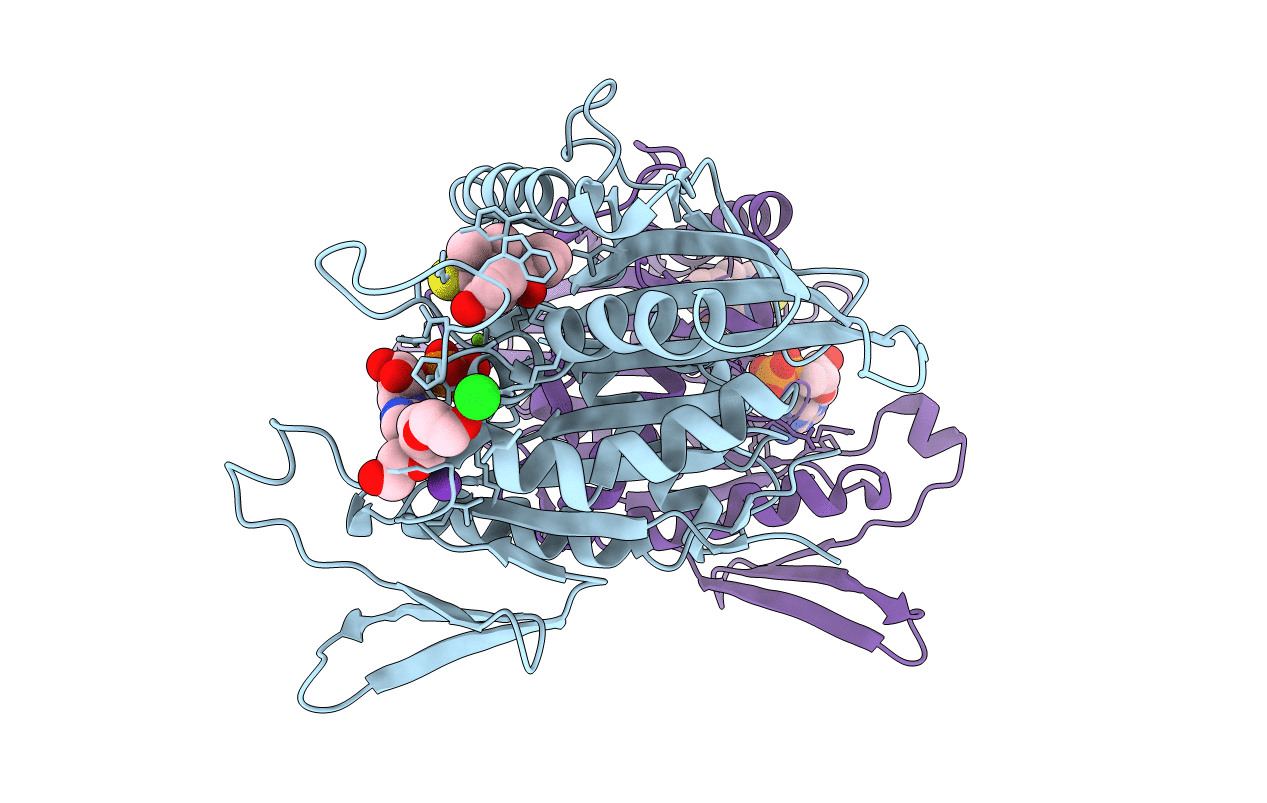
2IEH image
Deposition Date 2006-09-19
Release Date 2007-01-23
Last Version Date 2023-08-30
Entry Detail
PDB ID:
2IEH
Keywords:
Title:
Crystal structure of human kinesin Eg5 in complex with (R)-mon97, a new monastrol-based inhibitor that binds as (R)-enantiomer
Biological Source:
Source Organism(s):
Homo sapiens (Taxon ID: 9606)
Expression System(s):
Method Details:
Experimental Method:
Resolution:
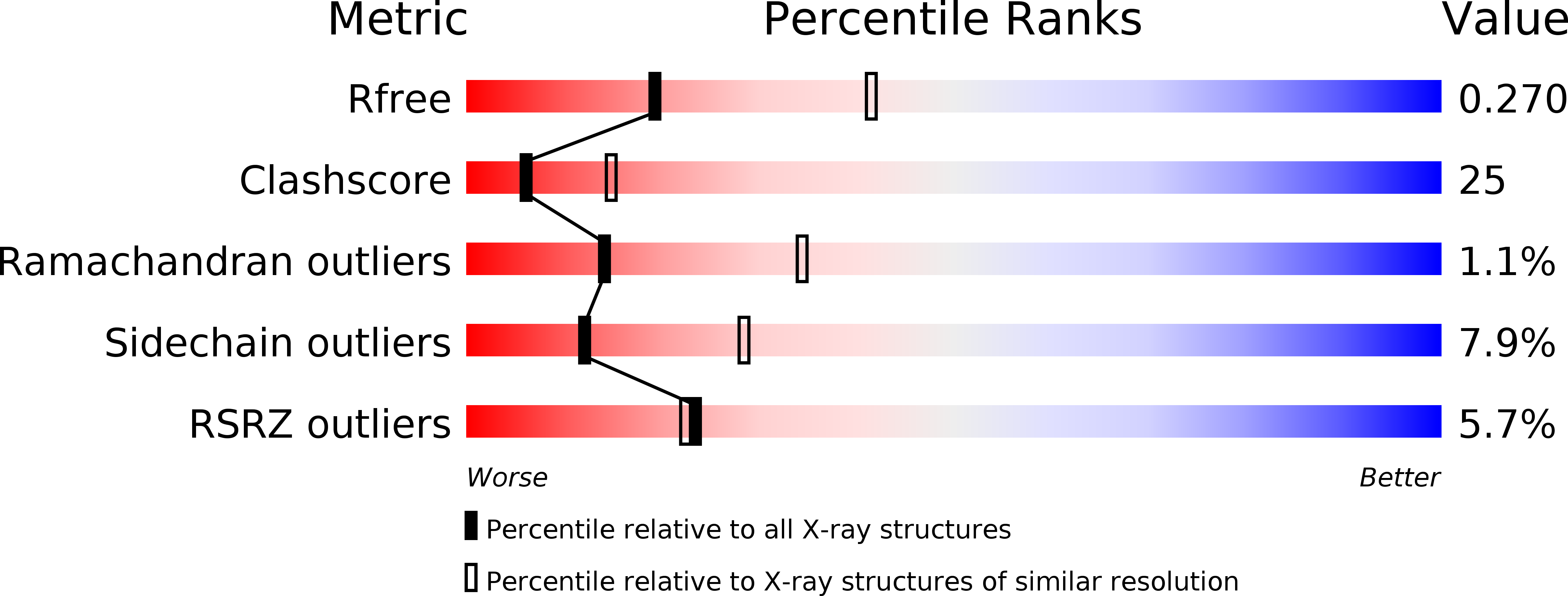
2.70 Å
R-Value Free:
0.28
R-Value Work:
0.23
R-Value Observed:
0.23
Space Group:
P 21 21 21
Macromolecular Entities
Structures with similar UniProt ID
Protein Blast
Polymer Type:polypeptide(L)
Molecule:Kinesin-like protein KIF11
Gene (Uniprot):KIF11
Chain IDs:A, B
Chain Length:367
Number of Molecules:2
Biological Source:Homo sapiens
Primary Citation
Structure of human Eg5 in complex with a new monastrol-based inhibitor bound in the R configuration.
J.Biol.Chem. 282 9740 9747 (2007)
PMID: 17251189 DOI: 10.1074/jbc.M608883200

Abstact

Drugs that target mitotic spindle proteins have been proven useful for tackling tumor growth. Eg5, a kinesin-5 family member, represents a potential target, since its inhibition leads to prolonged mitotic arrest through the activation of the mitotic checkpoint and apoptotic cell death. Monastrol, a specific dihydropyrimidine inhibitor of Eg5, shows stereo-specificity, since predominantly the (S)-, but not the (R)-, enantiomer has been shown to be the biologically active compound in vitro and in cell-based assays. Here, we solved the crystal structure (2.7A) of the complex between human Eg5 and a new keto derivative of monastrol (named mon-97), a potent antimitotic inhibitor. Surprisingly, we identified the (R)-enantiomer bound in the active site, and not, as for monastrol, the (S)-enantiomer. The absolute configuration of this more active (R)-enantiomer has been unambiguously determined via chemical correlation and x-ray analysis. Unexpectedly, both the R- and the S-forms inhibit Eg5 ATPase activity with IC(50) values of 110 and 520 nM (basal assays) and 150 nm and 650 nm (microtubule-stimulated assays), respectively. However, the difference was large enough for the protein to select the (R)- over the (S)-enantiomer. Taken together, these results show that in this new monastrol family, both (R)- and (S)-enantiomers can be active as Eg5 inhibitors. This considerably broadens the alternatives for rational drug design.

Legend

Protein

Chemical

Disease

Primary Citation of related structures
Feedback Form
Name
Email
Institute
Feedback