2IAG image
Deposition Date 2006-09-08
Release Date 2006-10-10
Last Version Date 2024-03-13
Entry Detail
PDB ID:
2IAG
Keywords:
Title:
Crystal structure of human prostacyclin synthase
Biological Source:
Source Organism(s):
Homo sapiens (Taxon ID: 9606)
Expression System(s):
Method Details:
Experimental Method:
Resolution:
2.15 Å
R-Value Free:
0.26
R-Value Work:
0.20
R-Value Observed:
0.20
Space Group:
P 1 21 1
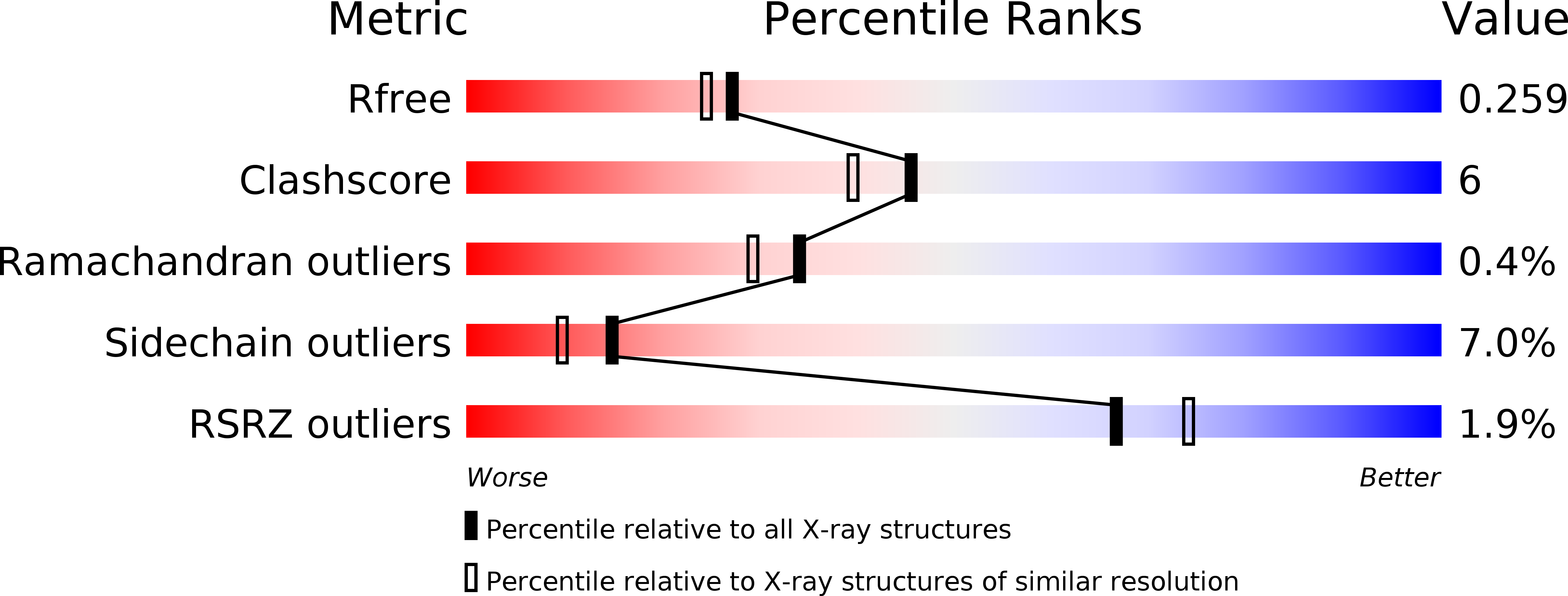
Macromolecular Entities
Structures with similar UniProt ID
Protein Blast
Polymer Type:polypeptide(L)
Molecule:Prostacyclin synthase
Gene (Uniprot):PTGIS
Chain IDs:A, B
Chain Length:482
Number of Molecules:2
Biological Source:Homo sapiens
Primary Citation
Crystal Structure of the Human Prostacyclin Synthase
J.Mol.Biol. 364 266 274 (2006)
PMID: 17020766 DOI: 10.1016/j.jmb.2006.09.039

Abstact

Prostacyclin synthase (PGIS) catalyzes an isomerization of prostaglandin H(2) to prostacyclin, a potent mediator of vasodilation and anti-platelet aggregation. Here, we report the crystal structure of human PGIS at 2.15 A resolution, which represents the first three-dimensional structure of a class III cytochrome P450. While notable sequence divergence has been recognized between PGIS and other P450s, PGIS exhibits the typical triangular prism-shaped P450 fold with only moderate structural differences. The conserved acid-alcohol pair in the I helix of P450s is replaced by residues G286 and N287 in PGIS, but the distinctive disruption of the I helix and the presence of a nearby water channel remain conserved. The side-chain of N287 appears to be positioned to facilitate the endoperoxide bond cleavage, suggesting a functional conservation of this residue in O-O bond cleavage. A combination of bent I helix and tilted B' helix creates a channel extending from the heme distal pocket, which seemingly allows binding of various ligands; however, residue W282, placed in this channel at a distance of 8.4 A from the iron with its indole side-chain lying parallel with the porphyrin plane, may serve as a threshold to exclude most ligands from binding. Additionally, a long "meander" region protruding from the protein surface may impede electron transfer. Although the primary sequence of the PGIS cysteine ligand loop diverges significantly from the consensus, conserved tertiary structure and hydrogen bonding pattern are observed for this region. The substrate-binding model was constructed and the structural basis for prostacyclin biosynthesis is discussed.

Legend

Protein

Chemical

Disease

Primary Citation of related structures
Feedback Form
Name
Email
Institute
Feedback