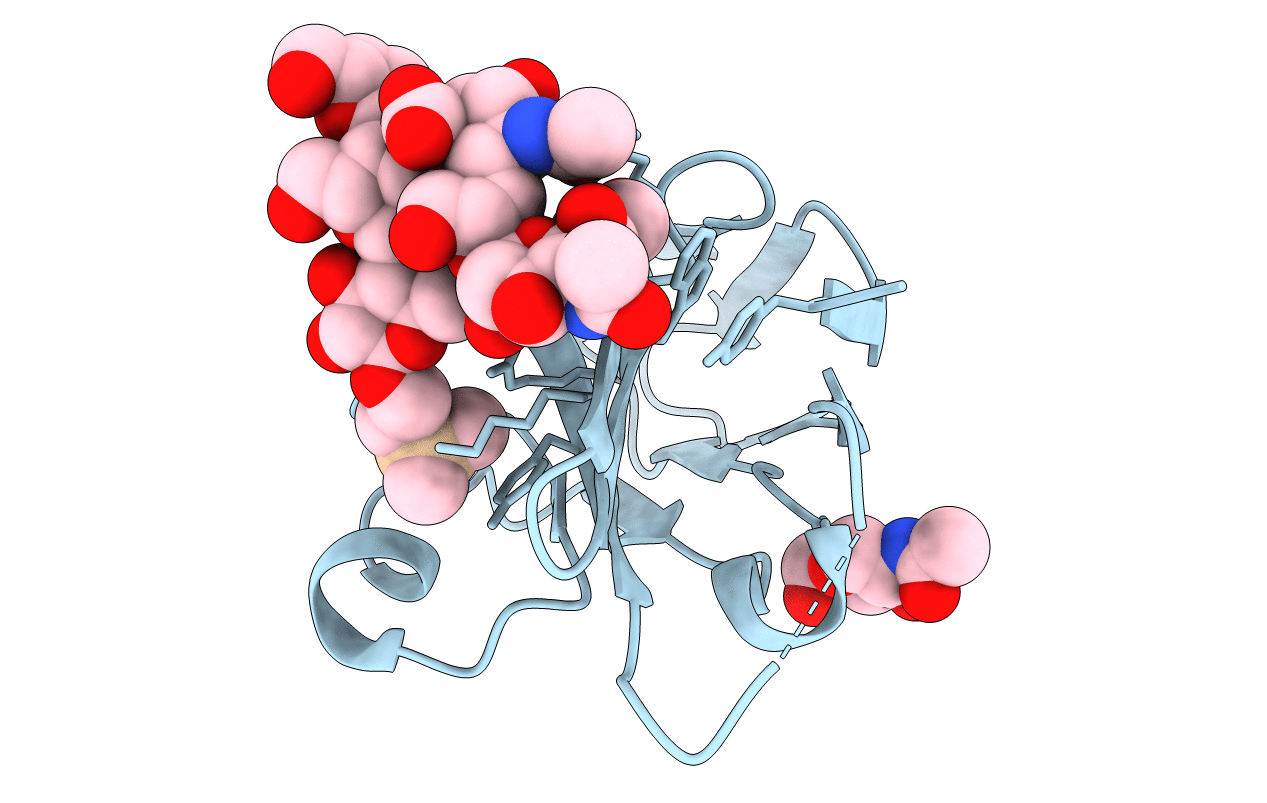
2HRL image
Deposition Date 2006-07-20
Release Date 2006-08-15
Last Version Date 2024-10-30
Entry Detail
PDB ID:
2HRL
Keywords:
Title:
Siglec-7 in complex with GT1b
Biological Source:
Source Organism(s):
Homo sapiens (Taxon ID: 9606)
Expression System(s):
Method Details:
Experimental Method:
Resolution:
1.85 Å
R-Value Free:
0.23
R-Value Work:
0.19
R-Value Observed:
0.19
Space Group:
P 32 2 1
Macromolecular Entities
Structures with similar UniProt ID
Protein Blast
Polymer Type:polypeptide(L)
Molecule:Sialic acid-binding Ig-like lectin 7
Gene (Uniprot):SIGLEC7
Chain IDs:A
Chain Length:127
Number of Molecules:1
Biological Source:Homo sapiens
Modified Residue
Compound ID Chain ID Parent Comp ID Details 2D Image
ASN A ASN GLYCOSYLATION SITE
Primary Citation
Siglec-7 Undergoes a Major Conformational Change When Complexed with the {alpha}(2,8)-Disialylganglioside GT1b
J.Biol.Chem. 281 32774 32783 (2006)
PMID: 16895906 DOI: 10.1074/jbc.M601714200

Abstact

The siglecs are a group of mammalian sialic acid binding receptors expressed predominantly in the immune system. The CD33-related siglecs show complex recognition patterns for sialylated glycans. Siglec-7 shows a preference for alpha(2,8)-disialylated ligands and provides a structural template for studying the key interactions that drive this selectivity. We have co-crystallized Siglec-7 with a synthetic oligosaccharide corresponding to the alpha(2,8)-disialylated ganglioside GT1b. The crystal structure of the complex offers a first glimpse into how this important family of lectins binds the structurally diverse gangliosides. The structure reveals that the C-C' loop, a region implicated in previous studies as driving siglec specificity, undergoes a dramatic conformational shift, allowing it to interact with the underlying neutral glycan core of the ganglioside. The structural data in combination with mutagenesis studies show that binding of the ganglioside is driven by extensive hydrophobic contacts together with key polar interactions and that the binding site structure is complementary to preferred solution conformations of GT1b.

Legend

Protein

Chemical

Disease

Primary Citation of related structures
Feedback Form
Name
Email
Institute
Feedback