2HPJ image
Deposition Date 2006-07-17
Release Date 2007-05-29
Last Version Date 2024-02-14
Entry Detail
PDB ID:
2HPJ
Keywords:
Title:
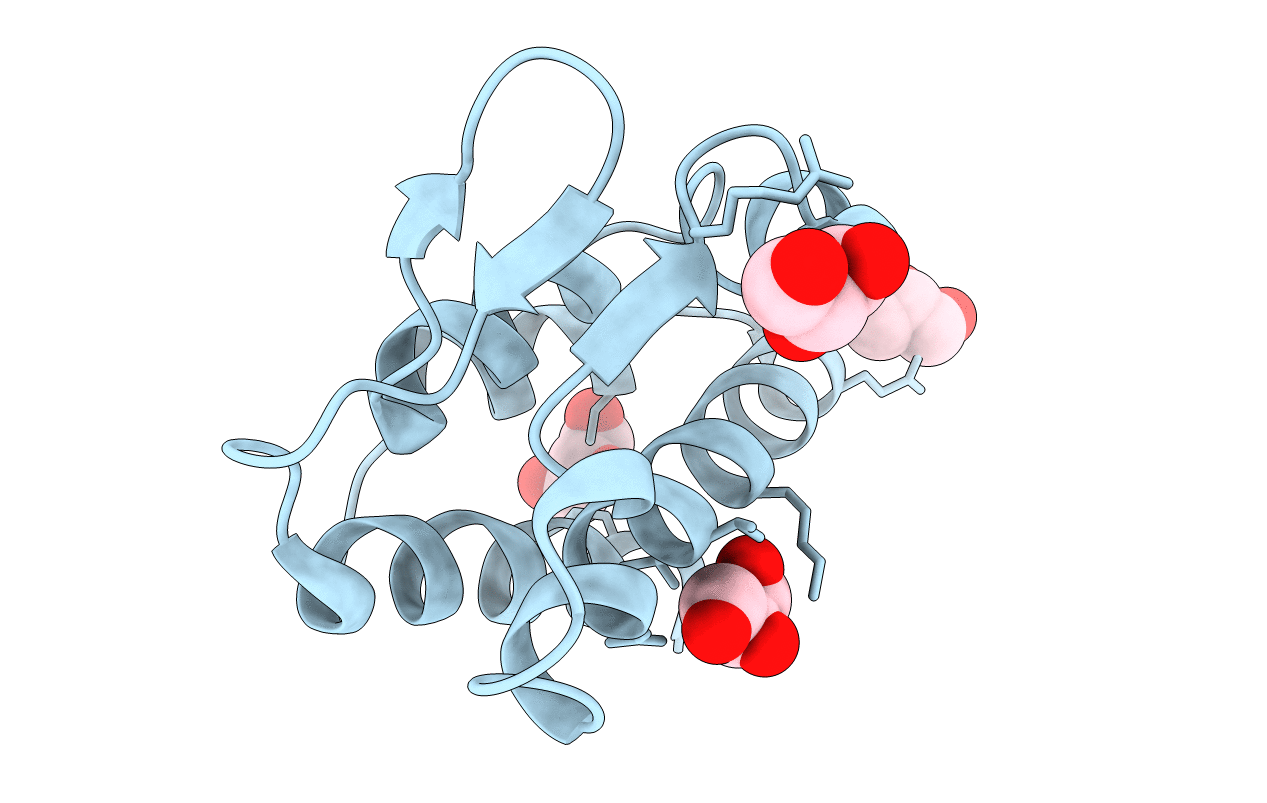
Crystal structure of the PUB domain of mouse PNGase
Biological Source:
Source Organism:
Mus musculus (Taxon ID: 10090)
Host Organism:
Method Details:
Experimental Method:
Resolution:
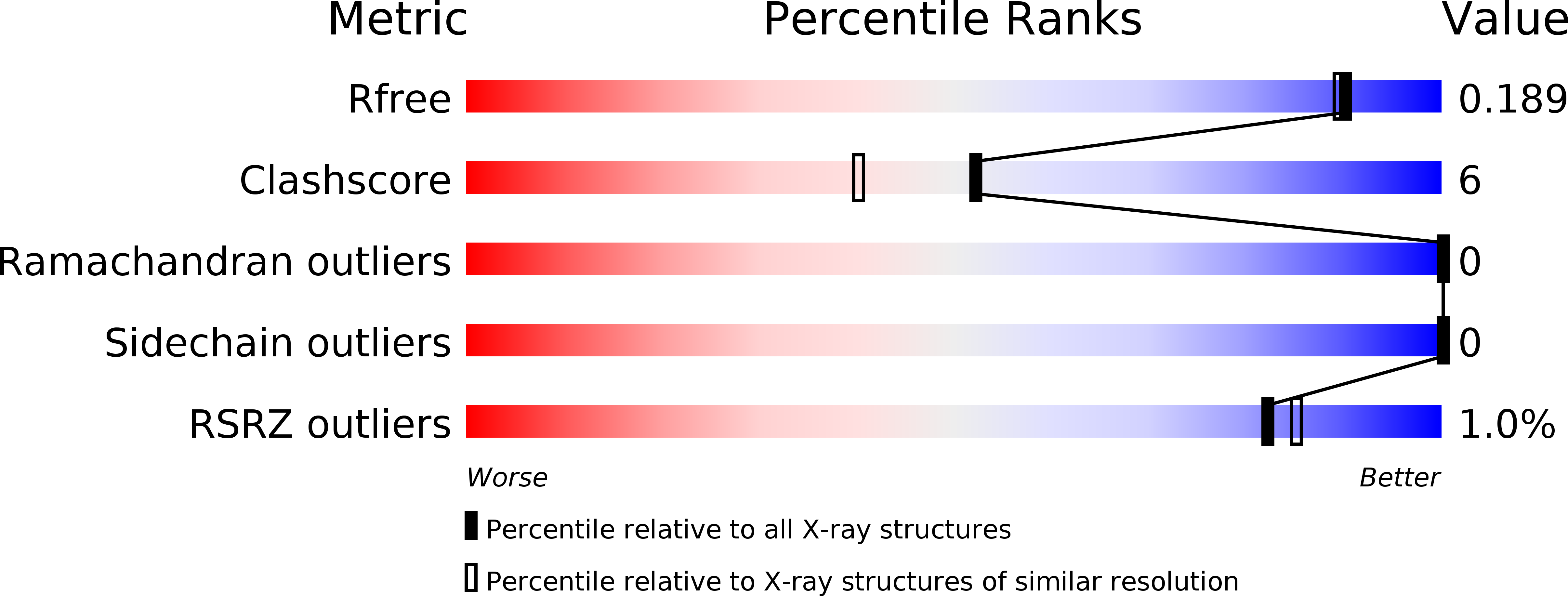
1.70 Å
R-Value Free:
0.17
R-Value Work:
0.14
R-Value Observed:
0.14
Space Group:
C 1 2 1
Macromolecular Entities
Structures with similar UniProt ID
Protein Blast
Polymer Type:polypeptide(L)
Molecule:PNGase
Gene (Uniprot):Ngly1
Chain IDs:A
Chain Length:99
Number of Molecules:1
Biological Source:Mus musculus
Ligand Molecules
Primary Citation
Studies on peptide:N-glycanase-p97 interaction suggest that p97 phosphorylation modulates endoplasmic reticulum-associated degradation.
Proc.Natl.Acad.Sci.Usa 104 8785 8790 (2007)
PMID: 17496150 DOI: 10.1073/pnas.0702966104

Abstact

During endoplasmic reticulum-associated degradation, the multifunctional AAA ATPase p97 is part of a protein degradation complex. p97 associates via its N-terminal domain with various cofactors to recruit ubiquitinated substrates. It also interacts with alternative substrate-processing cofactors, such as Ufd2, Ufd3, and peptide:N-glycanase (PNGase) in higher eukaryotes. These cofactors determine different fates of the substrates and they all bind outside of the N-terminal domain of p97. Here, we describe a cofactor-binding motif of p97 contained within the last 10 amino acid residues of the C terminus, which is both necessary and sufficient to mediate interactions of p97 with PNGase and Ufd3. The crystal structure of the N-terminal domain of PNGase in complex with this motif provides detailed insight into the interaction between p97 and its substrate-processing cofactors. Phosphorylation of p97's highly conserved penultimate tyrosine residue, which is the main phosphorylation site during T cell receptor stimulation, completely blocks binding of either PNGase or Ufd3 to p97. This observation suggests that phosphorylation of this residue modulates endoplasmic reticulum-associated protein degradation activity by discharging substrate-processing cofactors.

Legend

Protein

Chemical

Disease

Primary Citation of related structures
Feedback Form
Name
Email
Institute
Feedback