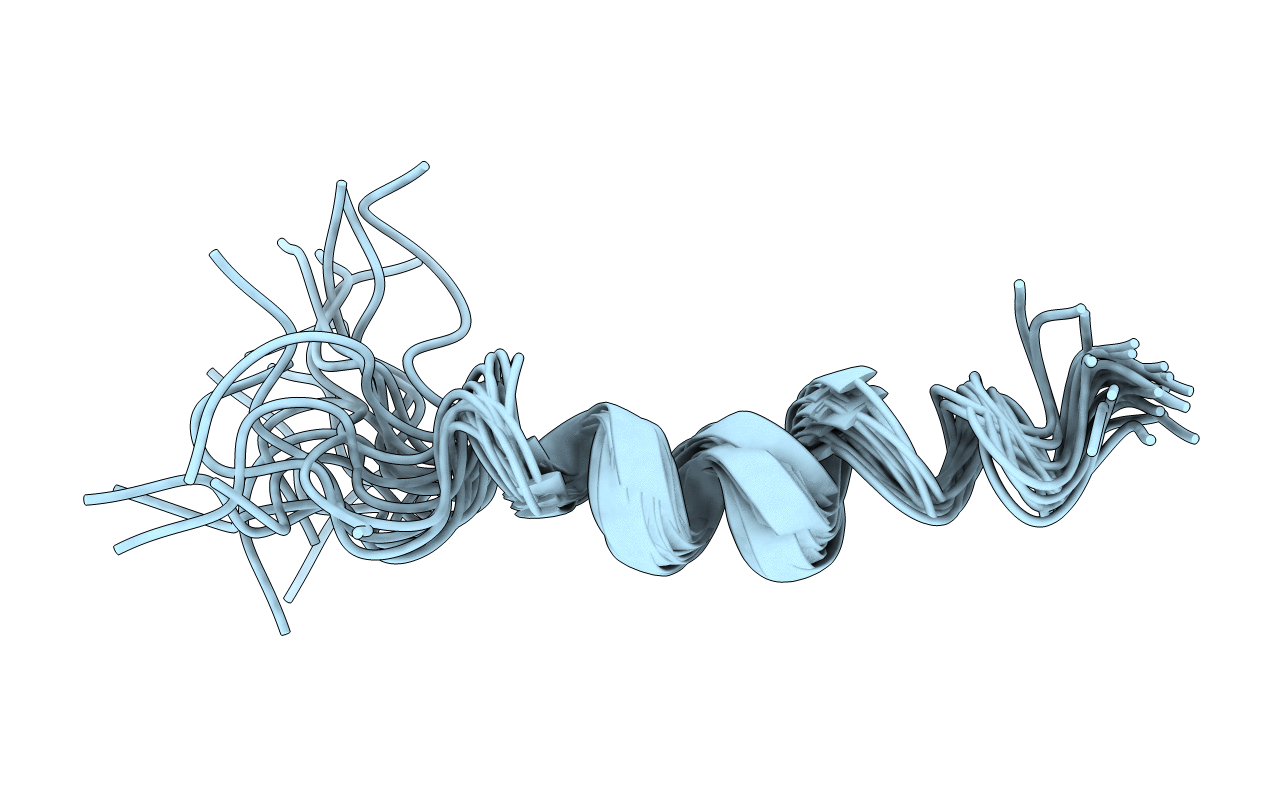
2HFR image
Deposition Date 2006-06-26
Release Date 2007-04-17
Last Version Date 2024-05-29
Entry Detail
PDB ID:
2HFR
Title:
solution structure of antimicrobial peptide Fowlicidin 3
Biological Source:
Source Organism:
Method Details:
Experimental Method:
Conformers Calculated:
100
Conformers Submitted:
20
Selection Criteria:
structures with the lowest energy

Macromolecular Entities
Structures with similar UniProt ID
Protein Blast
Polymer Type:polypeptide(L)
Molecule:Fowlicidin-3
Gene (Uniprot):CATHL3
Chain IDs:A
Chain Length:27
Number of Molecules:1
Biological Source:
Ligand Molecules
Primary Citation
Fowlicidin-3 is an alpha-helical cationic host defense peptide with potent antibacterial and lipopolysaccharide-neutralizing activities.
Febs J. 274 418 428 (2007)
PMID: 17229147 DOI: 10.1111/j.1742-4658.2006.05589.x

Abstact

Cathelicidins are an important family of cationic host defense peptides in vertebrates with both antimicrobial and immunomodulatory activities. Fowlicidin-1 and fowlicidin-2 are two newly identified chicken cathelicidins with potent antibacterial activities. Here we report structural and functional characterization of the putatively mature form of the third chicken cathelicidin, fowlicidin-3, for exploration of its therapeutic potential. NMR spectroscopy revealed that fowlicidin-3 comprises 27 amino-acid residues and adopts a predominantly alpha-helical structure extending from residue 9 to 25 with a slight kink induced by a glycine at position 17. It is highly potent against a broad range of Gram-negative and Gram-positive bacteria in vitro, including antibiotic-resistant strains, with minimum inhibitory concentrations in the range 1-2 microM. It kills bacteria quickly, permeabilizing cytoplasmic membranes immediately on coming into contact with them. Unlike many other host defense peptides with antimicrobial activities that are diminished by serum or salt, fowlicidin-3 retains bacteria-killing activities in the presence of 50% serum or physiological concentrations of salt. Furthermore, it is capable of suppressing lipopolysaccharide-induced expression of proinflammatory genes in mouse macrophage RAW264.7 cells, with nearly complete blockage at 10 microM. Fowlicidin-3 appears to be an excellent candidate for future development as a novel antimicrobial and antisepsis agent, particularly against antibiotic-resistant pathogens.

Legend

Protein

Chemical

Disease

Primary Citation of related structures
Feedback Form
Name
Email
Institute
Feedback