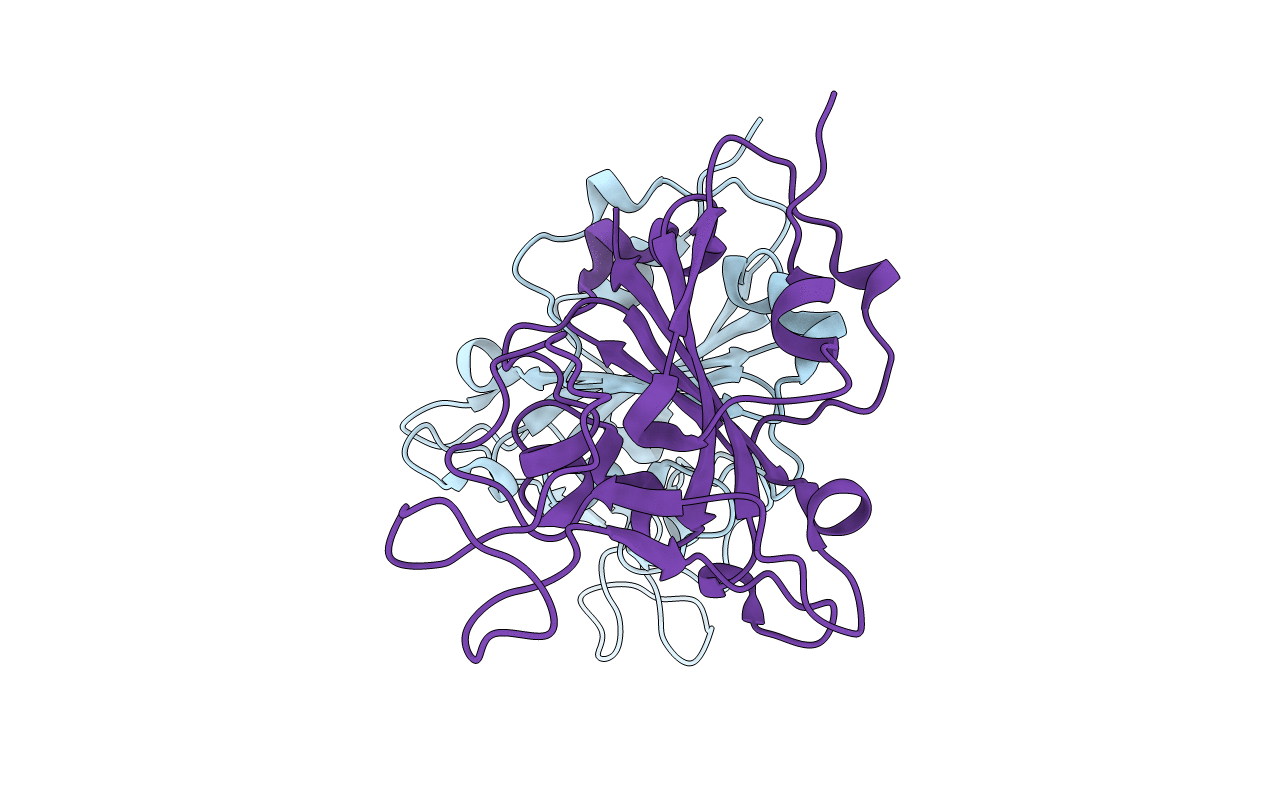
2GHV image
Deposition Date 2006-03-27
Release Date 2006-09-19
Last Version Date 2024-11-20
Entry Detail
PDB ID:
2GHV
Keywords:
Title:
Crystal structure of SARS spike protein receptor binding domain
Biological Source:
Source Organism:
Host Organism:
Method Details:
Experimental Method:
Resolution:
2.20 Å
R-Value Free:
0.21
R-Value Work:
0.18
R-Value Observed:
0.18
Space Group:
P 43 21 2
Macromolecular Entities
Structures with similar UniProt ID
Protein Blast
Polymer Type:polypeptide(L)
Molecule:Spike glycoprotein
Gene (Uniprot):S
Chain IDs:A (auth: E), B (auth: C)
Chain Length:203
Number of Molecules:2
Biological Source:SARS coronavirus
Primary Citation
Structural basis of neutralization by a human anti-severe acute respiratory syndrome spike protein antibody, 80R.
J.Biol.Chem. 281 34610 34616 (2006)
PMID: 16954221 DOI: 10.1074/jbc.M603275200

Abstact

Severe acute respiratory syndrome (SARS) is a newly emerged infectious disease that caused pandemic spread in 2003. The etiological agent of SARS is a novel coronavirus (SARS-CoV). The coronaviral surface spike protein S is a type I transmembrane glycoprotein that mediates initial host binding via the cell surface receptor angiotensin-converting enzyme 2 (ACE2), as well as the subsequent membrane fusion events required for cell entry. Here we report the crystal structure of the S1 receptor binding domain (RBD) in complex with a neutralizing antibody, 80R, at 2.3 A resolution, as well as the structure of the uncomplexed S1 RBD at 2.2 A resolution. We show that the 80R-binding epitope on the S1 RBD overlaps very closely with the ACE2-binding site, providing a rationale for the strong binding and broad neutralizing ability of the antibody. We provide a structural basis for the differential effects of certain mutations in the spike protein on 80R versus ACE2 binding, including escape mutants, which should facilitate the design of immunotherapeutics to treat a future SARS outbreak. We further show that the RBD of S1 forms dimers via an extensive interface that is disrupted in receptor- and antibody-bound crystal structures, and we propose a role for the dimer in virus stability and infectivity.

Legend

Protein

Chemical

Disease

Primary Citation of related structures
Feedback Form
Name
Email
Institute
Feedback