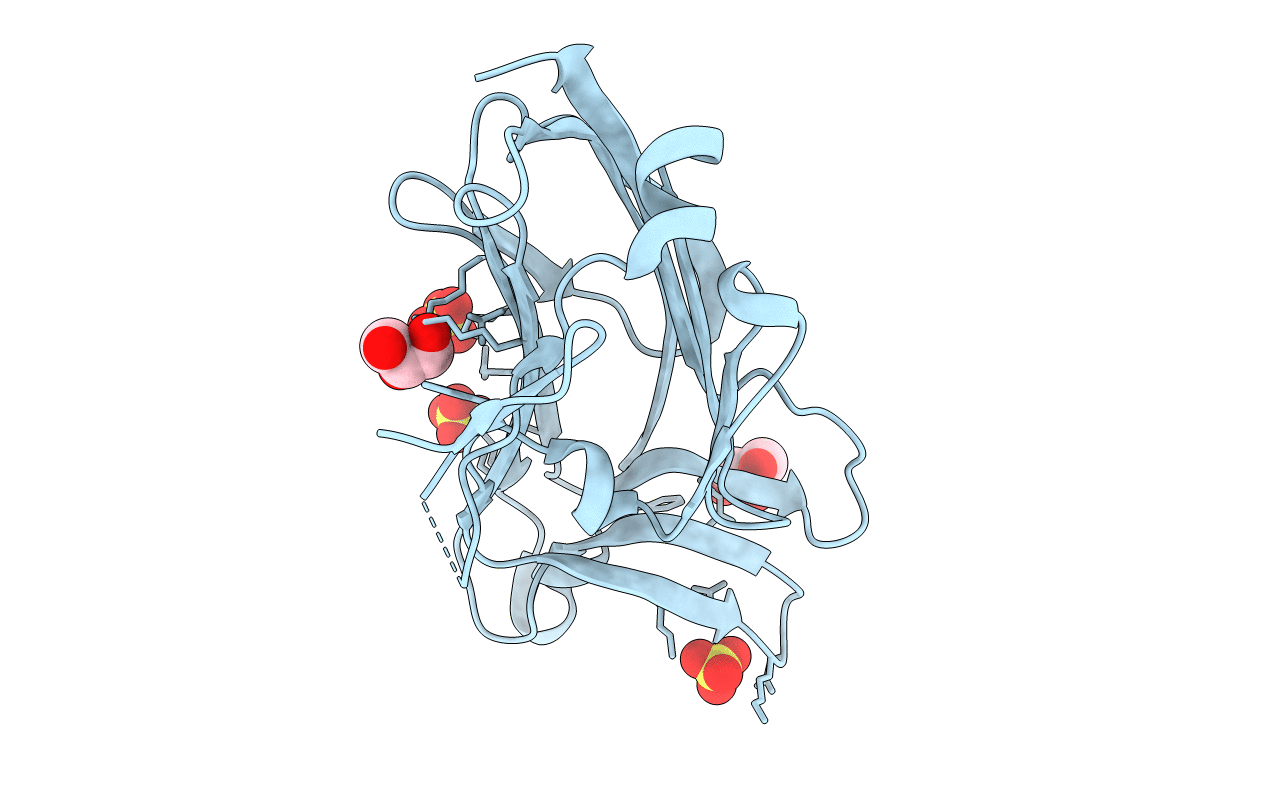
2G9G image
Deposition Date 2006-03-06
Release Date 2006-10-24
Last Version Date 2023-08-30
Entry Detail
PDB ID:
2G9G
Keywords:
Title:
Crystal structure of His-tagged mouse PNGase C-terminal domain
Biological Source:
Source Organism:
Mus musculus (Taxon ID: 10090)
Host Organism:
Method Details:
Experimental Method:
Resolution:
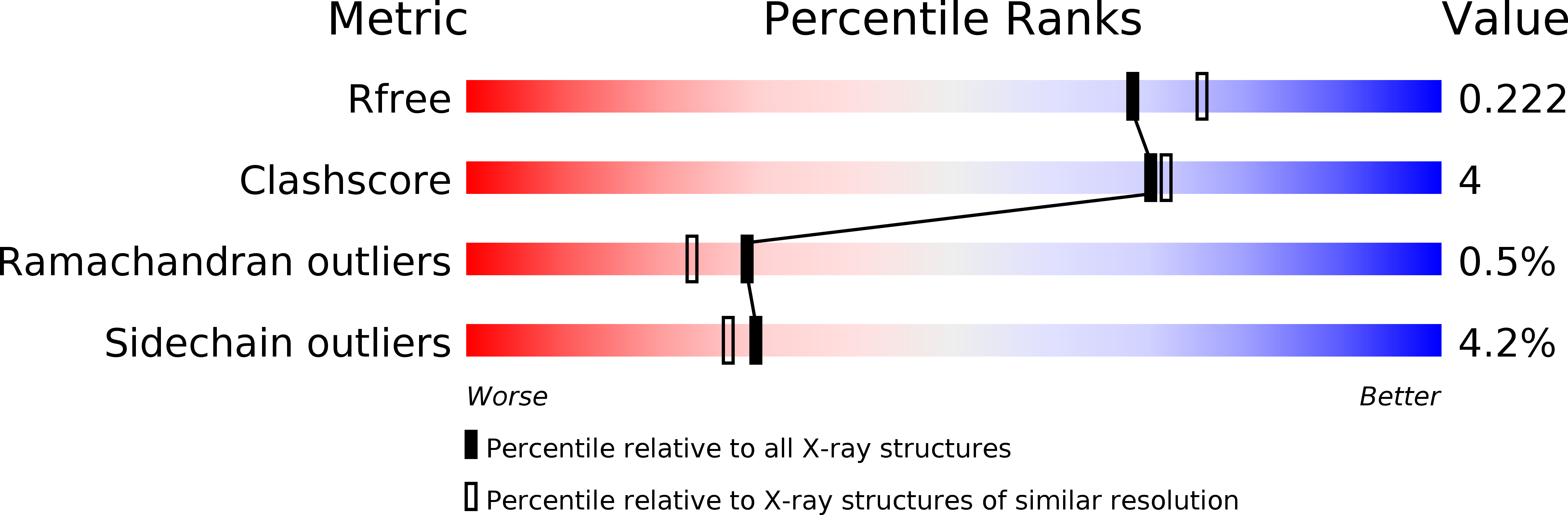
2.00 Å
R-Value Free:
0.20
R-Value Work:
0.15
R-Value Observed:
0.15
Space Group:
C 1 2 1
Macromolecular Entities
Structures with similar UniProt ID
Protein Blast
Polymer Type:polypeptide(L)
Molecule:peptide N-glycanase
Chain IDs:A
Chain Length:221
Number of Molecules:1
Biological Source:Mus musculus
Primary Citation
Structural and biochemical studies of the C-terminal domain of mouse peptide-N-glycanase identify it as a mannose-binding module.
Proc.Natl.Acad.Sci.Usa 103 17214 17219 (2006)
PMID: 17088551 DOI: 10.1073/pnas.0602954103

Abstact

The inability of certain N-linked glycoproteins to adopt their native conformation in the endoplasmic reticulum (ER) leads to their retrotranslocation into the cytosol and subsequent degradation by the proteasome. In this pathway the cytosolic peptide-N-glycanase (PNGase) cleaves the N-linked glycan chains off denatured glycoproteins. PNGase is highly conserved in eukaryotes and plays an important role in ER-associated protein degradation. In higher eukaryotes, PNGase has an N-terminal and a C-terminal extension in addition to its central catalytic domain, which is structurally and functionally related to transglutaminases. Although the N-terminal domain of PNGase is involved in protein-protein interactions, the function of the C-terminal domain has not previously been characterized. Here, we describe biophysical, biochemical, and crystallographic studies of the mouse PNGase C-terminal domain, including visualization of a complex between this domain and mannopentaose. These studies demonstrate that the C-terminal domain binds to the mannose moieties of N-linked oligosaccharide chains, and we further show that it enhances the activity of the mouse PNGase core domain, presumably by increasing the affinity of mouse PNGase for the glycan chains of misfolded glycoproteins.

Legend

Protein

Chemical

Disease

Primary Citation of related structures
Feedback Form
Name
Email
Institute
Feedback