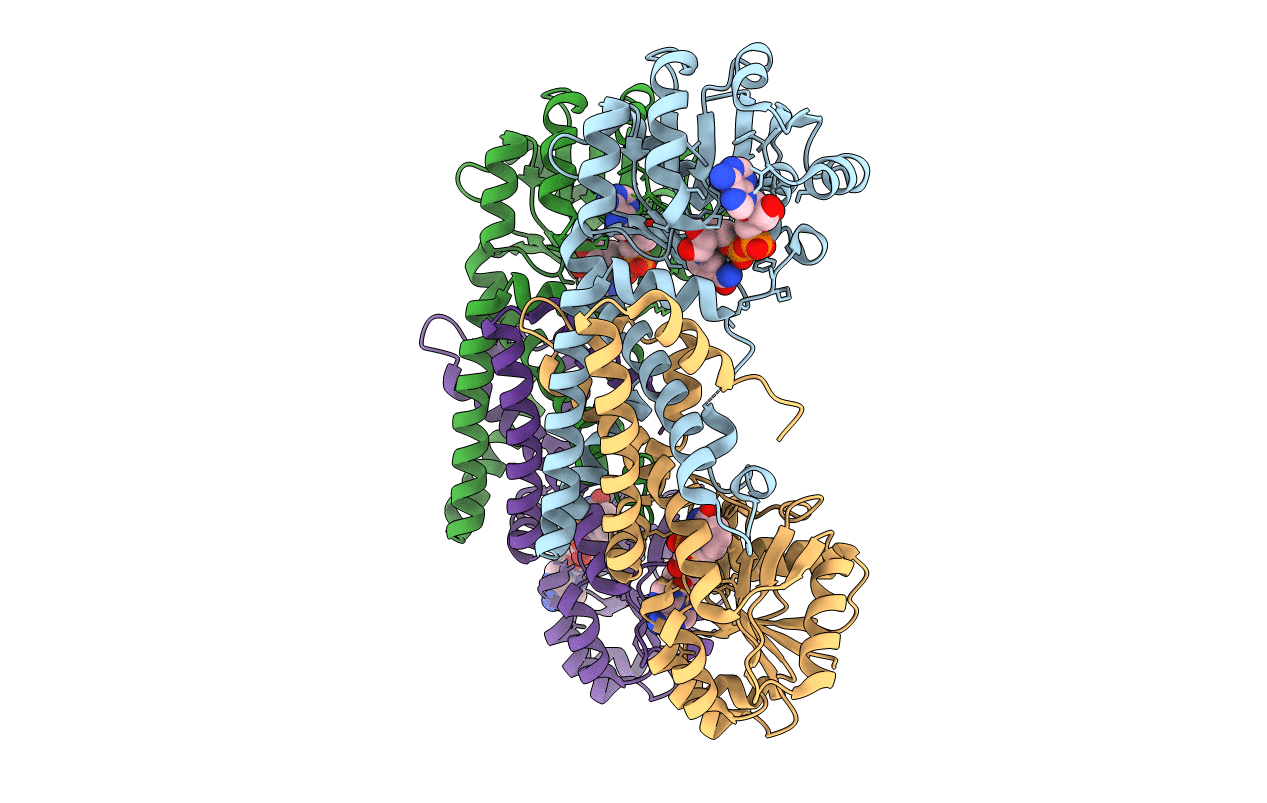
2G5C image
Deposition Date 2006-02-22
Release Date 2006-03-07
Last Version Date 2024-11-13
Entry Detail
PDB ID:
2G5C
Keywords:
Title:
Crystal Structure of Prephenate Dehydrogenase from Aquifex aeolicus
Biological Source:
Source Organism(s):
Expression System(s):
Method Details:
Experimental Method:
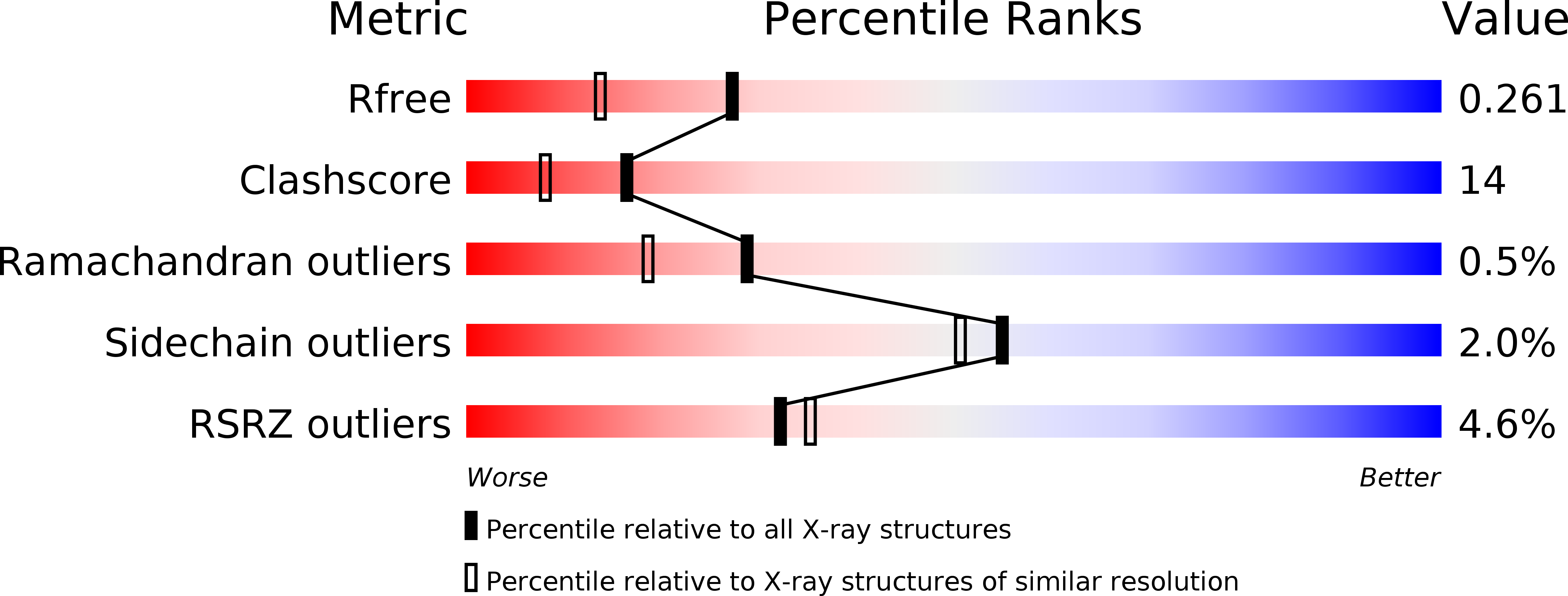
Resolution:
1.90 Å
R-Value Free:
0.26
R-Value Work:
0.22
R-Value Observed:
0.22
Space Group:
P 1 21 1
Macromolecular Entities
Structures with similar UniProt ID
Protein Blast
Polymer Type:polypeptide(L)
Molecule:prephenate dehydrogenase
Gene (Uniprot):tyrA
Chain IDs:A, B, C, D
Chain Length:281
Number of Molecules:4
Biological Source:Aquifex aeolicus
Modified Residue
Compound ID Chain ID Parent Comp ID Details 2D Image
MSE A MET SELENOMETHIONINE
Ligand Molecules
Primary Citation
Crystal Structure of Prephenate Dehydrogenase from Aquifex aeolicus: Insights into the Catalytic Mechanism
J.Biol.Chem. 281 12919 12928 (2006)
PMID: 16513644 DOI: 10.1074/jbc.M511986200

Abstact

The enzyme prephenate dehydrogenase catalyzes the oxidative decarboxylation of prephenate to 4-hydroxyphenylpyruvate for the biosynthesis of tyrosine. Prephenate dehydrogenases exist as either monofunctional or bifunctional enzymes. The bifunctional enzymes are diverse, since the prephenate dehydrogenase domain is associated with other enzymes, such as chorismate mutase and 3-phosphoskimate 1-carboxyvinyltransferase. We report the first crystal structure of a monofunctional prephenate dehydrogenase enzyme from the hyper-thermophile Aquifex aeolicus in complex with NAD+. This protein consists of two structural domains, a modified nucleotide-binding domain and a novel helical prephenate binding domain. The active site of prephenate dehydrogenase is formed at the domain interface and is shared between the subunits of the dimer. We infer from the structure that access to the active site is regulated via a gated mechanism, which is modulated by an ionic network involving a conserved arginine, Arg250. In addition, the crystal structure reveals for the first time the positions of a number of key catalytic residues and the identity of other active site residues that may participate in the reaction mechanism; these residues include Ser126 and Lys246 and the catalytic histidine, His147. Analysis of the structure further reveals that two secondary structure elements, beta3 and beta7, are missing in the prephenate dehydrogenase domain of the bifunctional chorismate mutase-prephenate dehydrogenase enzymes. This observation suggests that the two functional domains of chorismate mutase-prephenate dehydrogenase are interdependent and explains why these domains cannot be separated.

Legend

Protein

Chemical

Disease

Primary Citation of related structures
Feedback Form
Name
Email
Institute
Feedback