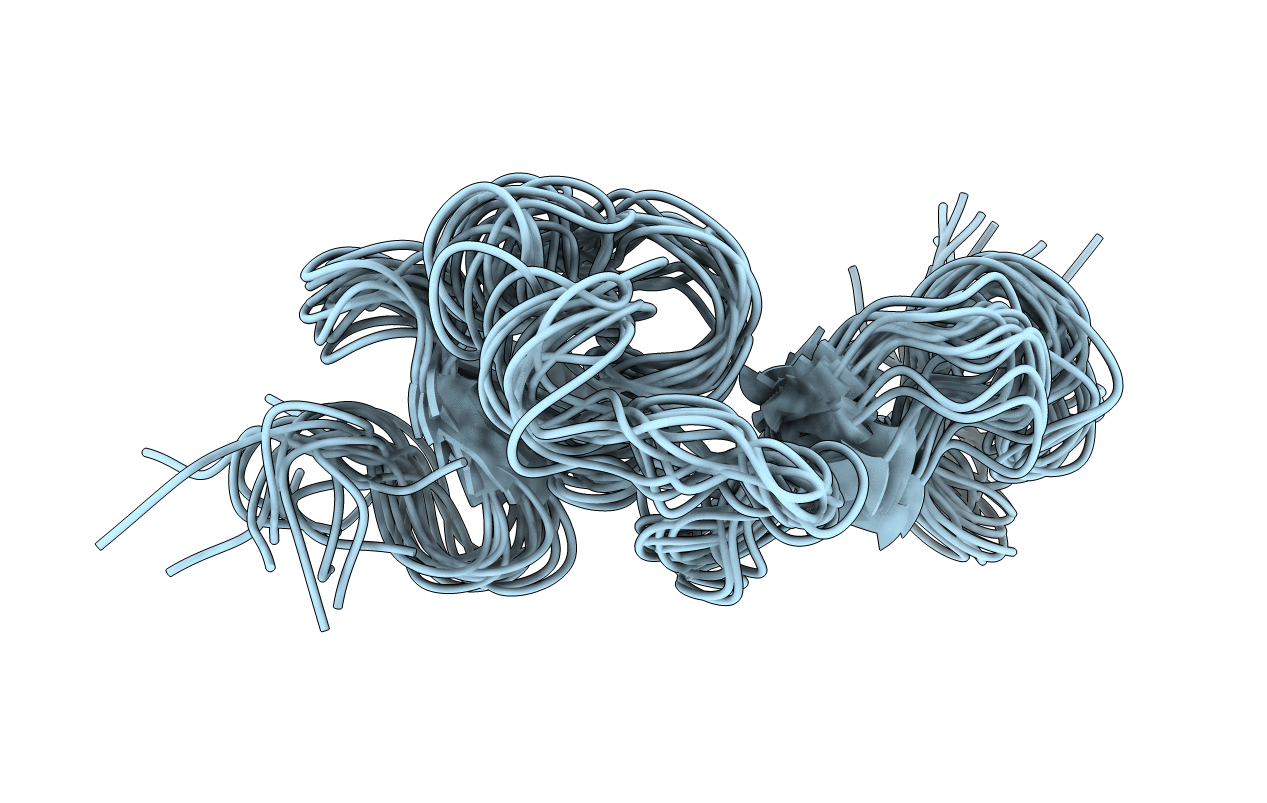
2FYJ image
Deposition Date 2006-02-08
Release Date 2006-10-10
Last Version Date 2024-11-20
Entry Detail
PDB ID:
2FYJ
Keywords:
Title:
NMR Solution structure of calcium-loaded LRP double module
Biological Source:
Source Organism:
Homo sapiens (Taxon ID: 9606)
Method Details:
Experimental Method:
Conformers Calculated:
200
Conformers Submitted:
15
Selection Criteria:
lowest energy, fewest violations

Macromolecular Entities
Structures with similar UniProt ID
Protein Blast
Polymer Type:polypeptide(L)
Molecule:Low-density lipoprotein receptor-related protein 1
Gene (Uniprot):LRP1
Chain IDs:A
Chain Length:82
Number of Molecules:1
Biological Source:Homo sapiens
Ligand Molecules
Primary Citation

Abstact

The low-density lipoprotein receptor-related protein (LRP) interacts with more than 30 ligands of different sizes and structures that can all be replaced by the receptor-associated protein (RAP). The double module of complement type repeats, CR56, of LRP binds many ligands including all three domains of RAP and alpha2-macroglobulin, which promotes the catabolism of the Abeta-peptide implicated in Alzheimer's disease. To understand the receptor-ligand cross-talk, the NMR structure of CR56 has been solved and ligand binding experiments with RAP domain 1 (RAPd1) have been performed. From chemical shift perturbations of both binding partners upon complex formation, a HADDOCK model of the complex between CR56 and RAPd1 has been obtained. The binding residues are similar to a common binding motif suggested from alpha2-macroglobulin binding studies and provide evidence for an understanding of their mutual cross-competition pattern. The present structural results convey a simultaneous description of both binding partners of an LRP-ligand complex and open a route to a broader understanding of the binding specificity of the LRP receptor, which may involve a general four-residue receptor-ligand recognition motif common to all LRP ligands. The present result may be beneficial in the design of antagonists of ligand binding to the LDL receptor family, and especially of drugs for treatment of Alzheimer's disease.

Legend

Protein

Chemical

Disease

Primary Citation of related structures
Feedback Form
Name
Email
Institute
Feedback