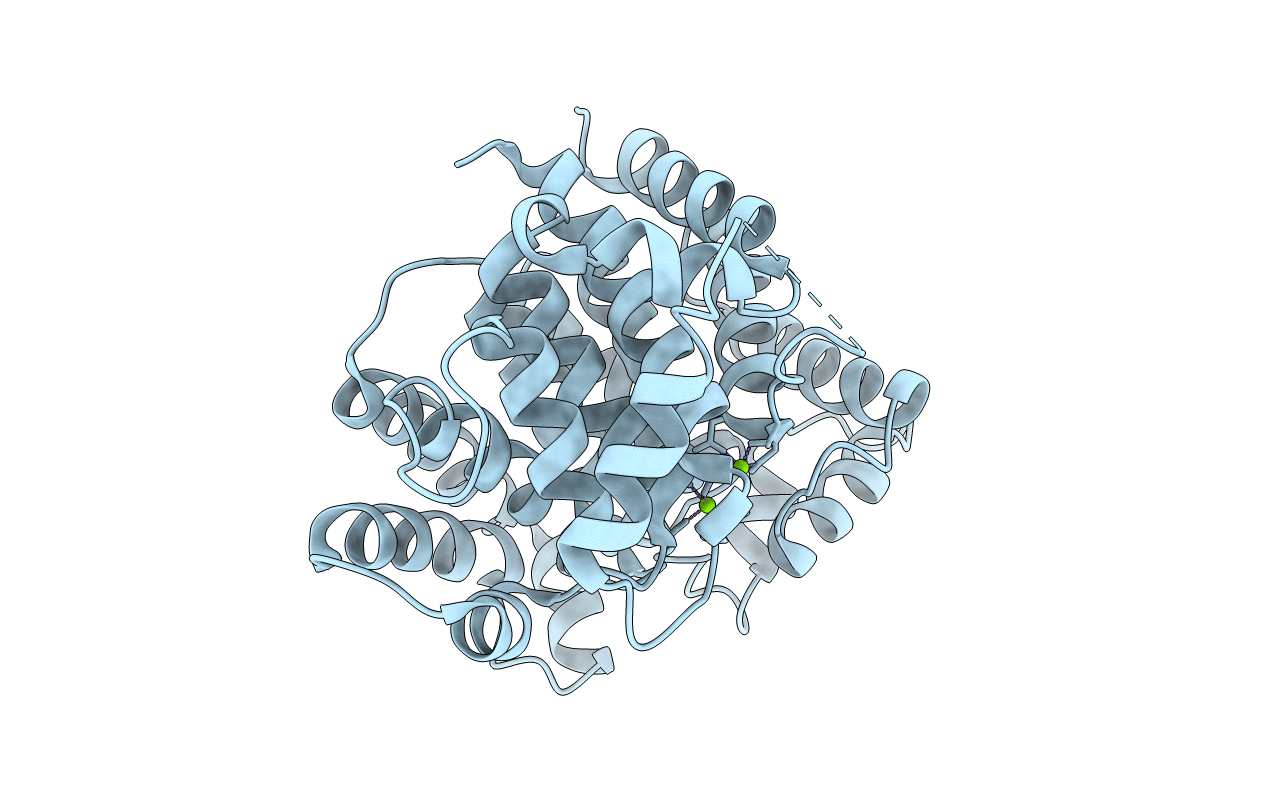
2FOZ image
Deposition Date 2006-01-15
Release Date 2006-10-10
Last Version Date 2024-02-14
Entry Detail
PDB ID:
2FOZ
Keywords:
Title:
human ADP-ribosylhydrolase 3
Biological Source:
Source Organism:
Homo sapiens (Taxon ID: 9606)
Host Organism:
Method Details:
Experimental Method:
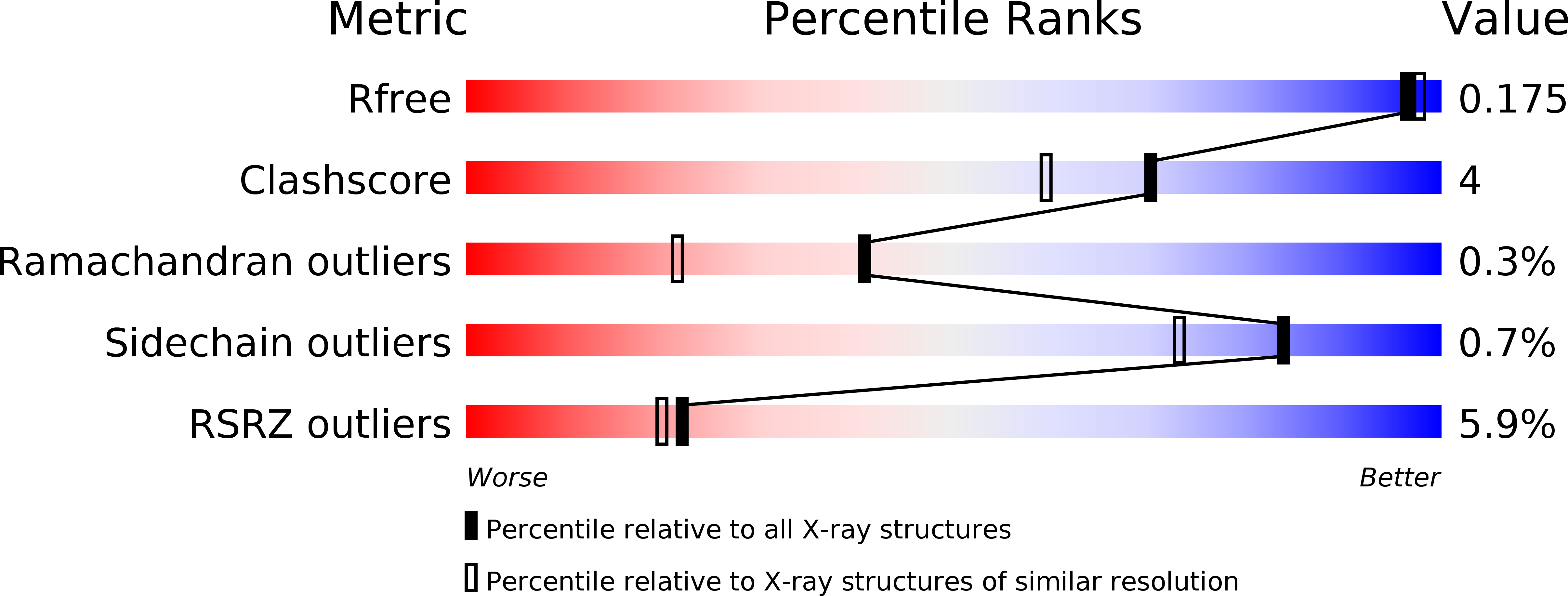
Resolution:
1.60 Å
R-Value Free:
0.20
R-Value Work:
0.17
R-Value Observed:
0.17
Space Group:
P 21 21 21
Macromolecular Entities
Structures with similar UniProt ID
Protein Blast
Polymer Type:polypeptide(L)
Molecule:ADP-ribosylhydrolase like 2
Gene (Uniprot):ADPRS
Chain IDs:A
Chain Length:347
Number of Molecules:1
Biological Source:Homo sapiens
Ligand Molecules
Primary Citation
The structure of human ADP-ribosylhydrolase 3 (ARH3) provides insights into the reversibility of protein ADP-ribosylation.
Proc.Natl.Acad.Sci.Usa 103 15026 15031 (2006)
PMID: 17015823 DOI: 10.1073/pnas.0606762103

Abstact

Posttranslational modifications are used by cells from all kingdoms of life to control enzymatic activity and to regulate protein function. For many cellular processes, including DNA repair, spindle function, and apoptosis, reversible mono- and polyADP-ribosylation constitutes a very important regulatory mechanism. Moreover, many pathogenic bacteria secrete toxins which ADP-ribosylate human proteins, causing diseases such as whooping cough, cholera, and diphtheria. Whereas the 3D structures of numerous ADP-ribosylating toxins and related mammalian enzymes have been elucidated, virtually nothing is known about the structure of protein de-ADP-ribosylating enzymes. Here, we report the 3Dstructure of human ADP-ribosylhydrolase 3 (hARH3). The molecular architecture of hARH3 constitutes the archetype of an all-alpha-helical protein fold and provides insights into the reversibility of protein ADP-ribosylation. Two magnesium ions flanked by highly conserved amino acids pinpoint the active-site crevice. Recombinant hARH3 binds free ADP-ribose with micromolar affinity and efficiently de-ADP-ribosylates poly- but not monoADP-ribosylated proteins. Docking experiments indicate a possible binding mode for ADP-ribose polymers and suggest a reaction mechanism. Our results underscore the importance of endogenous ADP-ribosylation cycles and provide a basis for structure-based design of ADP-ribosylhydrolase inhibitors.

Legend

Protein

Chemical

Disease

Primary Citation of related structures
Feedback Form
Name
Email
Institute
Feedback