2FHW image
Deposition Date 2005-12-27
Release Date 2006-01-24
Last Version Date 2024-11-13
Entry Detail
PDB ID:
2FHW
Title:
Solution structure of human relaxin-3
Method Details:
Experimental Method:
Conformers Calculated:
50
Conformers Submitted:
20
Selection Criteria:
structures with the least restraint violations,structures with the lowest energy
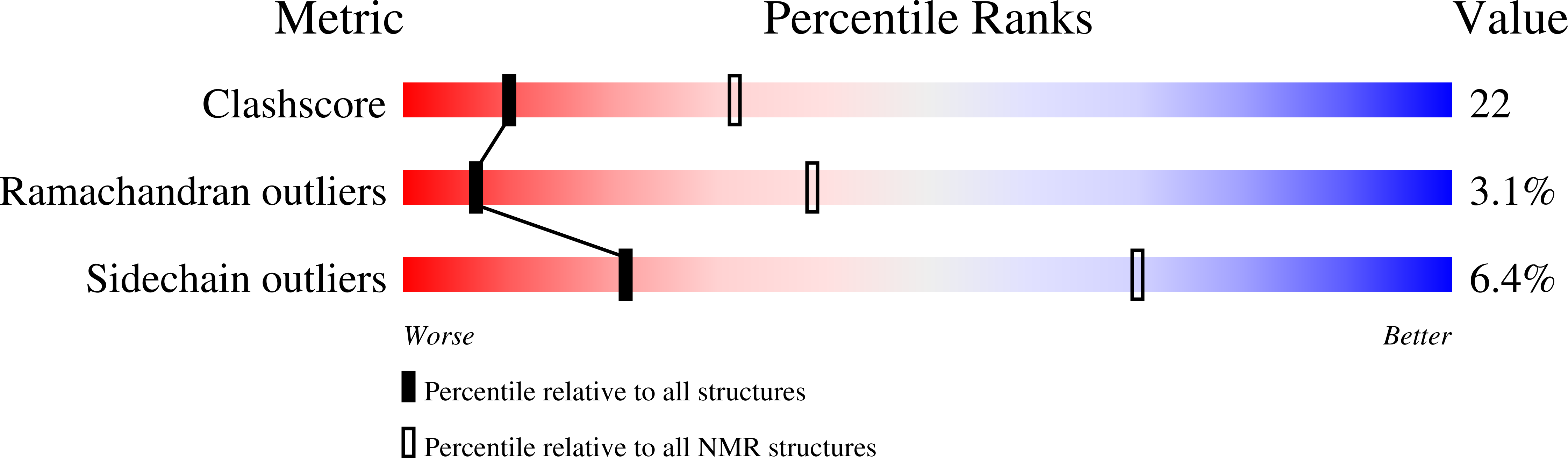
Macromolecular Entities
Structures with similar UniProt ID
Protein Blast
Polymer Type:polypeptide(L)
Molecule:Relaxin 3 (Prorelaxin H3) (Insulin-like peptide INSL7) (Insulin-like peptide 7)
Gene (Uniprot):RLN3
Chain IDs:B (auth: A)
Chain Length:24
Number of Molecules:1
Biological Source:
Structures with similar UniProt ID
Protein Blast
Polymer Type:polypeptide(L)
Molecule:Relaxin 3 (Prorelaxin H3) (Insulin-like peptide INSL7) (Insulin-like peptide 7)
Gene (Uniprot):RLN3
Chain IDs:A (auth: B)
Chain Length:27
Number of Molecules:1
Biological Source:
Ligand Molecules
Primary Citation
Solution structure and novel insights into the determinants of the receptor specificity of human relaxin-3.
J.Biol.Chem. 281 5845 5851 (2006)
PMID: 16365033 DOI: 10.1074/jbc.M511210200

Abstact

Relaxin-3 is the most recently discovered member of the relaxin family of peptide hormones. In contrast to relaxin-1 and -2, whose main functions are associated with pregnancy, relaxin-3 is involved in neuropeptide signaling in the brain. Here, we report the solution structure of human relaxin-3, the first structure of a relaxin family member to be solved by NMR methods. Overall, relaxin-3 adopts an insulin-like fold, but the structure differs crucially from the crystal structure of human relaxin-2 near the B-chain terminus. In particular, the B-chain C terminus folds back, allowing Trp(B27) to interact with the hydrophobic core. This interaction partly blocks the conserved RXXXRXXI motif identified as a determinant for the interaction with the relaxin receptor LGR7 and may account for the lower affinity of relaxin-3 relative to relaxin for this receptor. This structural feature is likely important for the activation of its endogenous receptor, GPCR135.

Legend

Protein

Chemical

Disease

Primary Citation of related structures
Feedback Form
Name
Email
Institute
Feedback