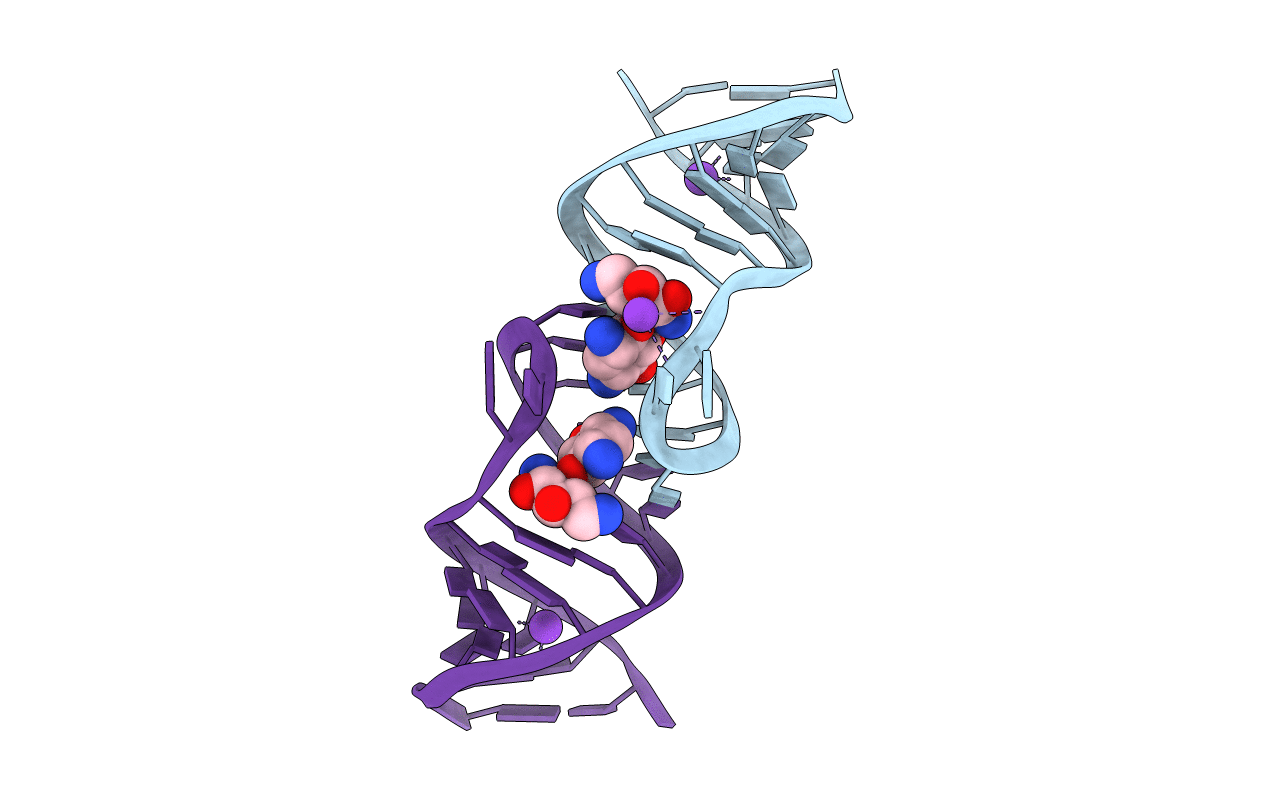
2FCX image
Deposition Date 2005-12-13
Release Date 2006-05-16
Last Version Date 2024-02-14
Entry Detail
PDB ID:
2FCX
Keywords:
Title:
HIV-1 DIS kissing-loop in complex with neamine
Biological Source:
Source Organism:
Method Details:
Experimental Method:
Resolution:
2.00 Å
R-Value Free:
0.29
R-Value Work:
0.26
R-Value Observed:
0.26
Space Group:
C 2 2 21
Macromolecular Entities
Polymer Type:polyribonucleotide
Molecule:HIV-1 DIS RNA
Chain IDs:A, B
Chain Length:23
Number of Molecules:2
Biological Source:
Modified Residue
Compound ID Chain ID Parent Comp ID Details 2D Image
5BU A U 5-BROMO-URIDINE-5'-MONOPHOSPHATE
Primary Citation
Targeting the dimerization initiation site of HIV-1 RNA with aminoglycosides: from crystal to cell.
Nucleic Acids Res. 34 2328 2339 (2006)
PMID: 16679451 DOI: 10.1093/nar/gkl317

Abstact

The kissing-loop complex that initiates dimerization of genomic RNA is crucial for Human Immunodeficiency Virus Type 1 (HIV-1) replication. We showed that owing to its strong similitude with the bacterial ribosomal A site it can be targeted by aminoglycosides. Here, we present its crystal structure in complex with neamine, ribostamycin, neomycin and lividomycin. These structures explain the specificity for 4,5-disubstituted 2-deoxystreptamine (DOS) derivatives and for subtype A and subtype F kissing-loop complexes, and provide a strong basis for rational drug design. As a consequence of the different topologies of the kissing-loop complex and the A site, these aminoglycosides establish more contacts with HIV-1 RNA than with 16S RNA. Together with biochemical experiments, they showed that while rings I, II and III confer binding specificity, rings IV and V are important for affinity. Binding of neomycin, paromomycin and lividomycin strongly stabilized the kissing-loop complex by bridging the two HIV-1 RNA molecules. Furthermore, in situ footprinting showed that the dimerization initiation site (DIS) of HIV-1 genomic RNA could be targeted by these aminoglycosides in infected cells and virions, demonstrating its accessibility.

Legend

Protein

Chemical

Disease

Primary Citation of related structures
Feedback Form
Name
Email
Institute
Feedback