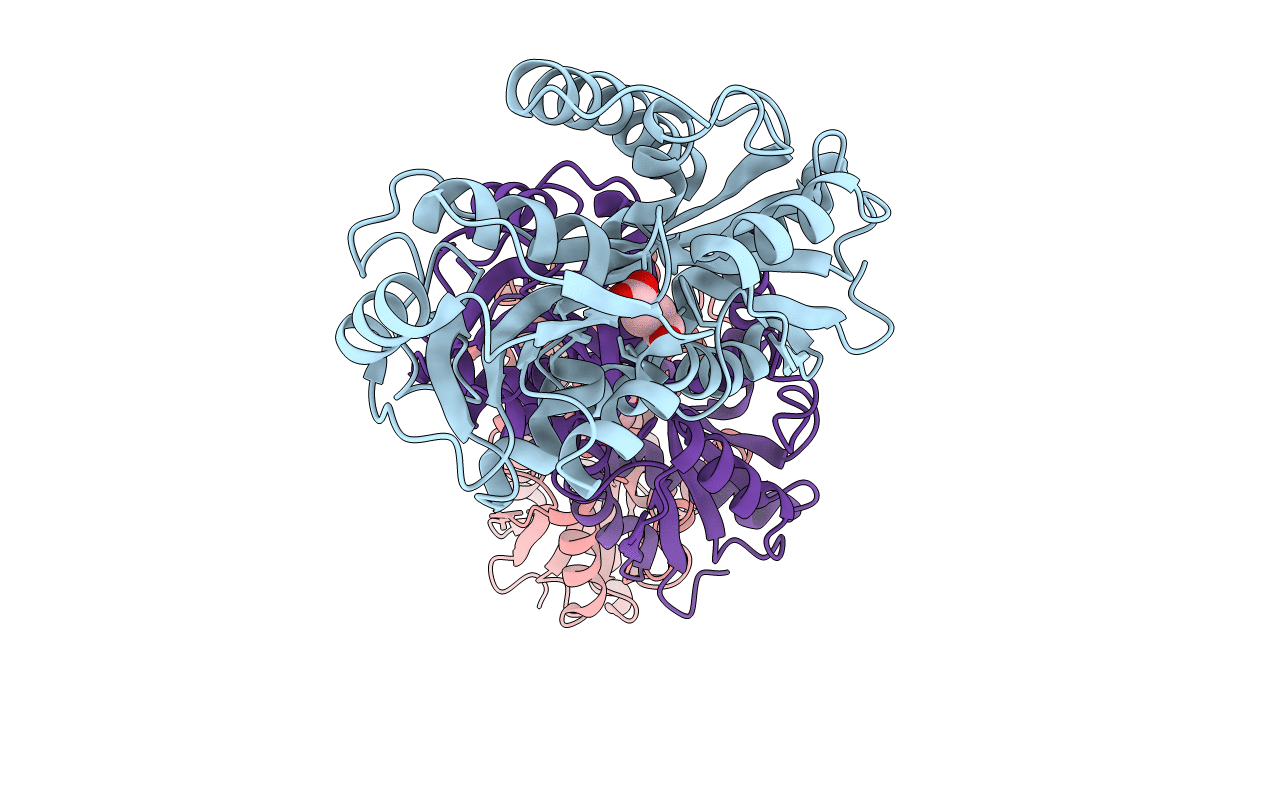
2F5X image
Deposition Date 2005-11-28
Release Date 2006-01-24
Last Version Date 2024-11-20
Entry Detail
PDB ID:
2F5X
Title:
Structure of periplasmic binding protein BugD
Biological Source:
Source Organism:
Host Organism:
Method Details:
Experimental Method:
Resolution:
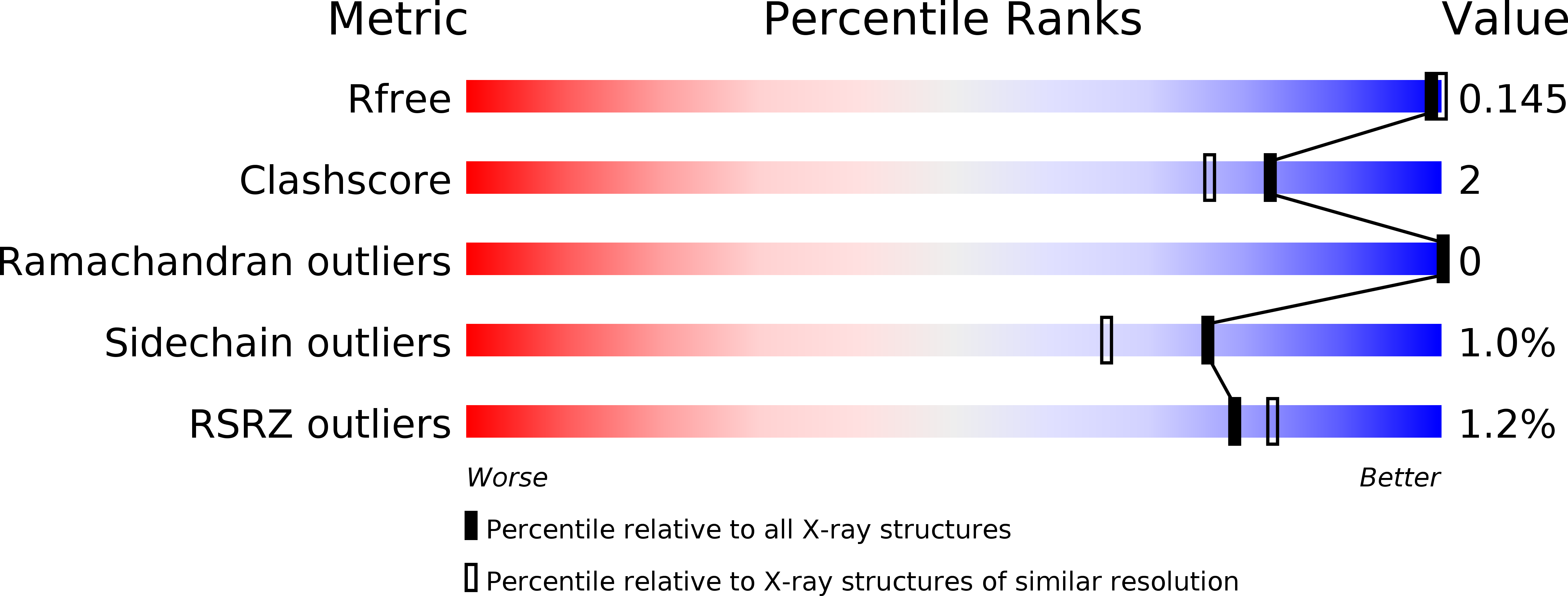
1.72 Å
R-Value Free:
0.17
R-Value Work:
0.14
R-Value Observed:
0.14
Space Group:
P 21 21 21
Macromolecular Entities
Structures with similar UniProt ID
Protein Blast
Polymer Type:polypeptide(L)
Molecule:BugD
Chain IDs:A, B, C
Chain Length:312
Number of Molecules:3
Biological Source:Bordetella pertussis Tohama I
Modified Residue
Compound ID Chain ID Parent Comp ID Details 2D Image
MSE A MET SELENOMETHIONINE
Ligand Molecules
Primary Citation
Crystal Structure of Bordetella pertussis BugD Solute Receptor Unveils the Basis of Ligand Binding in a New Family of Periplasmic Binding Proteins
J.Mol.Biol. 356 1014 1026 (2006)
PMID: 16403514 DOI: 10.1016/j.jmb.2005.11.096

Abstact

Periplasmic binding proteins of a new family particularly well represented in Bordetella pertussis have been called Bug receptors. One B.pertussis Bug protein is part of a tripartite tricarboxylate transporter while the functions of the other 77 are unknown. We report the first structure of a Bug receptor, BugD. It adopts the characteristic Venus flytrap motif observed in other periplasmic binding proteins, with two globular domains bisected by a deep cleft. BugD displays a closed conformation resulting from the fortuitous capture of a ligand, identified from the electron density as an aspartate. The structure reveals a distinctive alpha carboxylate-binding motif, involving two water molecules that bridge the carboxylate oxygen atoms to the protein. Both water molecules are hydrogen bonded to a common carbonyl group from Ala14, and each forms a hydrogen bond with one carboxylate oxygen atom of the ligand. Additional hydrogen bonds are found between the ligand alpha carboxylate oxygen atoms and protein backbone amide groups and with a threonine hydroxyl group. This specific ligand-binding motif is highly conserved in Bug proteins, indicating that they may all be receptors of amino acids or other carboxylated solutes, with a similar binding mode. The present structure thus unveils the bases of ligand binding in this large family of periplasmic binding proteins, several hundred members of which have been identified in various bacterial species.

Legend

Protein

Chemical

Disease

Primary Citation of related structures
Feedback Form
Name
Email
Institute
Feedback