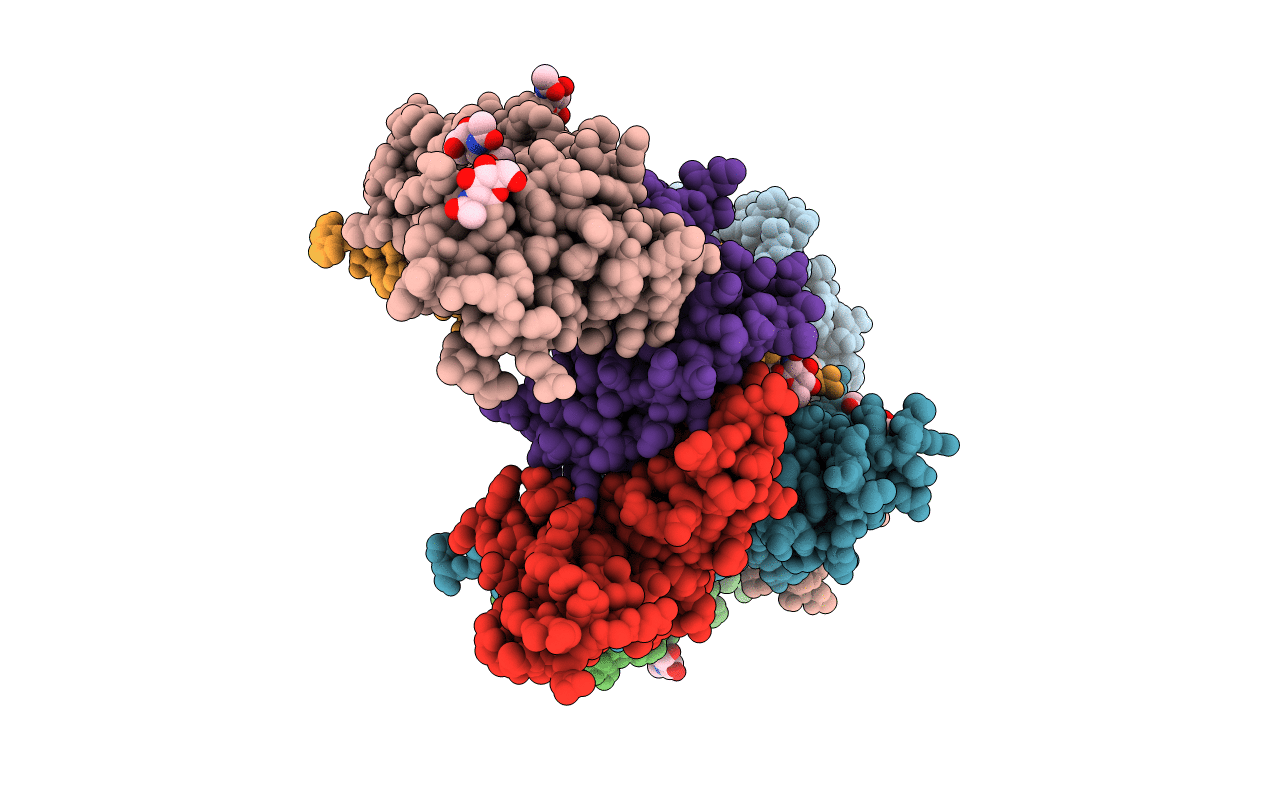
2ERJ image
Deposition Date 2005-10-25
Release Date 2006-02-21
Last Version Date 2024-10-30
Entry Detail
PDB ID:
2ERJ
Title:
Crystal structure of the heterotrimeric interleukin-2 receptor in complex with interleukin-2
Biological Source:
Source Organism:
Homo sapiens (Taxon ID: 9606)
Host Organism:
Method Details:
Experimental Method:
Resolution:
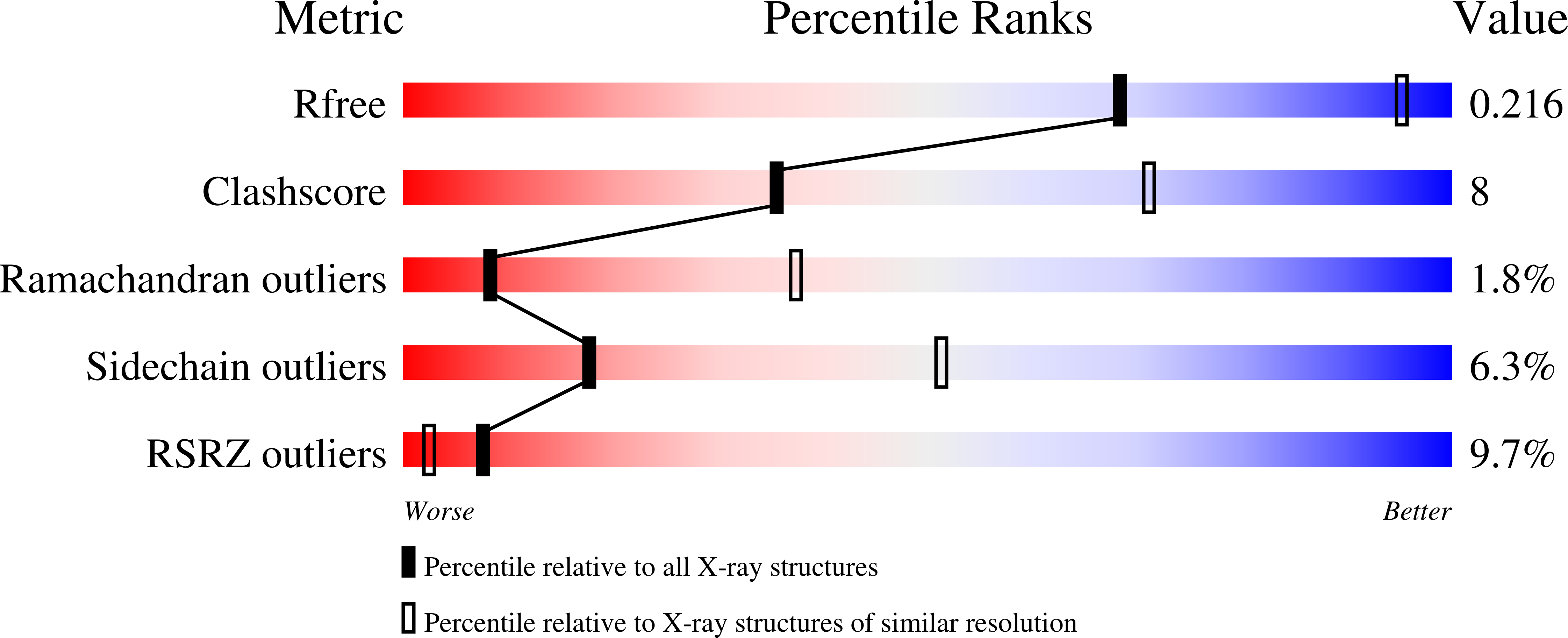
3.00 Å
R-Value Free:
0.26
R-Value Work:
0.22
R-Value Observed:
0.22
Space Group:
P 1
Macromolecular Entities
Structures with similar UniProt ID
Protein Blast
Polymer Type:polypeptide(L)
Molecule:Interleukin-2 receptor alpha chain
Gene (Uniprot):IL2RA
Mutagens:N49S,N68S
Chain IDs:A, E
Chain Length:225
Number of Molecules:2
Biological Source:Homo sapiens
Structures with similar UniProt ID
Protein Blast
Polymer Type:polypeptide(L)
Molecule:Interleukin-2 receptor beta chain
Gene (Uniprot):IL2RB
Chain IDs:B, F
Chain Length:219
Number of Molecules:2
Biological Source:Homo sapiens
Structures with similar UniProt ID
Protein Blast
Polymer Type:polypeptide(L)
Molecule:Cytokine receptor common gamma chain
Gene (Uniprot):IL2RG
Mutagens:N58Q
Chain IDs:C, G
Chain Length:247
Number of Molecules:2
Biological Source:Homo sapiens
Structures with similar UniProt ID
Protein Blast
Polymer Type:polypeptide(L)
Molecule:Interleukin-2
Gene (Uniprot):IL2
Mutagens:C125A
Chain IDs:D, H
Chain Length:133
Number of Molecules:2
Biological Source:Homo sapiens
Modified Residue
Compound ID Chain ID Parent Comp ID Details 2D Image
ASN B ASN GLYCOSYLATION SITE
Ligand Molecules
Primary Citation
Crystal structure of the IL-2 signaling complex: Paradigm for a heterotrimeric cytokine receptor.
Proc.Natl.Acad.Sci.Usa 103 2793 ? (2006)
PMID: 16477002 DOI: 10.1073/pnas.0511161103

Abstact

IL-2 is a cytokine that functions as a growth factor and central regulator in the immune system and mediates its effects through ligand-induced hetero-trimerization of the receptor subunits IL-2R alpha, IL-2R beta, and gamma(c). Here, we describe the crystal structure of the trimeric assembly of the human IL-2 receptor ectodomains in complex with IL-2 at 3.0 A resolution. The quaternary structure is consistent with a stepwise assembly from IL-2/IL-2R alpha to IL-2/IL-2R alpha/IL-2R beta to IL-2/IL-2R alpha/IL-2R beta/gamma(c). The IL-2R alpha subunit forms the largest of the three IL-2/IL-2R interfaces, which, together with the high abundance of charge-charge interactions, correlates well with the rapid association rate and high-affinity interaction of IL-2R alpha with IL-2 at the cell surface. Surprisingly, IL-2R alpha makes no contacts with IL-2R beta or gamma(c), and only minor changes are observed in the IL-2 structure in response to receptor binding. These findings support the principal role of IL-2R alpha to deliver IL-2 to the signaling complex and act as regulator of signal transduction. Cooperativity in assembly of the final quaternary complex is easily explained by the extraordinarily extensive set of interfaces found within the fully assembled IL-2 signaling complex, which nearly span the entire length of the IL-2R beta and gamma(c) subunits. Helix A of IL-2 wedges tightly between IL-2R beta and gamma(c) to form a three-way junction that coalesces into a composite binding site for the final gamma(c) recruitment. The IL-2/gamma(c) interface itself exhibits the smallest buried surface and the fewest hydrogen bonds in the complex, which is consistent with its promiscuous use in other cytokine receptor complexes.

Legend

Protein

Chemical

Disease

Primary Citation of related structures
Feedback Form
Name
Email
Institute
Feedback