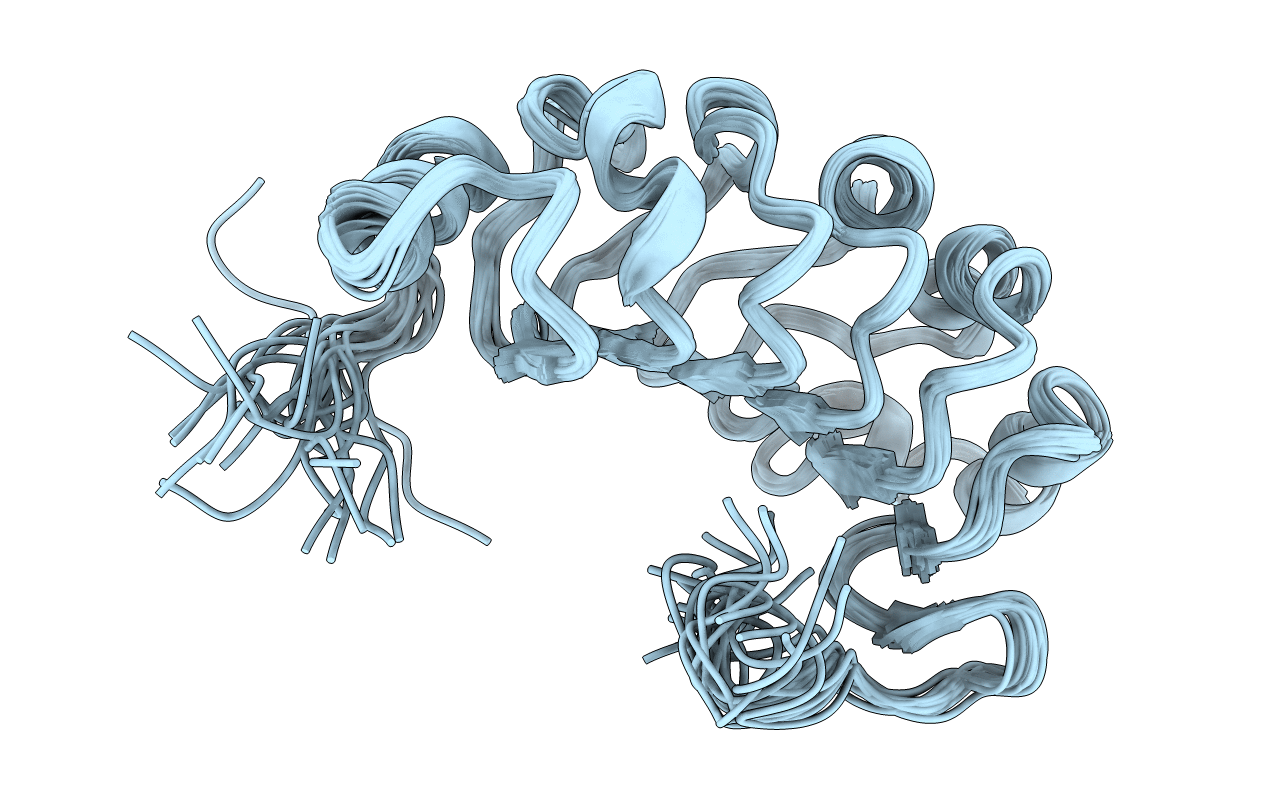
2ELL image
Deposition Date 2007-03-27
Release Date 2008-04-01
Last Version Date 2024-05-01
Entry Detail
PDB ID:
2ELL
Keywords:
Title:
Solution structure of the Leucine Rich Repeat of human Acidic leucine-rich nuclear phosphoprotein 32 family member B
Biological Source:
Source Organism:
Homo sapiens (Taxon ID: 9606)
Method Details:
Experimental Method:
Conformers Calculated:
100
Conformers Submitted:
20
Selection Criteria:
structures with the least restraint violations, target function

Macromolecular Entities
Structures with similar UniProt ID
Protein Blast
Polymer Type:polypeptide(L)
Molecule:Acidic leucine-rich nuclear phosphoprotein 32 family member B
Gene (Uniprot):ANP32B
Chain IDs:A
Chain Length:168
Number of Molecules:1
Biological Source:Homo sapiens
Ligand Molecules
Primary Citation
Solution structure of histone chaperone ANP32B: interaction with core histones H3-H4 through its acidic concave domain.
J.Mol.Biol. 401 97 114 (2010)
PMID: 20538007 DOI: 10.1016/j.jmb.2010.06.005

Abstact

Eukaryotic gene expression is regulated by histone deposition onto and eviction from nucleosomes, which are mediated by several chromatin-modulating factors. Among them, histone chaperones are key factors that facilitate nucleosome assembly. Acidic nuclear phosphoprotein 32B (ANP32B) belongs to the ANP32 family, which shares N-terminal leucine-rich repeats (LRRs) and a C-terminal variable anionic region. The C-terminal region functions as an inhibitor of histone acetylation, but the functional roles of the LRR domain in chromatin regulation have remained elusive. Here, we report that the LRR domain of ANP32B possesses histone chaperone activity and forms a curved structure with a parallel beta-sheet on the concave side and mostly helical elements on the convex side. Our analyses revealed that the interaction of ANP32B with the core histones H3-H4 occurs on its concave side, and both the acidic and hydrophobic residues that compose the concave surface are critical for histone binding. These results provide a structural framework for understanding the functional mechanisms of acidic histone chaperones.

Legend

Protein

Chemical

Disease

Primary Citation of related structures
Feedback Form
Name
Email
Institute
Feedback