2EAL image
Deposition Date 2007-01-31
Release Date 2007-09-25
Last Version Date 2024-03-13
Entry Detail
PDB ID:
2EAL
Title:
Crystal structure of human galectin-9 N-terminal CRD in complex with Forssman pentasaccharide
Biological Source:
Source Organism:
Homo sapiens (Taxon ID: 9606)
Method Details:
Experimental Method:
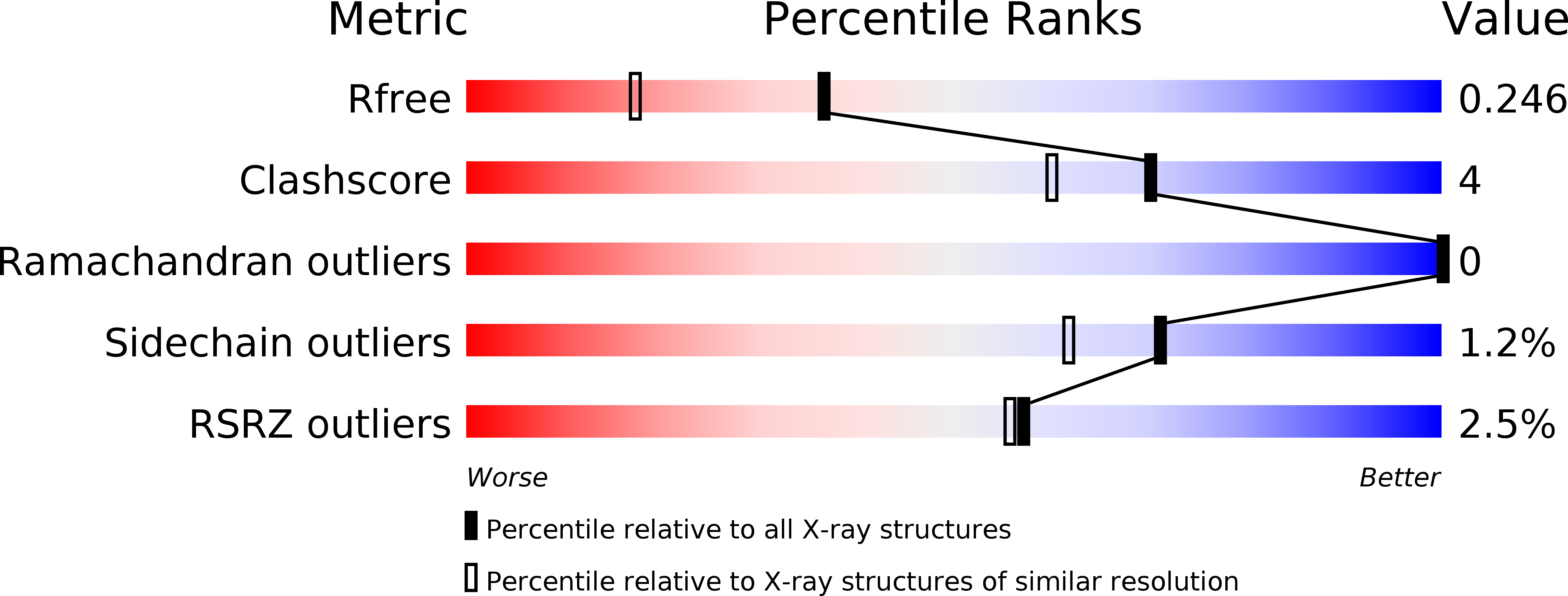
Resolution:
1.85 Å
R-Value Free:
0.24
R-Value Work:
0.20
R-Value Observed:
0.20
Space Group:
P 21 21 21
Macromolecular Entities
Structures with similar UniProt ID
Protein Blast
Polymer Type:polypeptide(L)
Molecule:Galectin-9
Gene (Uniprot):LGALS9
Chain IDs:A, B
Chain Length:148
Number of Molecules:2
Biological Source:Homo sapiens
Primary Citation
Structural analysis of the human galectin-9 N-terminal carbohydrate recognition domain reveals unexpected properties that differ from the mouse orthologue.
J.Mol.Biol. 375 119 135 (2008)
PMID: 18005988 DOI: 10.1016/j.jmb.2007.09.060

Abstact

Galectins are a family of beta-galactoside-binding lectins that contain a conserved carbohydrate recognition domain (CRD). They exhibit high affinities for small beta-galactosides as well as variable binding specificities for complex glycoconjugates. Structural and biochemical analyses of the mechanism governing specific carbohydrate recognition provide a useful template to elucidate the function of these proteins. Here we report the crystal structures of the human galectin-9 N-terminal CRD (NCRD) in the presence of lactose and Forssman pentasaccharide. Mouse galectin-9 NCRD, the structure of which was previously solved by our group, forms a non-canonical dimer in both the crystal state and in solution. Human galectin-9 NCRD, however, exists as a monomer in crystals, despite a high sequence identity to the mouse homologue. Comparative frontal affinity chromatography analysis of the mouse and human galectin-9 NCRDs revealed different carbohydrate binding specificities, with disparate affinities for complex glycoconjugates. Human galectin-9 NCRD exhibited a high affinity for Forssman pentasaccharide; the association constant for mouse galectin-9 NCRD was 100-fold less than that observed for the human protein. The combination of structural data with mutational studies demonstrated that non-conserved amino acid residues on the concave surface were important for determination of target specificities. The human galectin-9 NCRD exhibited greater inhibition of cell proliferation than the mouse NCRD. We discuss the biochemical and structural differences between highly homologous proteins from different species.

Legend

Protein

Chemical

Disease

Primary Citation of related structures
Feedback Form
Name
Email
Institute
Feedback