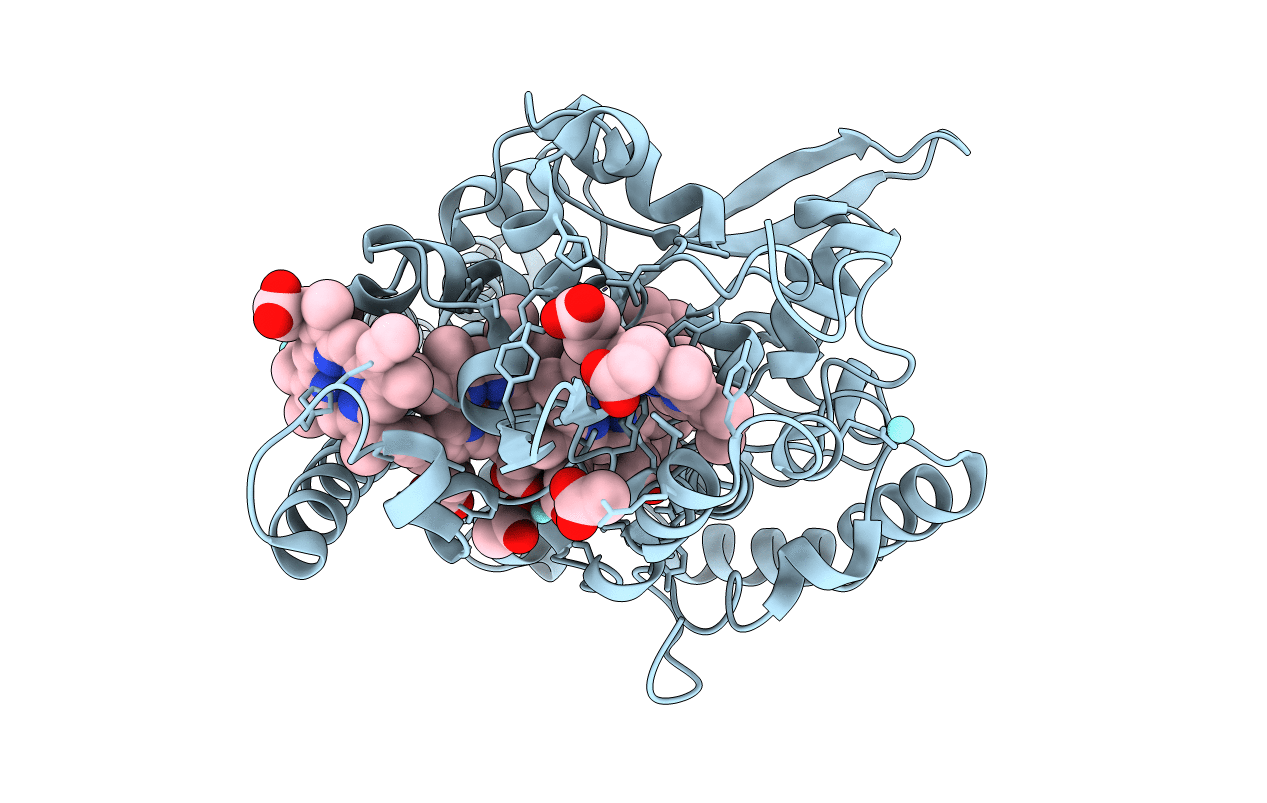
2E80 image
Deposition Date 2007-01-15
Release Date 2007-01-30
Last Version Date 2024-10-23
Entry Detail
PDB ID:
2E80
Keywords:
Title:
Cytochrome c Nitrite Reductase from Wolinella succinogenes with bound substrate nitrite
Biological Source:
Source Organism:
Method Details:
Experimental Method:
Resolution:
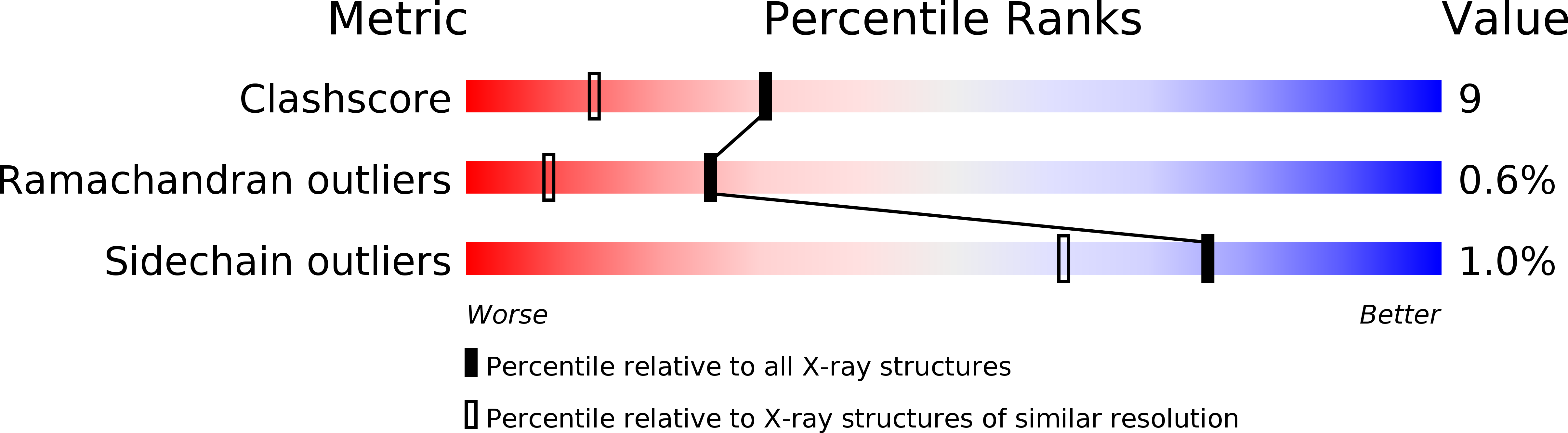
1.60 Å
R-Value Free:
0.21
R-Value Work:
0.18
Space Group:
I 41 2 2
Macromolecular Entities
Structures with similar UniProt ID
Protein Blast
Polymer Type:polypeptide(L)
Molecule:Cytochrome c-552
Gene (Uniprot):nrfA
Chain IDs:A
Chain Length:485
Number of Molecules:1
Biological Source:Wolinella succinogenes
Primary Citation
Mechanism of the six-electron reduction of nitrite to ammonia by cytochrome c nitrite reductase
J.Am.Chem.Soc. 124 11737 11745 (2002)
PMID: 12296741 DOI: 10.1021/ja0206487

Abstact

Cytochrome c nitrite reductase catalyzes the six-electron reduction of nitrite to ammonia without the release of potential reaction intermediates, such as NO or hydroxylamine. On the basis of the crystallographic observation of reaction intermediates and of density functional calculations, we present a working hypothesis for the reaction mechanism of this multiheme enzyme which carries a novel lysine-coordinated heme group (Fe-Lys). It is proposed that nitrite reduction starts with a heterolytic cleavage of the N-O bond which is facilitated by a pronounced back-bonding interaction of nitrite coordinated through nitrogen to the reduced (Fe(II)) but not the oxidized (Fe(III)) active site iron. This step leads to the formation of an [FeNO](6) species and a water molecule and is further facilitated by a hydrogen bonding network that induces an electronic asymmetry in the nitrite molecule that weakens one N-O bond and strengthens the other. Subsequently, two rapid one-electron reductions lead to an [FeNO](8) form and, by protonation, to an Fe(II)-HNO adduct. Hereafter, hydroxylamine will be formed by a consecutive two-electron two-proton step which is dehydrated in the final two-electron reduction step to give ammonia and an additional water molecule. A single electron reduction of the active site closes the catalytic cycle.

Legend

Protein

Chemical

Disease

Primary Citation of related structures
Feedback Form
Name
Email
Institute
Feedback