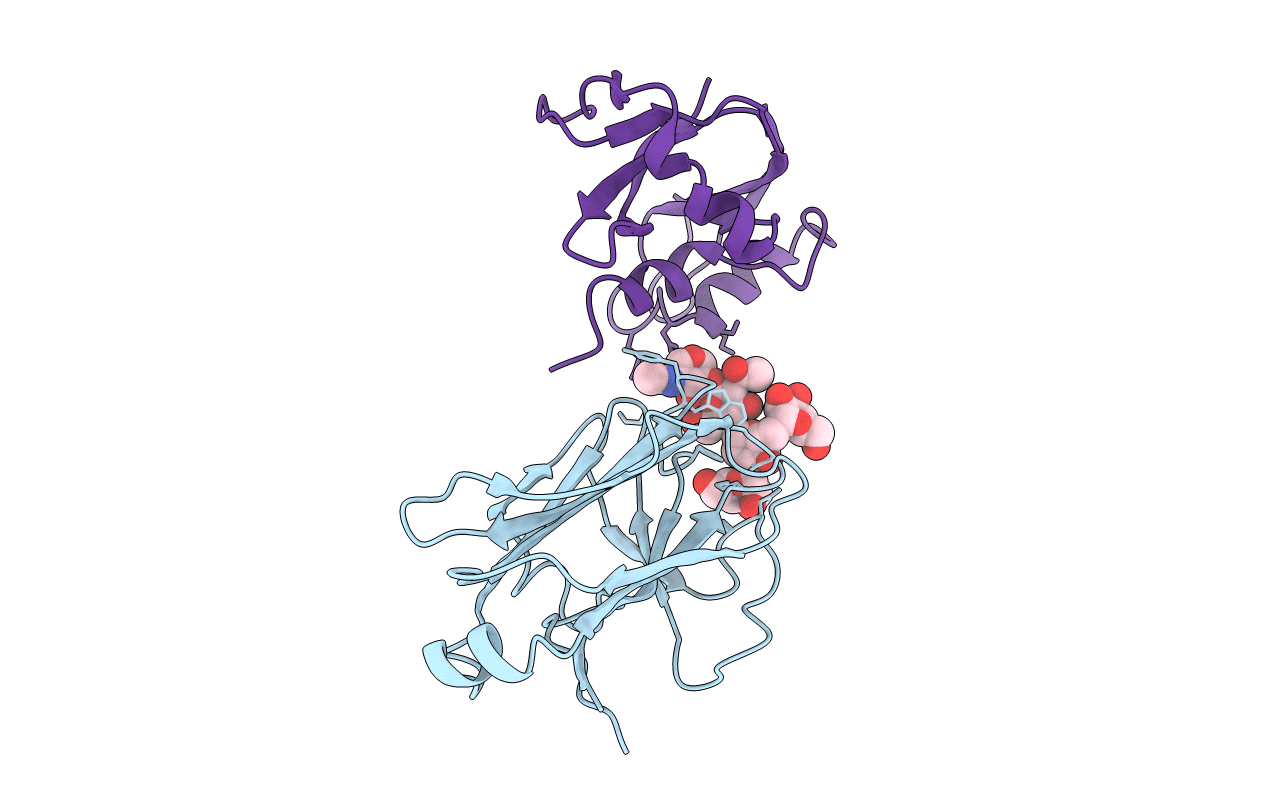
2E33 image
Deposition Date 2006-11-20
Release Date 2007-03-20
Last Version Date 2024-11-20
Entry Detail
PDB ID:
2E33
Title:
Structural basis for selection of glycosylated substrate by SCFFbs1 ubiquitin ligase
Biological Source:
Source Organism:
Mus musculus (Taxon ID: 10090)
Bos taurus (Taxon ID: 9913)
Host Organism:
Method Details:
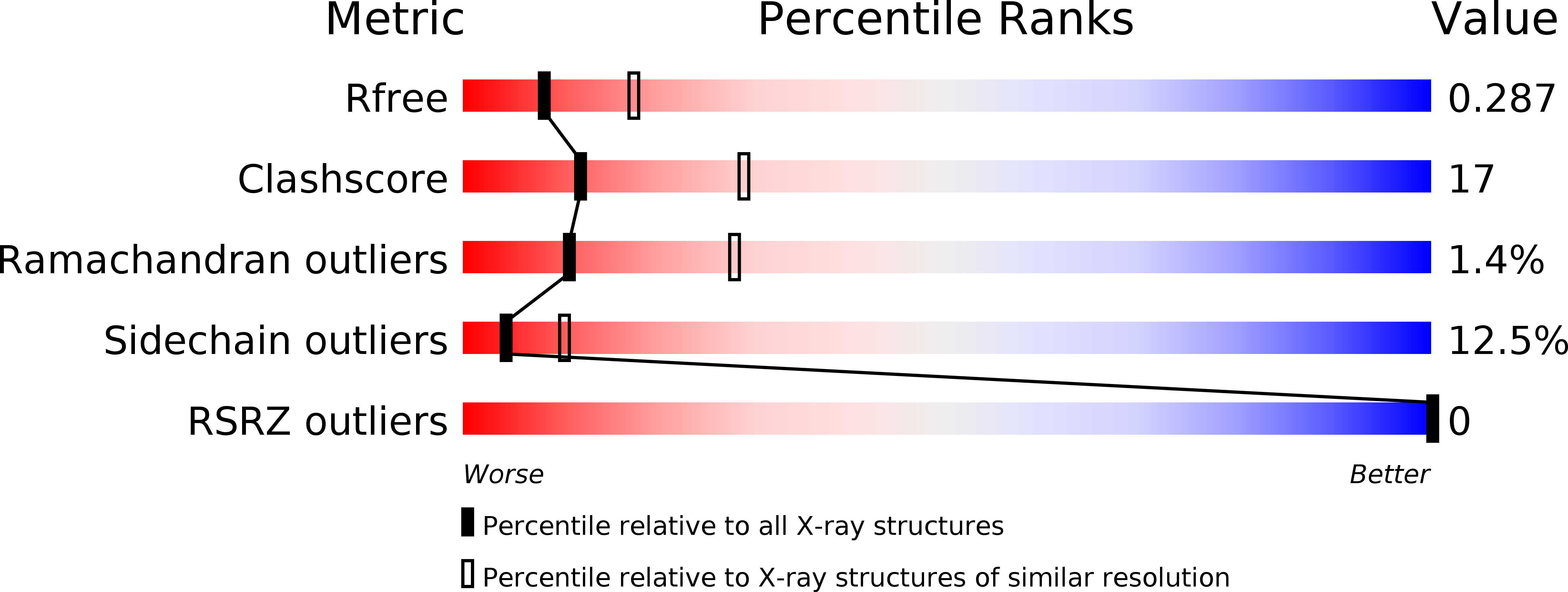
Experimental Method:
Resolution:
2.70 Å
R-Value Free:
0.28
R-Value Work:
0.21
R-Value Observed:
0.21
Space Group:
P 4 3 2
Macromolecular Entities
Structures with similar UniProt ID
Protein Blast
Polymer Type:polypeptide(L)
Molecule:F-box only protein 2
Gene (Uniprot):Fbxo2
Chain IDs:A
Chain Length:197
Number of Molecules:1
Biological Source:Mus musculus
Structures with similar UniProt ID
Protein Blast
Polymer Type:polypeptide(L)
Molecule:Ribonuclease pancreatic
Gene (Uniprot):RNASE1
Chain IDs:B
Chain Length:124
Number of Molecules:1
Biological Source:Bos taurus
Modified Residue
Compound ID Chain ID Parent Comp ID Details 2D Image
ASN B ASN GLYCOSYLATION SITE
Ligand Molecules
Primary Citation
Structural basis for the selection of glycosylated substrates by SCFFbs1 ubiquitin ligase
Proc.Natl.Acad.Sci.Usa 104 5777 5781 (2007)
PMID: 17389369 DOI: 10.1073/pnas.0610312104

Abstact

The ubiquitin ligase complex SCF(Fbs1), which contributes to the ubiquitination of glycoproteins, is involved in the endoplasmic reticulum-associated degradation pathway. In SCF ubiquitin ligases, a diverse array of F-box proteins confers substrate specificity. Fbs1/Fbx2, a member of the F-box protein family, recognizes high-mannose oligosaccharides. To elucidate the structural basis of SCF(Fbs1) function, we determined the crystal structures of the Skp1-Fbs1 complex and the sugar-binding domain (SBD) of the Fbs1-glycoprotein complex. The mechanistic model indicated by the structures appears to be well conserved among the SCF ubiquitin ligases. The structure of the SBD-glycoprotein complex indicates that the SBD primarily recognizes Man(3)GlcNAc(2), thereby explaining the broad activity of the enzyme against various glycoproteins. Comparison of two crystal structures of the Skp1-Fbs1 complex revealed the relative motion of a linker segment between the F-box and the SBD domains, which might underlie the ability of the complex to recognize different acceptor lysine residues for ubiquitination.

Legend

Protein

Chemical

Disease

Primary Citation of related structures
Feedback Form
Name
Email
Institute
Feedback