2DYP image
Deposition Date 2006-09-15
Release Date 2006-11-07
Last Version Date 2024-10-16
Entry Detail
PDB ID:
2DYP
Keywords:
Title:
Crystal Structure of LILRB2(LIR2/ILT4/CD85d) complexed with HLA-G
Biological Source:
Source Organism:
Homo sapiens (Taxon ID: 9606)
Host Organism:
Method Details:
Experimental Method:
Resolution:
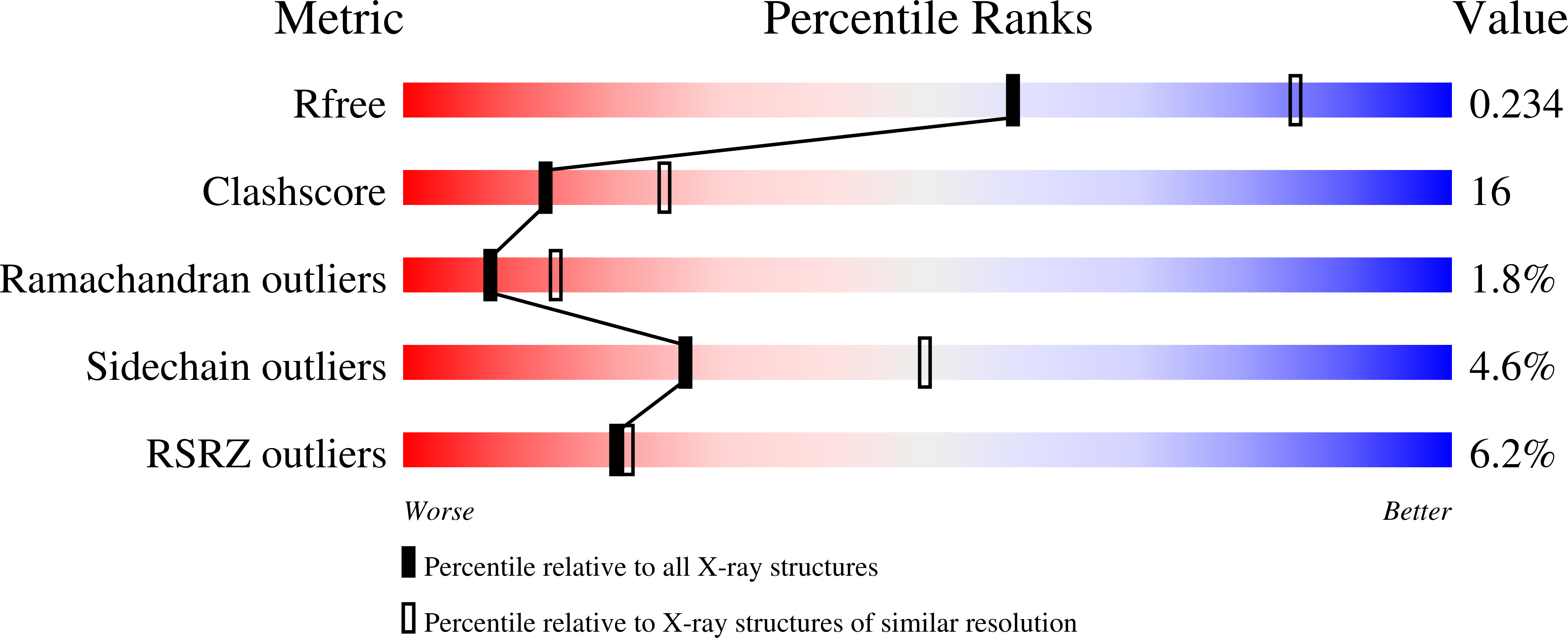
2.50 Å
R-Value Free:
0.27
R-Value Work:
0.23
Space Group:
P 31 2 1
Macromolecular Entities
Structures with similar UniProt ID
Protein Blast
Polymer Type:polypeptide(L)
Molecule:HLA class I histocompatibility antigen, alpha chain G
Gene (Uniprot):HLA-G
Mutagens:C42S
Chain IDs:A
Chain Length:277
Number of Molecules:1
Biological Source:Homo sapiens
Structures with similar UniProt ID
Protein Blast
Polymer Type:polypeptide(L)
Molecule:Beta-2-microglobulin
Gene (Uniprot):B2M
Chain IDs:B
Chain Length:100
Number of Molecules:1
Biological Source:Homo sapiens
Structures with similar UniProt ID
Protein Blast
Polymer Type:polypeptide(L)
Molecule:9 Mer Peptide From Histone H2A.x
Gene (Uniprot):H2AX
Chain IDs:C
Chain Length:9
Number of Molecules:1
Biological Source:
Structures with similar UniProt ID
Protein Blast
Polymer Type:polypeptide(L)
Molecule:Leukocyte immunoglobulin-like receptor subfamily B member 2
Gene (Uniprot):LILRB2
Chain IDs:D
Chain Length:196
Number of Molecules:1
Biological Source:Homo sapiens
Primary Citation
Structural basis for recognition of the nonclassical MHC molecule HLA-G by the leukocyte Ig-like receptor B2 (LILRB2/LIR2/ILT4/CD85d)
Proc.Natl.Acad.Sci.Usa 103 16412 16417 (2006)
PMID: 17056715 DOI: 10.1073/pnas.0605228103

Abstact

HLA-G is a nonclassical MHC class I (MHCI) molecule that can suppress a wide range of immune responses in the maternal-fetal interface. The human inhibitory immune receptors leukocyte Ig-like receptor (LILR) B1 [also called LIR1, Ig-like transcript 2 (ILT2), or CD85j] and LILRB2 (LIR2/ILT4/CD85d) preferentially recognize HLA-G. HLA-G inherently exhibits various forms, including beta(2)-microglobulin (beta(2)m)-free and disulfide-linked dimer forms. Notably, LILRB1 cannot recognize the beta(2)m-free form of HLA-G or HLA-B27, but LILRB2 can recognize the beta(2)m-free form of HLA-B27. To date, the structural basis for HLA-G/LILR recognition remains to be examined. Here, we report the 2.5-A resolution crystal structure of the LILRB2/HLA-G complex. LILRB2 exhibits an overlapping but distinct MHCI recognition mode compared with LILRB1 and dominantly recognizes the hydrophobic site of the HLA-G alpha3 domain. NMR binding studies also confirmed these LILR recognition differences on both conformed (heavy chain/peptide/beta(2)m) and free forms of beta(2)m. Binding studies using beta(2)m-free MHCIs revealed differential beta(2)m-dependent LILR-binding specificities. These results suggest that subtle structural differences between LILRB family members cause the distinct binding specificities to various forms of HLA-G and other MHCIs, which may in turn regulate immune suppression.

Legend

Protein

Chemical

Disease

Primary Citation of related structures
Feedback Form
Name
Email
Institute
Feedback