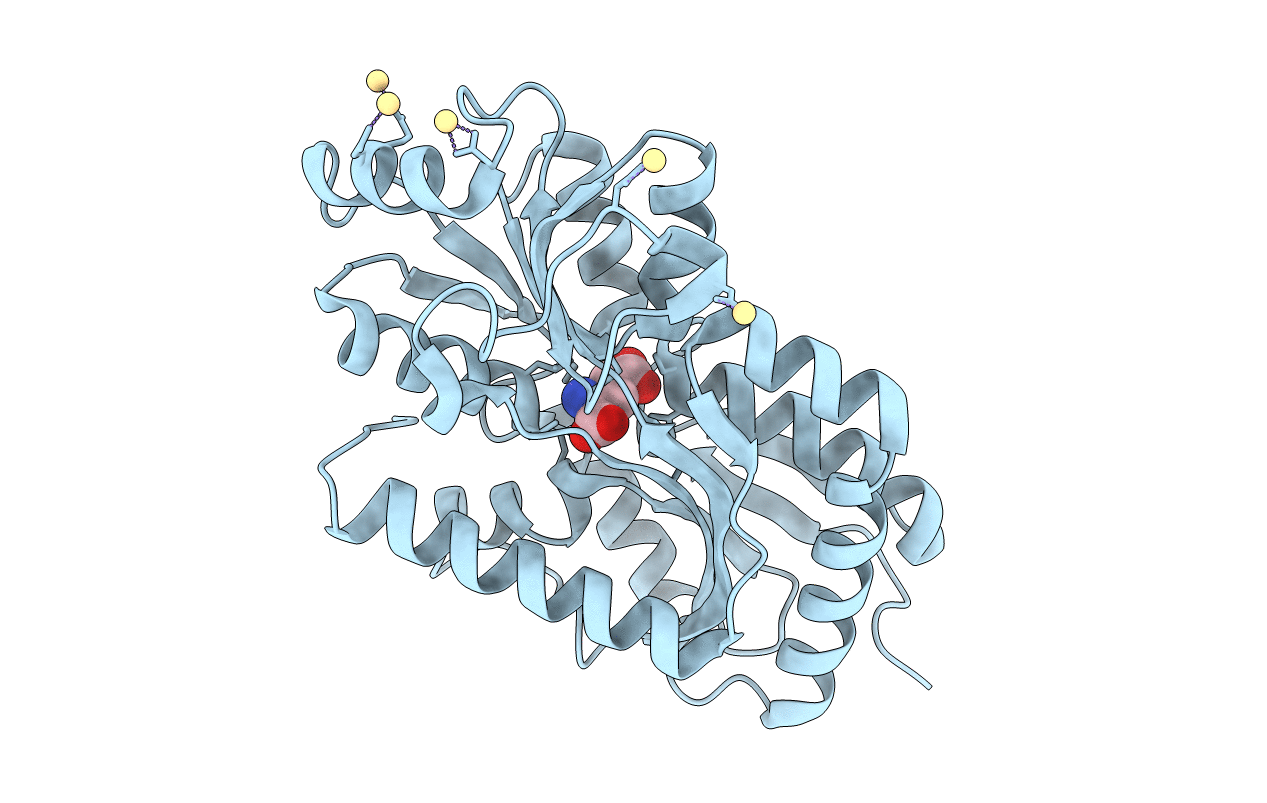
2DVZ image
Deposition Date 2006-08-01
Release Date 2006-11-07
Last Version Date 2024-10-30
Entry Detail
PDB ID:
2DVZ
Title:
Structure of a periplasmic transporter
Biological Source:
Source Organism(s):
Expression System(s):
Method Details:
Experimental Method:
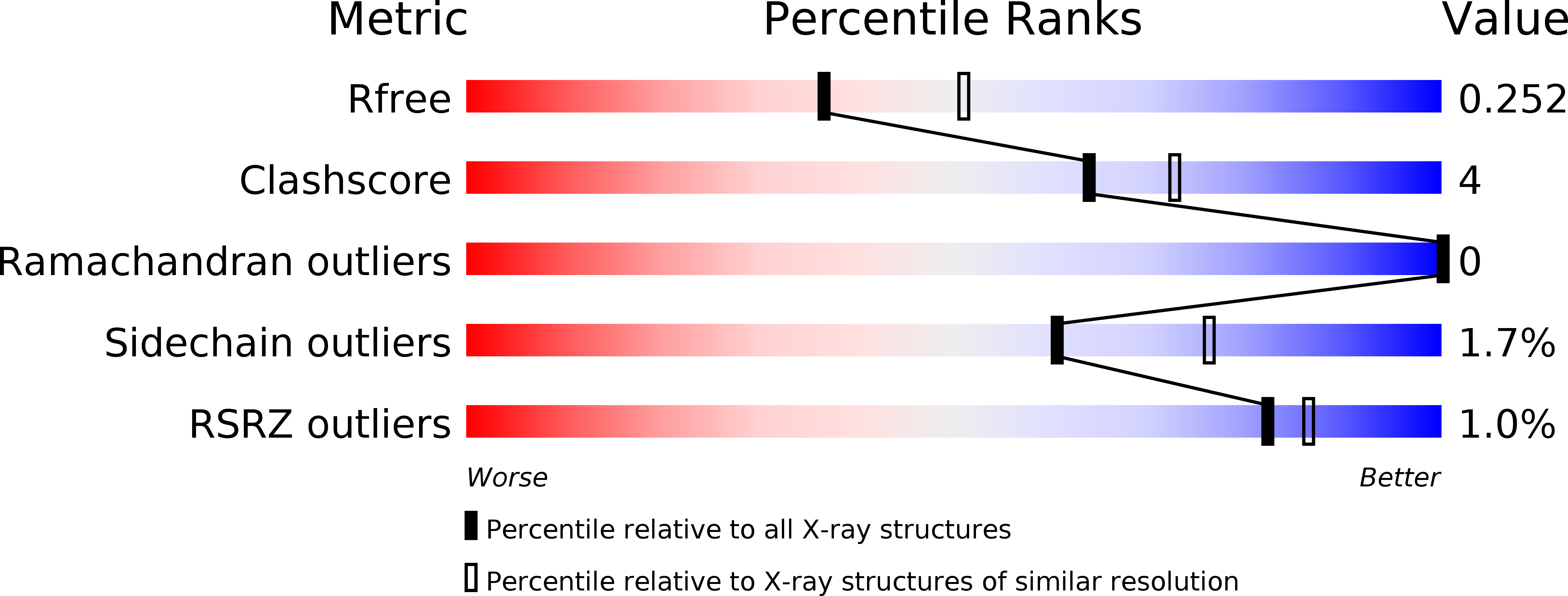
Resolution:
2.30 Å
R-Value Free:
0.24
R-Value Work:
0.17
R-Value Observed:
0.18
Space Group:
P 65 2 2
Macromolecular Entities
Structures with similar UniProt ID
Protein Blast
Polymer Type:polypeptide(L)
Molecule:Putative exported protein
Gene (Uniprot):BP0250
Chain IDs:A
Chain Length:314
Number of Molecules:1
Biological Source:Bordetella pertussis
Modified Residue
Compound ID Chain ID Parent Comp ID Details 2D Image
MSE A MET SELENOMETHIONINE
Primary Citation
Structural analysis of Bordetella pertussis BugE solute receptor in a bound conformation
ACTA CRYSTALLOGR.,SECT.D 62 1375 1381 (2006)
PMID: 17057341 DOI: 10.1107/S0907444906032653

Abstact

The Bug proteins form a large family of periplasmic solute-binding receptors present in a number of bacterial species. Here, the crystal structure of Bordetella pertussis BugE, a member of the Bug family coded by the gene BP0250, is reported. It adopts the Venus flytrap architecture of periplasmic binding proteins, with two domains separated by a deep cleft. BugE has a bound ligand, identified as a glutamate. The structure of B. pertussis BugD, which is an aspartic acid transporter, has recently been reported. These structures reveal high conservation of the Bug architecture, despite limited sequence identity. They share a common carboxylate-binding motif defined by two strand-beta-turn-alpha-helix motifs, also involving two water molecules to bridge the carboxylate O atoms to the protein. The two water molecules are hydrogen bonded to a common main-chain carbonyl group. Although the features of the carboxylate-binding motif are totally conserved, the ligand in BugE is bound by its side-chain carboxylate group rather than by its alpha-carboxylate as in BugD. This specific ligand-binding motif is highly conserved in Bug proteins and the BugE structure suggests that the cavity of the Bug proteins might also accommodate carboxylated solutes other than amino acids. The vast expansion of the Bug family in several bacterial genera is likely to be explained by the possible diversity of ligands. No charged residues are involved in glutamate binding by BugE, unlike what has been described for all glutamate receptors reported so far.

Legend

Protein

Chemical

Disease

Primary Citation of related structures
Feedback Form
Name
Email
Institute
Feedback