2DPY image
Deposition Date 2006-05-18
Release Date 2006-12-26
Last Version Date 2024-03-13
Entry Detail
PDB ID:
2DPY
Keywords:
Title:
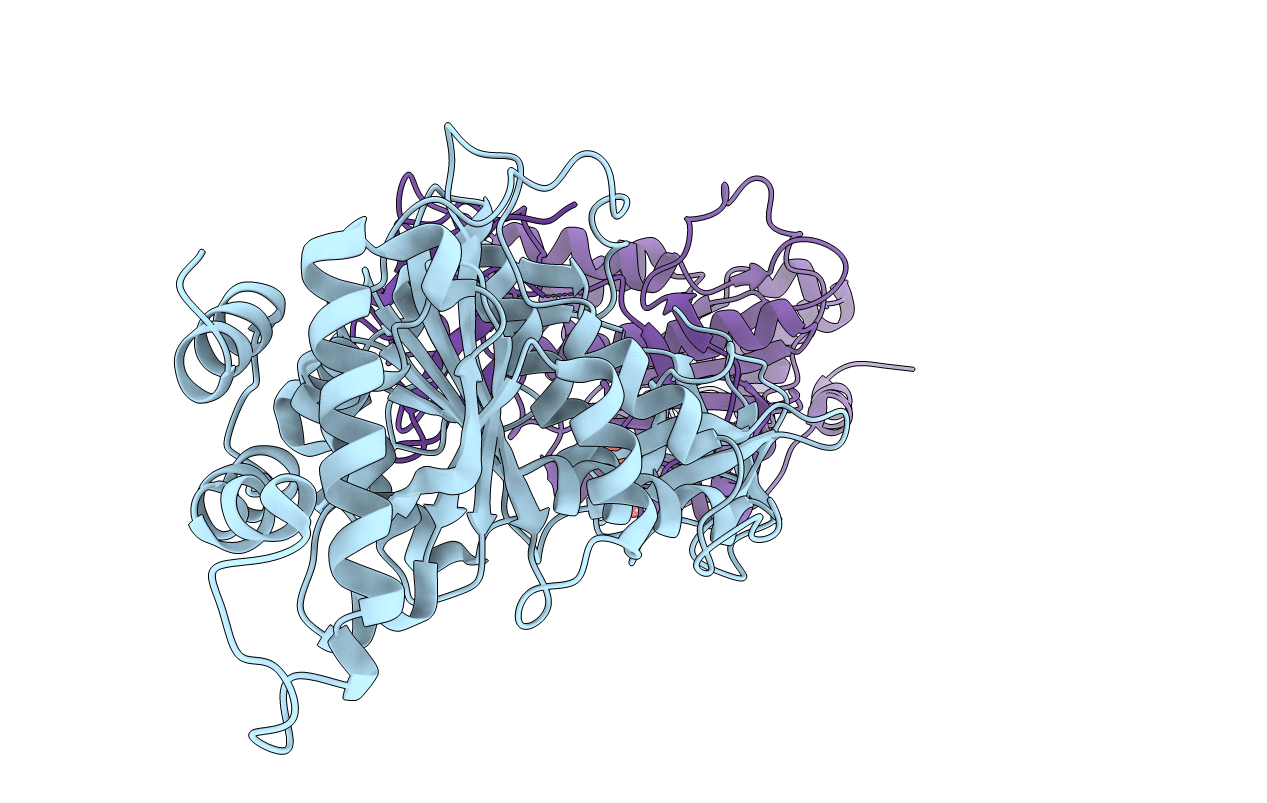
Crystal structure of the flagellar type III ATPase FliI
Biological Source:
Source Organism:
Host Organism:
Method Details:
Experimental Method:
Resolution:
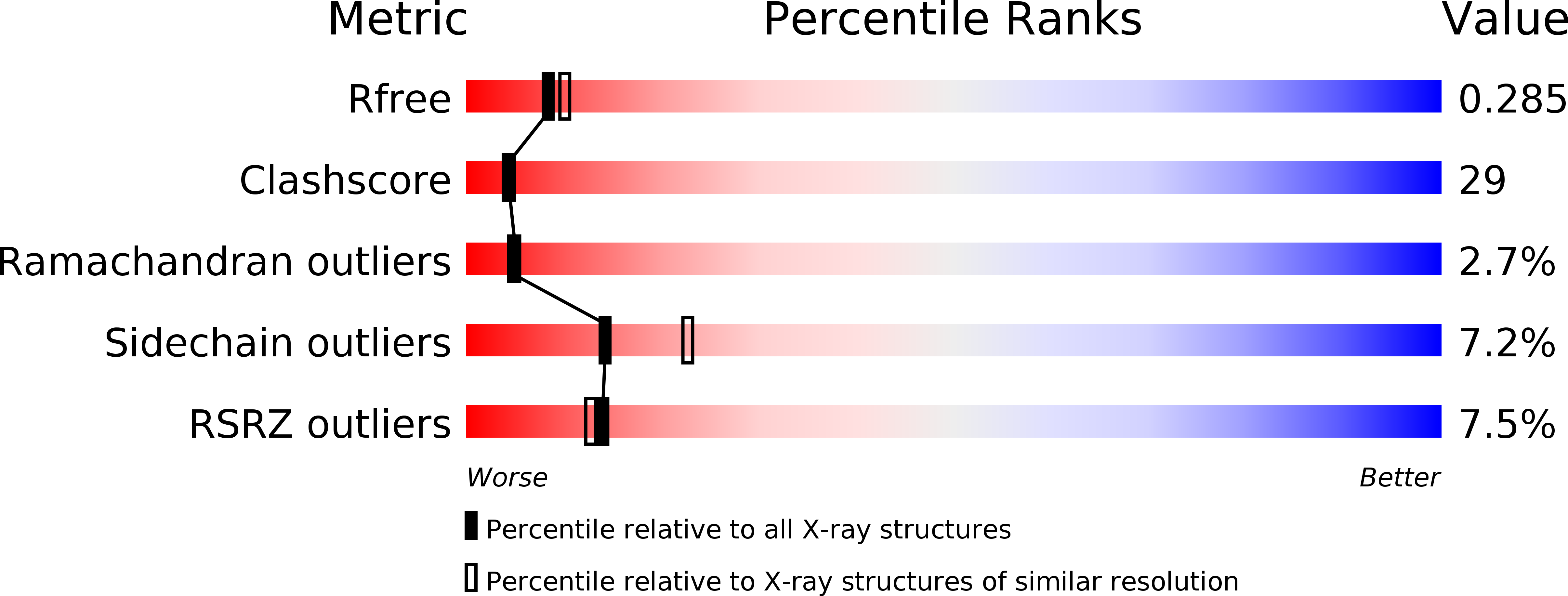
2.40 Å
R-Value Free:
0.29
R-Value Work:
0.24
R-Value Observed:
0.24
Space Group:
P 1 21 1
Macromolecular Entities
Structures with similar UniProt ID
Protein Blast
Polymer Type:polypeptide(L)
Molecule:Flagellum-specific ATP synthase
Gene (Uniprot):fliI
Chain IDs:A, B
Chain Length:438
Number of Molecules:2
Biological Source:Salmonella typhimurium
Ligand Molecules
Primary Citation
Structural similarity between the flagellar type III ATPase FliI and F1-ATPase subunits
Proc.Natl.Acad.Sci.Usa 104 485 490 (2007)
PMID: 17202259 DOI: 10.1073/pnas.0608090104

Abstact

Construction of the bacterial flagellum in the cell exterior proceeds at its distal end by highly ordered self-assembly of many different component proteins, which are selectively exported through the central channel of the growing flagellum by the flagellar type III export apparatus. FliI is the ATPase of the export apparatus that drives the export process. Here we report the 2.4 A resolution crystal structure of FliI in the ADP-bound form. FliI consists of three domains, and the whole structure shows extensive similarities to the alpha and beta subunits of F0F1-ATPsynthase, a rotary motor that drives the chemical reaction of ATP synthesis. A hexamer model of FliI has been constructed based on the F1-ATPase structure composed of the alpha3beta3gamma subunits. Although the regions that differ in conformation between FliI and the F1-alpha/beta subunits are all located on the outer surface of the hexamer ring, the main chain structures at the subunit interface and those surrounding the central channel of the ring are well conserved. These results imply an evolutionary relation between the flagellum and F0F1-ATPsynthase and a similarity in the mechanism between FliI and F1-ATPase despite the apparently different functions of these proteins.

Legend

Protein

Chemical

Disease

Primary Citation of related structures
Feedback Form
Name
Email
Institute
Feedback