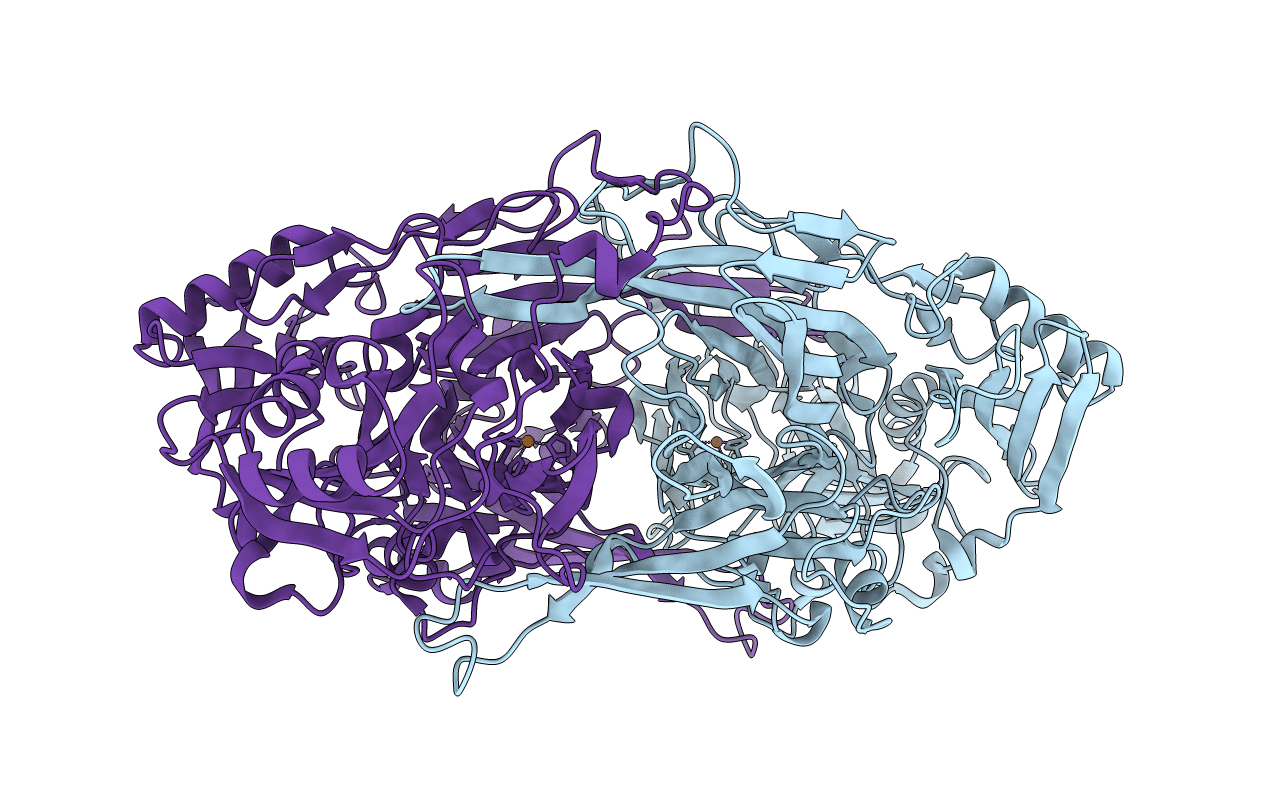
2D1W image
Deposition Date 2005-09-01
Release Date 2006-05-02
Last Version Date 2024-10-09
Entry Detail
PDB ID:
2D1W
Keywords:
Title:
Substrate Schiff-Base intermediate with tyramine in copper amine oxidase from Arthrobacter globiformis
Biological Source:
Source Organism:
Host Organism:
Method Details:
Experimental Method:
Resolution:
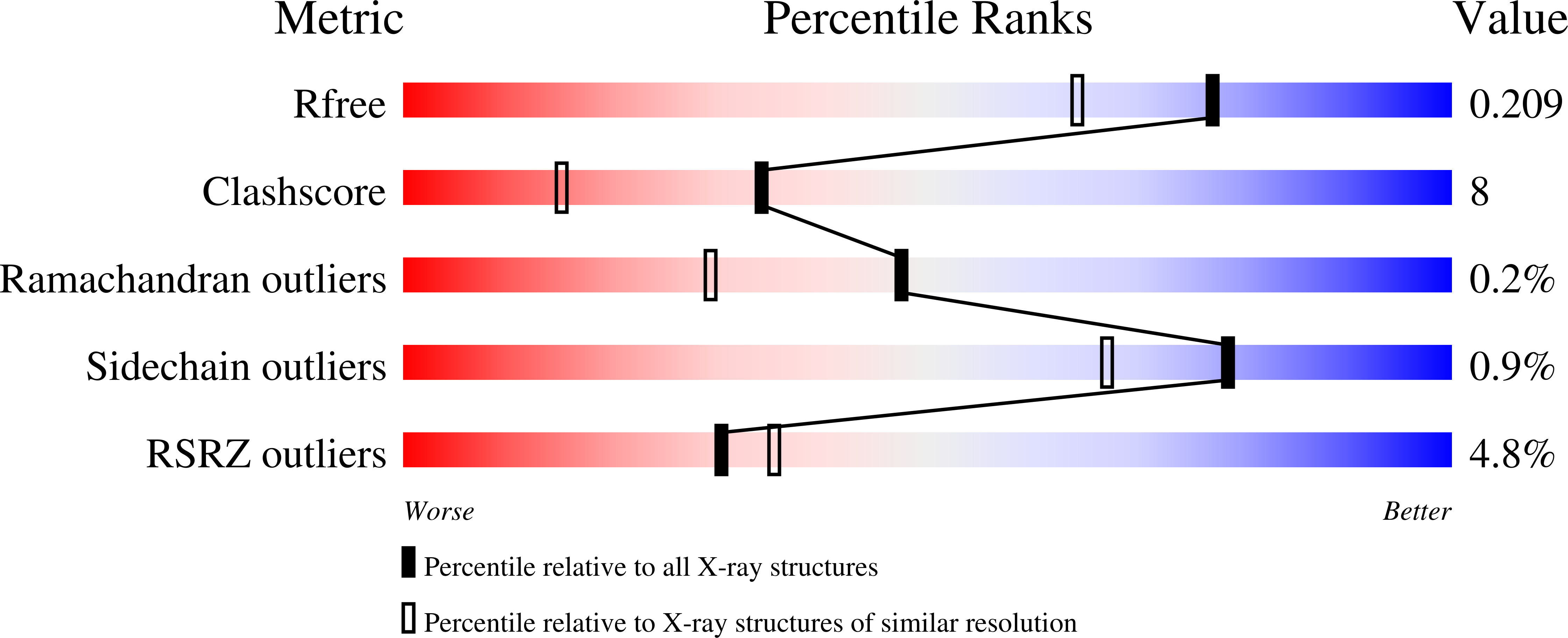
1.74 Å
R-Value Free:
0.21
R-Value Work:
0.19
R-Value Observed:
0.19
Space Group:
I 1 2 1
Macromolecular Entities
Structures with similar UniProt ID
Protein Blast
Polymer Type:polypeptide(L)
Molecule:Phenylethylamine oxidase
Mutagens:D298A
Chain IDs:A, B
Chain Length:638
Number of Molecules:2
Biological Source:Arthrobacter globiformis
Modified Residue
Compound ID Chain ID Parent Comp ID Details 2D Image
TTS A TYR ?
Ligand Molecules
Primary Citation
Quantum mechanical hydrogen tunneling in bacterial copper amine oxidase reaction
Biochem.Biophys.Res.Commun. 342 414 423 (2006)
PMID: 16487484 DOI: 10.1016/j.bbrc.2006.01.150

Abstact

A key step decisively affecting the catalytic efficiency of copper amine oxidase is stereospecific abstraction of substrate alpha-proton by a conserved Asp residue. We analyzed this step by pre-steady-state kinetics using a bacterial enzyme and stereospecifically deuterium-labeled substrates, 2-phenylethylamine and tyramine. A small and temperature-dependent kinetic isotope effect (KIE) was observed with 2-phenylethylamine, whereas a large and temperature-independent KIE was observed with tyramine in the alpha-proton abstraction step, showing that this step is driven by quantum mechanical hydrogen tunneling rather than the classical transition-state mechanism. Furthermore, an Arrhenius-type preexponential factor ratio approaching a transition-state value was obtained in the reaction of a mutant enzyme lacking the critical Asp. These results provide strong evidence for enzyme-enhanced hydrogen tunneling. X-ray crystallographic structures of the reaction intermediates revealed a small difference in the binding mode of distal parts of substrates, which would modulate hydrogen tunneling proceeding through either active or passive dynamics.

Legend

Protein

Chemical

Disease

Primary Citation of related structures
Feedback Form
Name
Email
Institute
Feedback