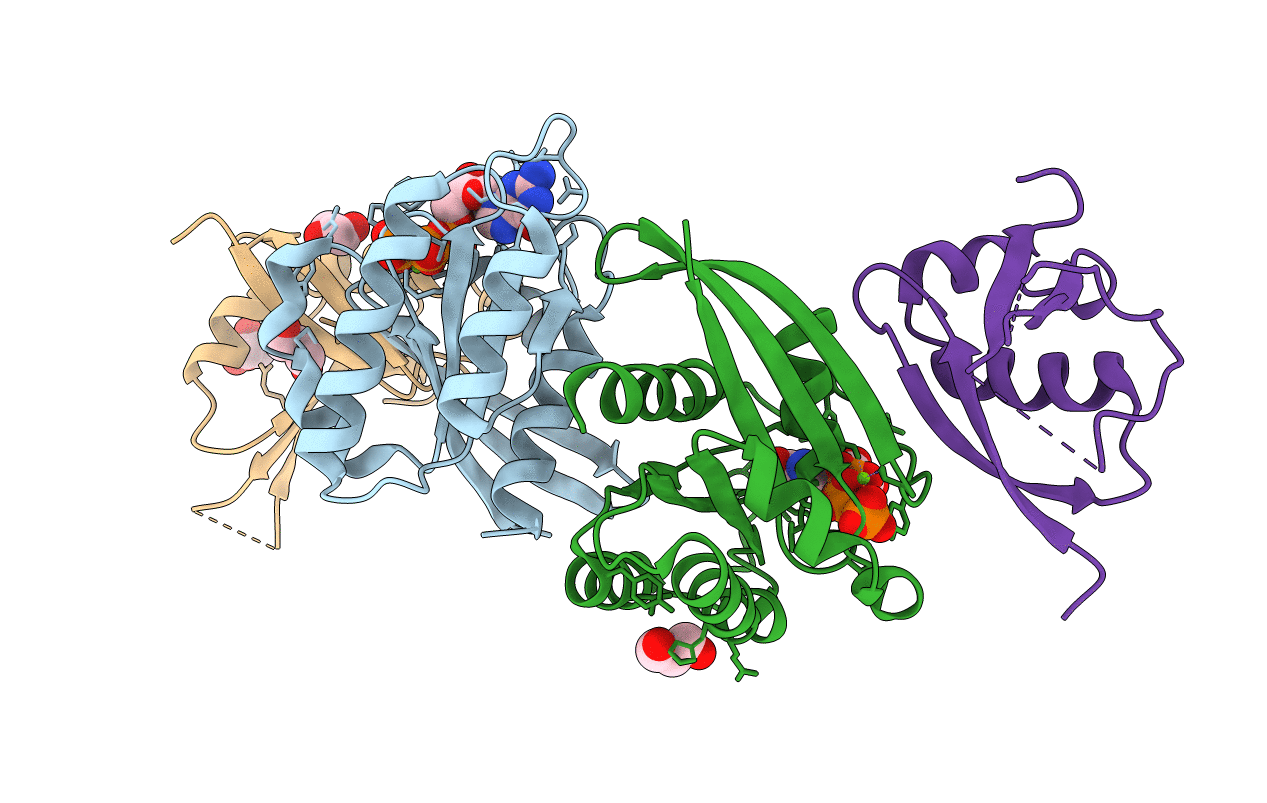
2C5L image
Deposition Date 2005-10-27
Release Date 2006-02-20
Last Version Date 2024-05-08
Entry Detail
PDB ID:
2C5L
Title:
Structure of PLC epsilon Ras association domain with hRas
Biological Source:
Source Organism:
HOMO SAPIENS (Taxon ID: 9606)
Method Details:
Experimental Method:
Resolution:
1.90 Å
R-Value Free:
0.22
R-Value Work:
0.18
R-Value Observed:
0.18
Space Group:
P 21 21 21

Macromolecular Entities
Structures with similar UniProt ID
Protein Blast
Polymer Type:polypeptide(L)
Molecule:GTPASE HRAS
Gene (Uniprot):HRAS
Mutagens:YES
Chain IDs:A, B
Chain Length:173
Number of Molecules:2
Biological Source:HOMO SAPIENS
Structures with similar UniProt ID
Protein Blast
Polymer Type:polypeptide(L)
Molecule:PHOSPHOINOSITIDE-SPECIFIC PHOSPHOLIPASE C PLC-EPSILON
Mutagens:YES
Chain IDs:C, D
Chain Length:117
Number of Molecules:2
Biological Source:HOMO SAPIENS
Primary Citation
Structural and Mechanistic Insights Into Ras Association Domains of Phospholipase C Epsilon
Mol.Cell 21 495 ? (2006)
PMID: 16483931 DOI: 10.1016/J.MOLCEL.2006.01.008

Abstact

Ras proteins signal to a number of distinct pathways by interacting with diverse effectors. Studies of ras/effector interactions have focused on three classes, Raf kinases, ral guanylnucleotide-exchange factors, and phosphatidylinositol-3-kinases. Here we describe ras interactions with another effector, the recently identified phospholipase C epsilon (PLCepsilon). We solved structures of PLCepsilon RA domains (RA1 and RA2) by NMR and the structure of the RA2/ras complex by X-ray crystallography. Although the similarity between ubiquitin-like folds of RA1 and RA2 proves that they are homologs, only RA2 can bind ras. Some of the features of the RA2/ras interface are unique to PLCepsilon, while the ability to make contacts with both switch I and II regions of ras is shared only with phosphatidylinositol-3-kinase. Studies of PLCepsilon regulation suggest that, in a cellular context, the RA2 domain, in a mode specific to PLCepsilon, has a role in membrane targeting with further regulatory impact on PLC activity.

Legend

Protein

Chemical

Disease

Feedback Form
Name
Email
Institute
Feedback