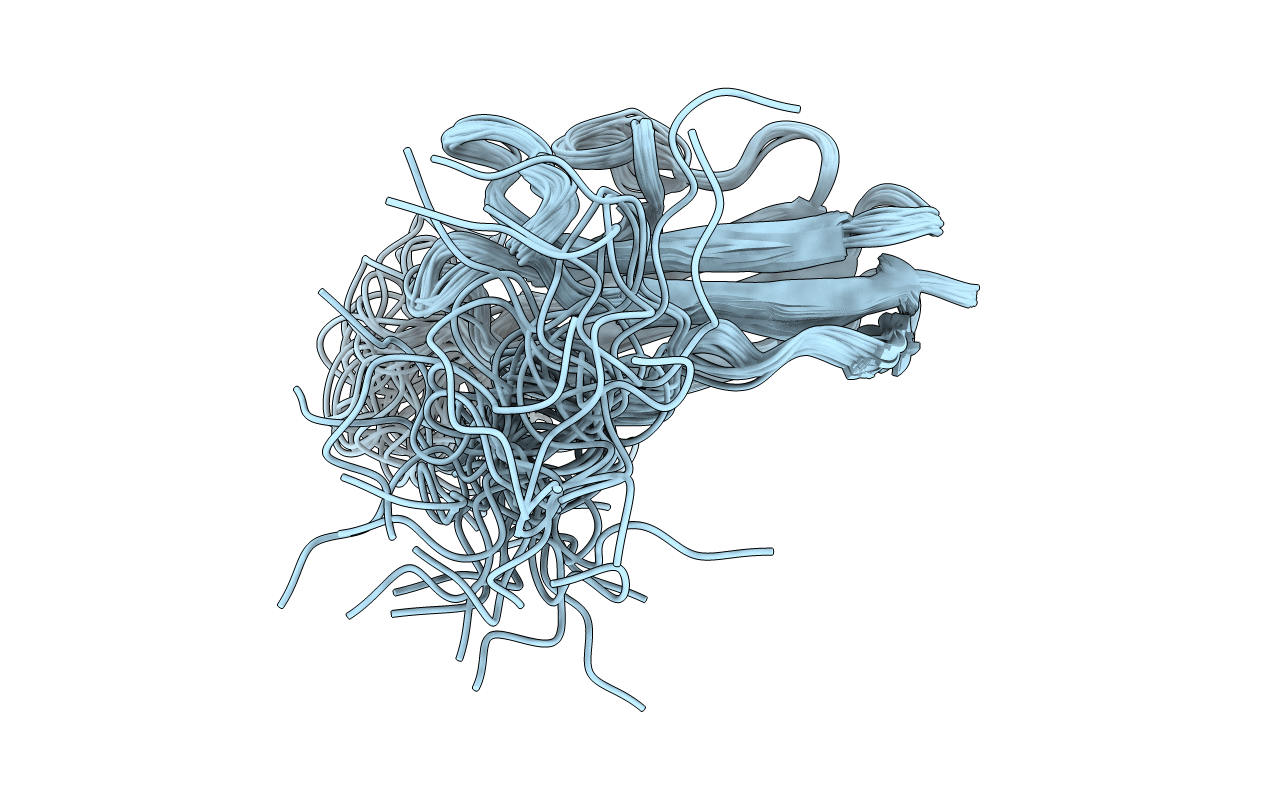
2C34 image
Deposition Date 2005-10-04
Release Date 2005-12-21
Last Version Date 2024-05-15
Entry Detail
PDB ID:
2C34
Keywords:
Title:
Leishmania mexicana ICP
Biological Source:
Source Organism:
Host Organism:
Method Details:
Experimental Method:
Conformers Calculated:
50
Conformers Submitted:
38
Selection Criteria:
LOWEST RESTRAINT ENERGY

Macromolecular Entities
Structures with similar UniProt ID
Protein Blast
Polymer Type:polypeptide(L)
Molecule:INHIBITOR OF CYSTEINE PEPTIDASES
Gene (Uniprot):icp
Chain IDs:A
Chain Length:116
Number of Molecules:1
Biological Source:LEISHMANIA MEXICANA
Ligand Molecules
Primary Citation
The Structure of Leishmania Mexicana Icp Provides Evidence for Convergent Evolution of Cysteine Peptidase Inhibitors.
J.Biol.Chem. 281 5821 ? (2006)
PMID: 16407198 DOI: 10.1074/JBC.M510868200

Abstact

Clan CA, family C1 cysteine peptidases (CPs) are important virulence factors and drug targets in parasites that cause neglected diseases. Natural CP inhibitors of the I42 family, known as ICP, occur in some protozoa and bacterial pathogens but are absent from metazoa. They are active against both parasite and mammalian CPs, despite having no sequence similarity with other classes of CP inhibitor. Recent data suggest that Leishmania mexicana ICP plays an important role in host-parasite interactions. We have now solved the structure of ICP from L. mexicana by NMR and shown that it adopts a type of immunoglobulin-like fold not previously reported in lower eukaryotes or bacteria. The structure places three loops containing highly conserved residues at one end of the molecule, one loop being highly mobile. Interaction studies with CPs confirm the importance of these loops for the interaction between ICP and CPs and suggest the mechanism of inhibition. Structure-guided mutagenesis of ICP has revealed that residues in the mobile loop are critical for CP inhibition. Data-driven docking models support the importance of the loops in the ICP-CP interaction. This study provides structural evidence for the convergent evolution from an immunoglobulin fold of CP inhibitors with a cystatin-like mechanism.

Legend

Protein

Chemical

Disease

Primary Citation of related structures
Feedback Form
Name
Email
Institute
Feedback